My Chitwan Trip!!

By: Janani Bhave

One day, I got a letter from my school, The British School. I was going to go on a 5-day trip to Chitwan! I was so excited because it would be my first overnight field trip. The weekend before the trip, I started packing. I was glad that the school provided a packing list because I didn’t think I would come up with everything I would need. By the way, I have never packed my things by myself before. This would be my first time, so I got the packing list and I started packing. I got distracted many times. The hardest thing to pack was my washing kit because I was always feeling that I forgot something. Luckily I didn’t.

I was getting more and more excited so I did some research about Chitwan. This is what I learned and wrote before my trip: Chitwan is a National Park in Nepal. It protects forests, marshlands, and grasslands. The word Chitwan means “heart of the jungle”. Chitwan is one of the best wild life viewing national parks in Asia. You will have many chances to spot one-horned rhinos, deer, monkeys and 450 species of birds. If you are extremely lucky, you will see leopards, wild elephants, sloth bears or even a Bengal tiger! 7/10ths of the national park is covered in Sal forest. “Sal” is a large leaf, hard wood tree. Chitwan has more than 50 species of mammals including rhinos, tigers, deer, monkeys, elephants, leopards, sloth bears, wild boar and hyenas. Butterfly spotters have identified at least 67 species, some as large as your hand! Birds seen in Chitwan include bulbuls, mynahs, egrets, parakeets, jungle fowl, peacocks, kingfishers, oriels and various species of drongos. There are also rare species such as ruby checked sun birds, emerald doves, jungle owlets and crested horn bills. That is what I learned about Chitwan.
Excited and a little bit sad...

That’s Mr. Cross, my class teacher.

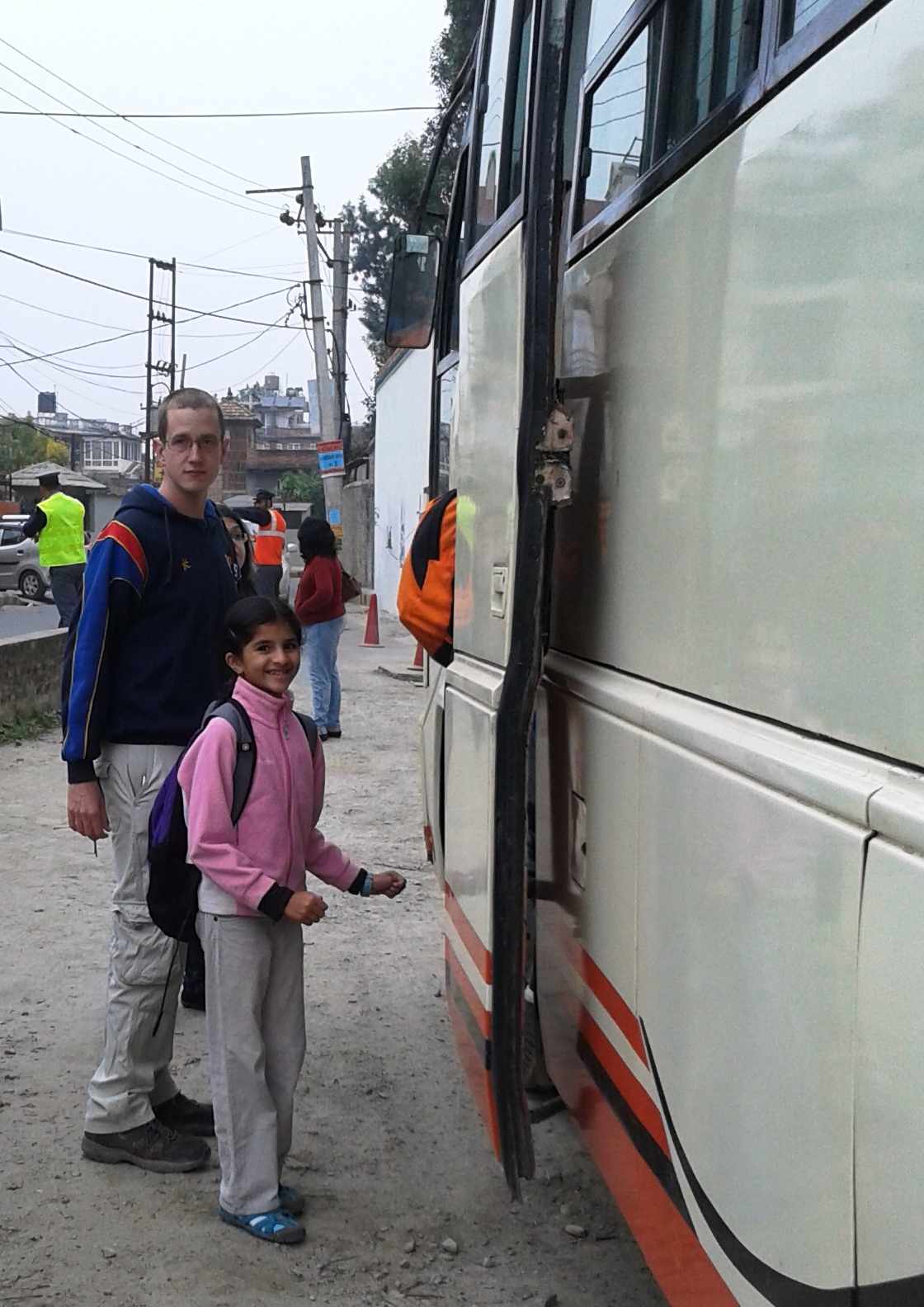
Monday, November 3, 2014, was the day I started getting sad because I was going to leave. I thought that I would miss my parents so much. I said good-bye to my mom and walked to school with my dad. Seeing my friends cheered me up a bit. Their parents were taking pictures of them. Then, we boarded the bus. I sat next to Meghna at the front of the bus.
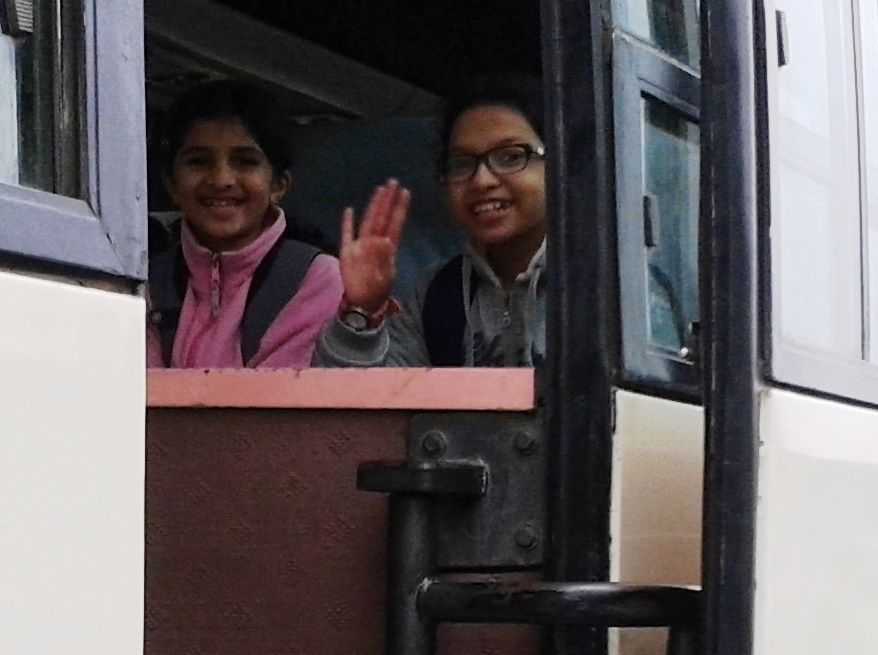
Meghna and I waved goodbye to our parents from the bus.

Meghna and I waved goodbye to our parents from the bus.

We played hand games, but we soon got bored of them. We both knew that the ride would seem quicker if we fell asleep. After trying for a long time, I fell asleep. When I woke up, we were almost there. Soon, we came to a big crowd of people. They were crowded around a man selling what looked like sugarcane. The crowd of people looked so colorful. Finally, after 7 hours of driving, we reached our lodge, Sapna Village Lodge!

We went to the dining room and had a bowl of soup. I wished we got something cold because it was so hot! Then we had some time to go to our rooms, unpack, tidy up, and make a poster to put on the front of our door. I was in a room with Meghna, Shivanshi and Ujesha. So we unpacked, tidied up and made a poster. We named our dorm, The Girls Dorm. Then, Mr. Swift came to give us dorm points. Dorm points are points that people in our dorm earn. He gave us 3 points for cleaning our room and 2 points because he liked the way Meghna helped Ujesha carry her bag up the stairs to our room. Soon it was dinner time.

After dinner, we made candy for elephants and we fed it to them! What we had to do was tie some straw into a knot. Then we had to fill it with rice and feed it to the elephant. The elephant didn’t eat the bundle that I made, but it was fun trying to feed her. After that, we had a circle time when everyone had a chance to tell what they were looking forward to. Most people were looking forward to the jeep safari, the jungle walk or the canoe ride, like me. Mr. Swift was looking forward to breakfast!! And Ms. Kulung was looking forward to Friday, when we would leave!! Then, it was bedtime so we went up to our dorms, changed our clothes, brushed our teeth, combed our hair and went to bed.

When I woke up the next morning, it was really cold. Soon, I noticed that Shivanshi was awake and she just finished changing. Ujesha was also awake but she was still in bed. When we found out that Meghna was awake, we all got up and started getting ready. Our plan was to get ready and tidy up our room so when Mrs. Swift comes to wake us up, she would give us extra dorm points! Unfortunately, we didn’t get ready in time but we did get ready in time for breakfast.

After breakfast, I went with my class, 5C, on a jeep safari! We sat on seats at the top of the jeep. I loved the wind which was blowing so much on my face. Sometimes it got cold, but I still liked it. We saw some deer, some monkeys, a lizard sticking his head out of a hole, a cute little owlet, and even a leopard! We saw a lot of tall plants called elephant grass. I learned that elephant grass is called elephant grass because elephants eat it.
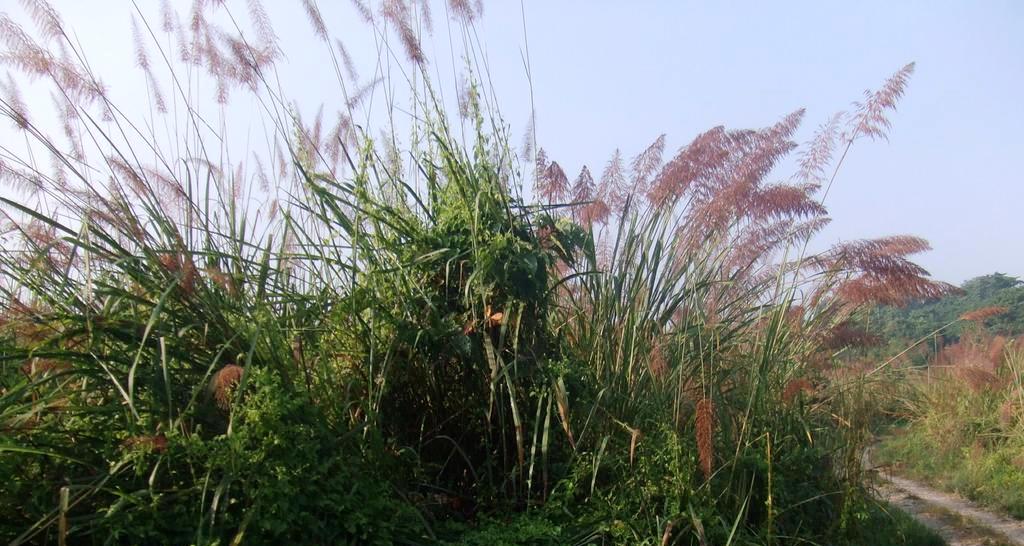
Some of the elephant grass was almost three times as tall as I am!

Some of the elephant grass was almost three times as tall as I am!

After the jeep safari, we went to our lodge and ate lunch. Then we went on a canoe ride. On the ride, we saw a lot of alligators. Some were really long. I enjoyed looking at them but it was really hot, so I wanted to get off. When the ride was over, we did a jungle walk. We saw a lot of huge spiders in the middle of their webs. We even saw a rhino bathing in a river! Many times, we had to jump over creeks and small streams. After the walk, we rode the canoe across the river and we walked back to our lodge.
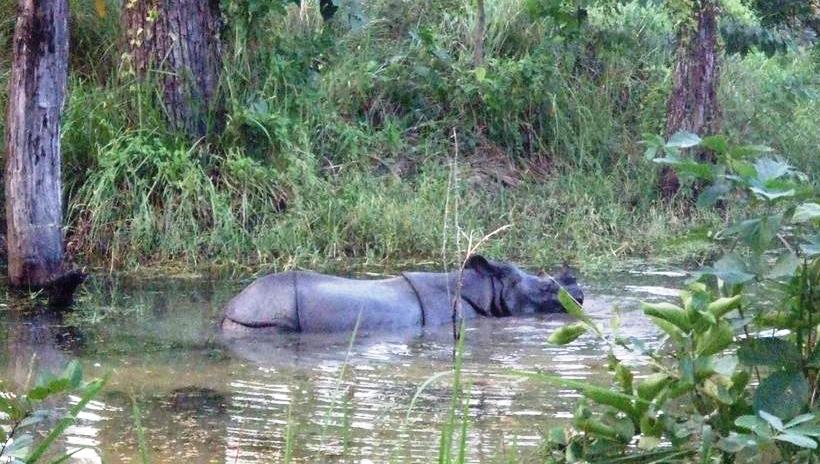
We had to be really quiet when we spotted any wild animals like this rhino.

We had to be really quiet when we spotted any wild animals like this rhino.

The next day, we went on an elephant safari! It was so much fun bumping along the trail on the back of an elephant. There were four people on each elephant. I was with Meghna, Zaki and Mrs. Swift. We were sitting in a box on the elephant. We were all turned outwards, each on one corner, holding on the railings of the wooden box. Our driver was sitting on the elephant’s neck. The seating was very interesting. We started in the grassy spaces. There we saw many peacocks. We soon reached the river. When the elephants started walking through the river, it sounded like a thunder storm! When they started going uphill and downhill, it was very bumpy. We also saw deer, monkeys, pheasants and even a wild boar.
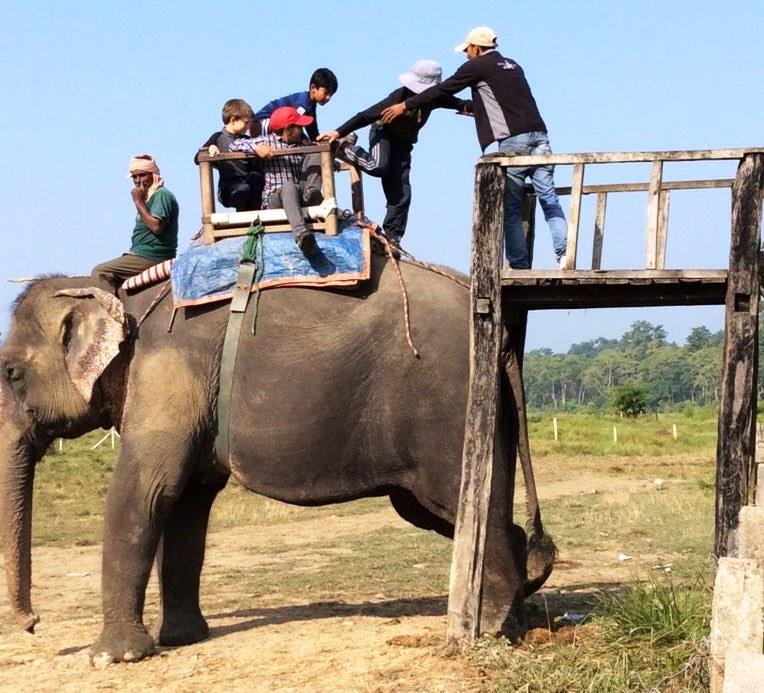
People boarding an elephant - it looks hard, but its quite easy.

People boarding an elephant – it looks hard, but its quite easy.

When the elephant safari was over, we went back to our lodge for lunch. After that, we went elephant washing! We went to a river where an elephant was, and once it was flipped over on its side, Mrs. Swift picked three people. She picked me, Rewa and Abayaa. We waded into the river and we rubbed water all over the elephant. Then we climbed onto the elephant and it sprayed us with its trunk!  I was both scared and excited right before it happened. I was scared because I felt like it might be too strong of a spray and excited because it probably would be refreshing. After everyone had a turn washing the elephant, we went back to the lodge for a shower. Then it was dinner time and then it was bedtime.
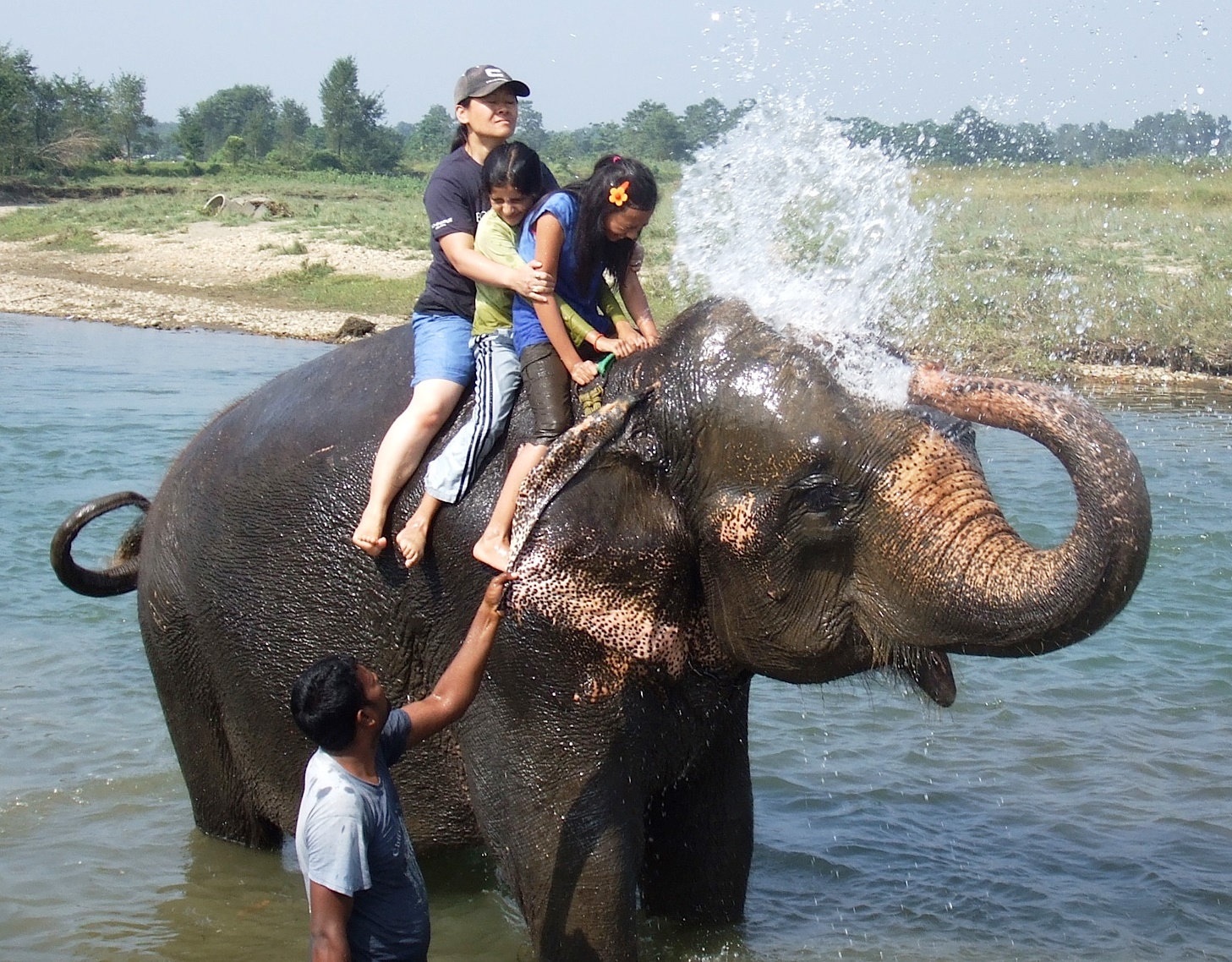
It was SO fun!

It was SO fun!

On Thursday we went bird watching. I was excited but we didn’t see very many birds. At the beginning we walked to the river banks. There, we saw a flock of birds who were taking a bath. When my friend, Alexia, let me borrow her binoculars I saw that the birds were all brown and white, but they had brown and white on different parts of their bodies. Then we started walking down the river. We only saw one more bird which had a very long tail. At one point, we saw hundreds of millipedes or centipedes. They looked exactly the same and they were crawling all over the grass. We kept walking until we came to our lodge. We ate lunch then we went to a Tharu Village.
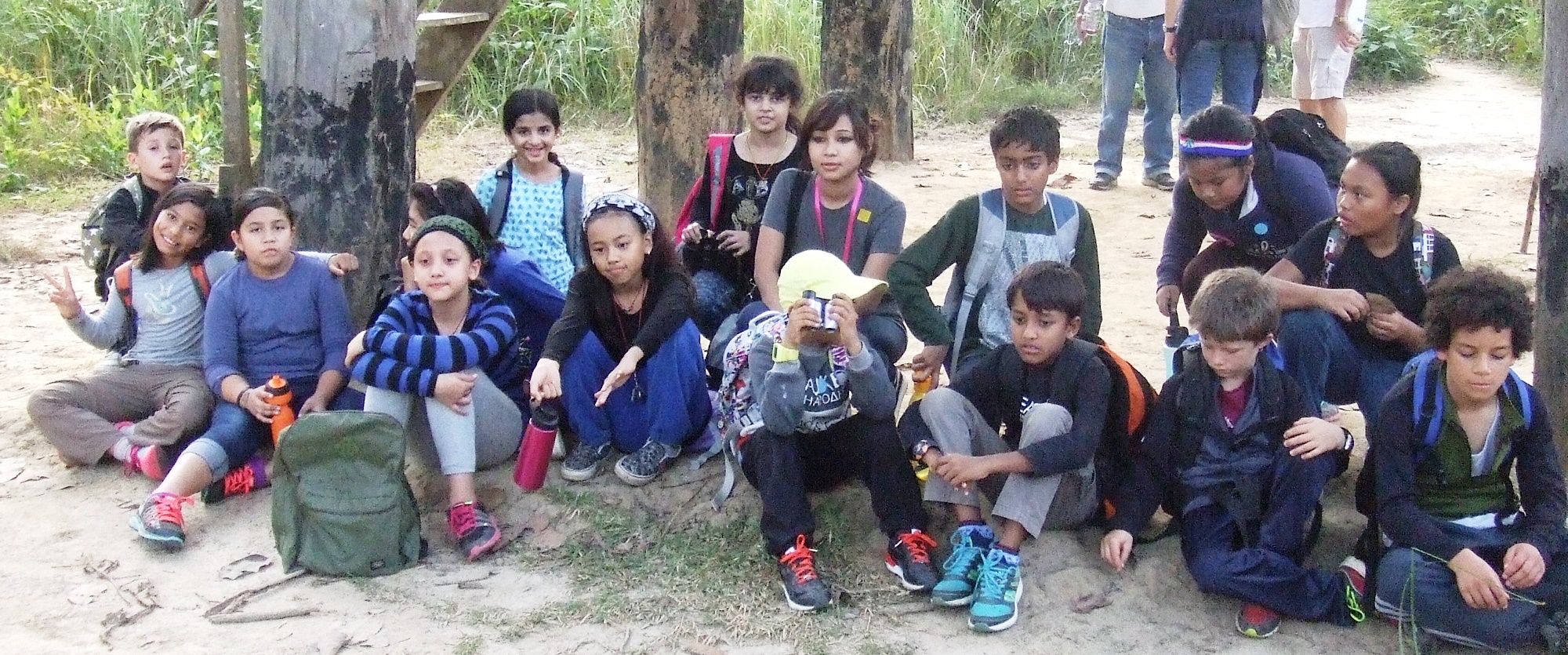
Resting in the shade during a long hike.  Everyone's wearing long sleeves and long pants because of the mosquitoes.

Resting in the shade during a long hike. Everyone’s wearing long sleeves and long pants because of the mosquitoes.

Tharu people are a type of Nepali people. We were going to learn how to decorate their houses. First we rubbed mud and cow poo all over the outside of a house so that no cracks would be showing. Then we put paint on another house by making flowers and paisley shapes with our hands. After we finished, we went fishing!

I had never gone fishing before. We each had an oval shaped ring of wood with a net hanging from it. We also had a basket tied to the side of our waist. We were supposed to wade in the water, dip in our net, and put the fish we caught in our baskets. I didn’t catch any fish, though. Then, we went back to our lodge.

The rivers in Chitwan are pretty and blue unlike the rivers in Kathmandu.

The rivers in Chitwan are pretty and blue unlike the rivers in Kathmandu.

The next day, we were going back home! I was excited to see my parents and brothers but I was also sad to leave Chitwan. After a long, boring bus ride, we finally reached The British School. Then I found my mom! I was happy to see her, but it felt like it had just been one day since I’d seen her. When I left home, I felt like I was going to miss my parents a lot, but I never actually did miss them much. I thought about them many times though… That was the end of my Chitwan trip!

My Didi made me a cake when I came home from the trip!  She doesn't know English well so she sounded out "WELCOME".

My Didi made me a cake when I came home from the trip! She doesn’t know English well so she sounded out “WELCOME”.

November Visitors – Prakash’s 2 most favorite Uncles!

Ravi Bhave, Prakash’s father’s younger brother (#11 out of 13 brothers and sisters) lives in Melbourne, Australia with his wife and daughter. He visited us this week for a short 3-day trip on his way to India. We had a fabulous time together!

A go-with-the-flow, happy-go-lucky personality and ease on a bicycle in the developing world – two prerequisites to a wonderful visit in Nepal (okay, you can get by with taxi and on foot, but bicycle is so much better!).  Ravi Kaka had both criteria down solid (Kaka = father’s brother or close uncle).  On Day #1, we covered the top sights within the Kathmandu Valley: Swayambhunath Temple – also known as the Monkey Temple because of the hundreds of monkeys that live on the Swayambhu hill, it is a famous temple for Buddhist and Hindu devotees ; Pashupathinath Temple – the most famous temple in Kathmandu, a major pilgrimage destination for Hindu devotees of Lord Shiva ; Boudhanath Temple – the largest Buddhist stupa in all of Asia! We both enjoyed Boudhanath best… and it all boiled down to cleanliness. Offerings of rice, flowers and sindur (red powder) aren’t adequately cleaned up and therefore litter the floor along with the standard dust that plagues all cities within developing nations. Within Boundhanath, offerings are limited to oil lamps and incense thus the stupa and surrounding areas are clean and emanate peace.

Giant prayer wheels at Swayambhunath.  Ashwin Kaka thought it would be effective to harness all the energy from so many devotees spinning so many prayer wheels!

Giant prayer wheels at Swayambhunath. Ashwin Kaka, our second Nov guest, thought it would be effective to harness all the energy from so many devotees spinning so many prayer wheels!

Later in the afternoon, we drove to Nagarkot, a small village on the outskirts of the KTM valley where spectacular mountain views are potentially visible. The dense cloud and pollution mixture covered much of the view, but the snow-covered mountain peaks were partially visible. Given that a trek into the Himalayas is out of the question on a 3-day trip, views from Nagarkot are a great substitute. It is said that even Mount Everest is visible from Nagarkot, although just as a small dot on a crystal clear horizon. A yummy pizza dinner at Roadhouse Restaurant was the end to a very long but very nice day.

A crisp, breezy evening atop Nagarkot hill.  The long vista of snow-capped peaks "peaking" through the clouds was beautiful.

A crisp, breezy evening atop Nagarkot hill. The long vista of snow-capped peaks “peaking” through the clouds was beautiful.

On Day #2 we set off on bicycle to Patan Darbar Square, the main community center that is centuries old. A familiar face approached and offered to give us a tour (Raj gave me a tour several months ago). He shared several tidbits of information, knowledge and stories about the history of the Square. Much was destroyed in an earthquake in the 1930s but has been successfully rebuilt. We also toured a Thanka Art Studio, healing bowl shop and Pashmina shawl shop – all very famous to Patan. In the end, we visited the famous Patan Museum that houses stone and metal sculptures from Hindu and Buddhist religions dating several centuries ago.

Ravi Kaka standing in front of metal elephant statues at the Golden Temple near Patan Durbar Square.

Ravi Kaka standing in front of metal elephant statues at the Golden Temple near Patan Durbar Square.

We also managed to squeeze in badminton and football (soccer) in our backyard, a trip to the local bakery and a sample of the famous local cuisine – momos! All in all, an enjoyable, relaxing and fun first visit of Ravi Kaka to Kathmandu! Next visit… trekking :-).

Less than 2 days later, Ashwin Honkan and Chitra Lele visited us. Ashwin Kaka knew Prakash’s family back in California when Prakash was as little as Sumanth! Back then, he was the “cool, young, fun Uncle” and frequently played games, attended school functions and hiked with Prakash’s family . Now, they live in Pune and came up to visit Nepal for one week. Initially, they visited Chitwan National Park and Pokhara before coming to our place. Luckily their trip overlapped with the weekend, so Prakash and the kids could also join in the fun…

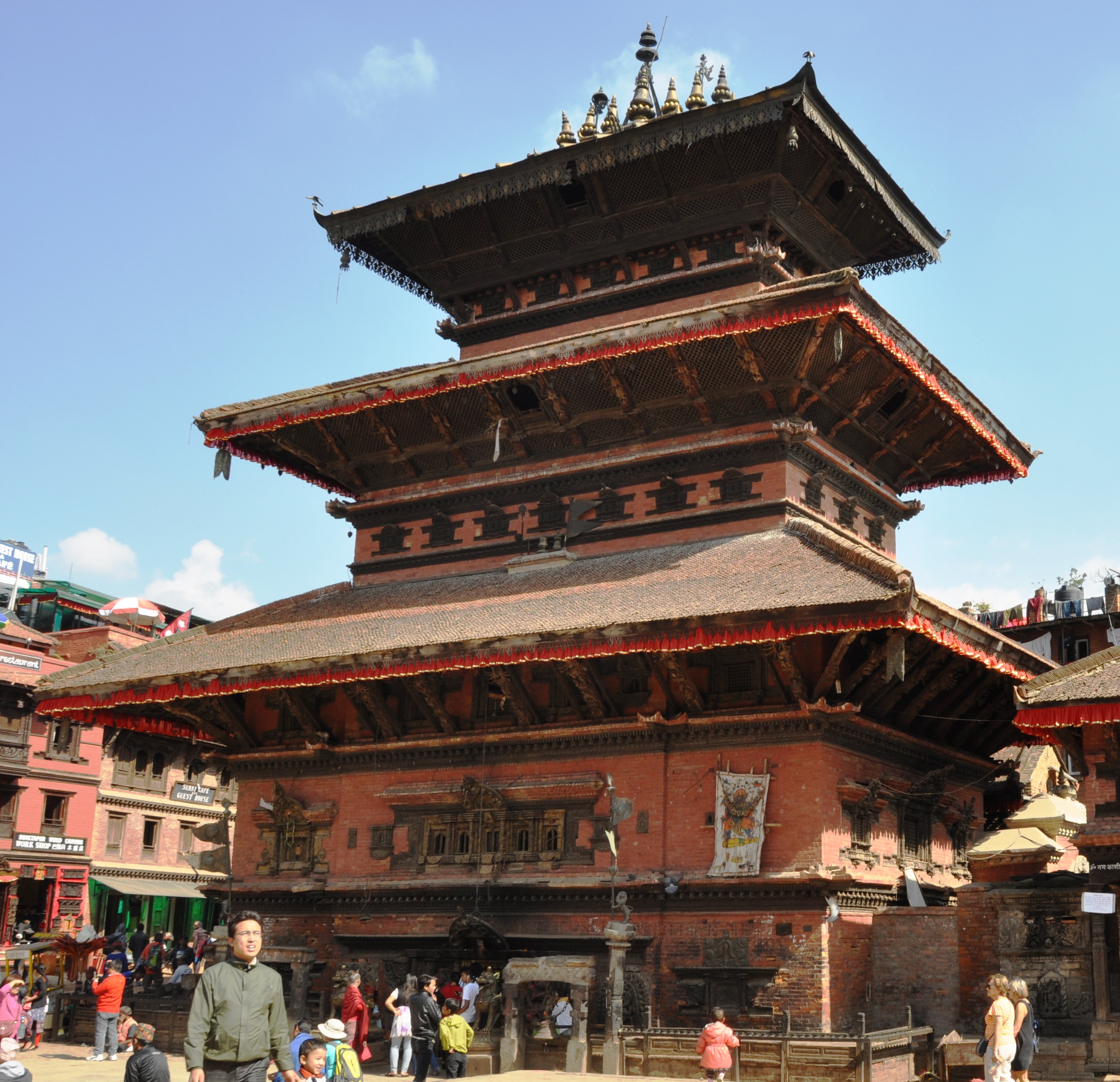
On Day #1, we went to Bhaktapur, one of the 3 kingdoms that used to exist in the Kathmandu Valley (Kathmandu, Patan and Bhaktapur). It is a quaint village made of bricks, cement and wood, full of temples, shops and homes all intermixed together. Their specialty is juju-dhau or sweet yogurt and we all sampled this very rich, tasty treat! Bhaktapur, along with many other areas in the Kathmandu Valley are receiving a quick makeover in time for the SAARC (South Asian Association for Regional Cooperation) Summit which will take place here later this month. Replacing temple decorations, resurfacing roadways, painting medians, cleaning rivers and roadways – SO much work is currently in progress. We got to witness some of this in Bhaktapur; I challenged the kids to imagine how they changed the shiny, red cloth from the edges of the pagoda tiers in the temples! The lower tiers are imaginable, with a tall ladder, but how do they work on the top tiers?!?

How do they replace the shiny red cloth decoration at the edge of the pagoda tiers?  Kathmandu is looking its finest in preparation for the SAARC Summit.

How do they replace the shiny red cloth decoration at the edge of the pagoda tiers? Kathmandu is looking its finest in preparation for the SAARC Summit.

We made a quick stop in Boudda to see Asia’s largest stupa then headed to the Garden of Dreams in Thamel. The Lonely Planet describes it as a 2-minute walk from Thamel but worlds away… It is an incredibly well-maintained, ornate garden full of flowers, manicured shrubs, gazebos, ponds, sculptures, and fine coffee shops. It reminds me of the CalTech campus where Prakash did his graduate work. Again, this long but very fun day was rounded out with a yummy pizza dinner at Fire and Ice – a popular family-friendly restaurant (that evening, we ran into 5 families we knew!).

The heavenly oasis of Garden of Dreams in Thamel - makes me feel like we are in Pasadena, California!

The heavenly oasis of Garden of Dreams in Thamel – makes me feel like we are in Pasadena, California!

Day #2 was a bit adventurous! We hired a one-way taxi to take us near to Changu Narayan Temple on the eastern edge of the Kathmandu Valley. Ashwin Kaka’s former employee, Rabi Shreshta, also lives in Kathmandu and he and his family joined us for the day. They hadn’t met in over 12 years, but it wasn’t too difficult to spot Rabi, Charu, and their 10-year old son, Rijul, at the intersection we decided to meet at. They jumped on board the large SUV and we headed east. Rabi is an avid cycler and has familiarity with the “trails” in the Valley. Trails in Nepal, however, are more like what we would consider rural dirt roads in the USA, not like marked trails within county, state and national parks.

Rural houses, shops, electrical wires -- you see it all scattered along the "trails" deep into the edges of the Kathmandu Valley.

Rural houses, shops, electrical wires — you see it all scattered along the “trails” deep into the edges of the Kathmandu Valley.

After only 15 minutes of hiking, we reached Changu Narayan Temple – complete with a multi-tier pagoda temple, old stone sculptures, and a well-made museum showing various cultures from all regions of Nepal. We continued hiking for another few hours, often asking locals along the way which is the correct path to Telkot, our destination, when we’d encounter a fork in the road. After reaching Telkot, we fortunately came upon an empty, parked bus that was headed towards Kathmandu in minutes! We all climbed aboard and claimed our seats – only 40 Nepali rupees (equivalent to ~ $0.40 USD) per person. This was our first try on the public buses and it was a great success. Key is that we got on first and had seats for the hour long journey; after the third or so stop, the seats filled up and many were left standing.

Ready for the journey back to the center of Kathmandu!

Ready for the journey back to the center of Kathmandu!

The main highlight of this day was meeting the Shreshta family – atypical for the average Nepali family, they are into outdoor activities and traveling the world! They’ve completed three treks in Nepal including the one we did last month (Poon Hill), the Annapurna Base Camp trek and the Langtang Valley trek. They’ve also vacationed is several countries including France, Switzerland, Belgium, Thailand, Mauritius, UAE and Australia. Rijul has his heart set on vacationing in the USA next!  Charu and Sumanth became good friends quickly — she was a whiz at interacting with little ones…

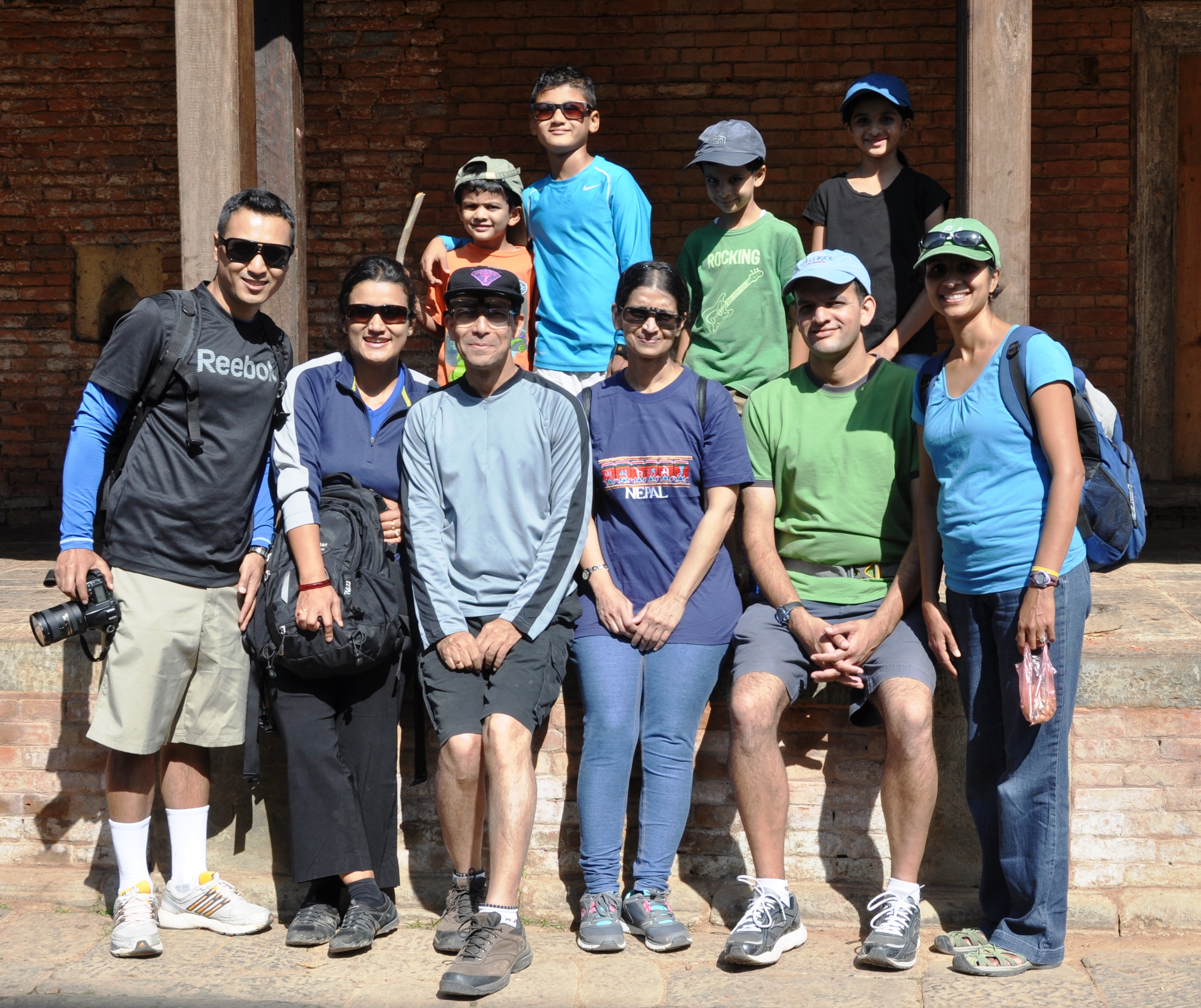
Top Row - Sumanth, Rijul, Sajjan, Janani. Bottom Row - Rabi, Charu, Ashwin Kaka, Chitra Kaki, Prakash, Nita

Top Row – Sumanth, Rijul, Sajjan, Janani.
Bottom Row – Rabi, Charu, Ashwin Kaka, Chitra Kaki, Prakash, Nita

Chitra Kaki and Ashwin Kaka spent the rest of the day thoroughly enjoying the kids – watching silly videos, telling jokes and riddles and singing songs. All in all, their visit was really enjoyable…

Note to Readers: thinking of vacationing in Nepal – DO COME! YOU WILL ENJOY!!

Halloween in Nepal…

Hundreds of expats from all around the world live here in Kathmandu – we get the benefit of celebrating Nepali holidays with the locals and celebrating foreign holidays with expats! Halloween is huge in North America and is starting to make a presence in the UK, Australia, and some other European countries. Families from Scotland, USA and Canada initiated the festive celebrations here…

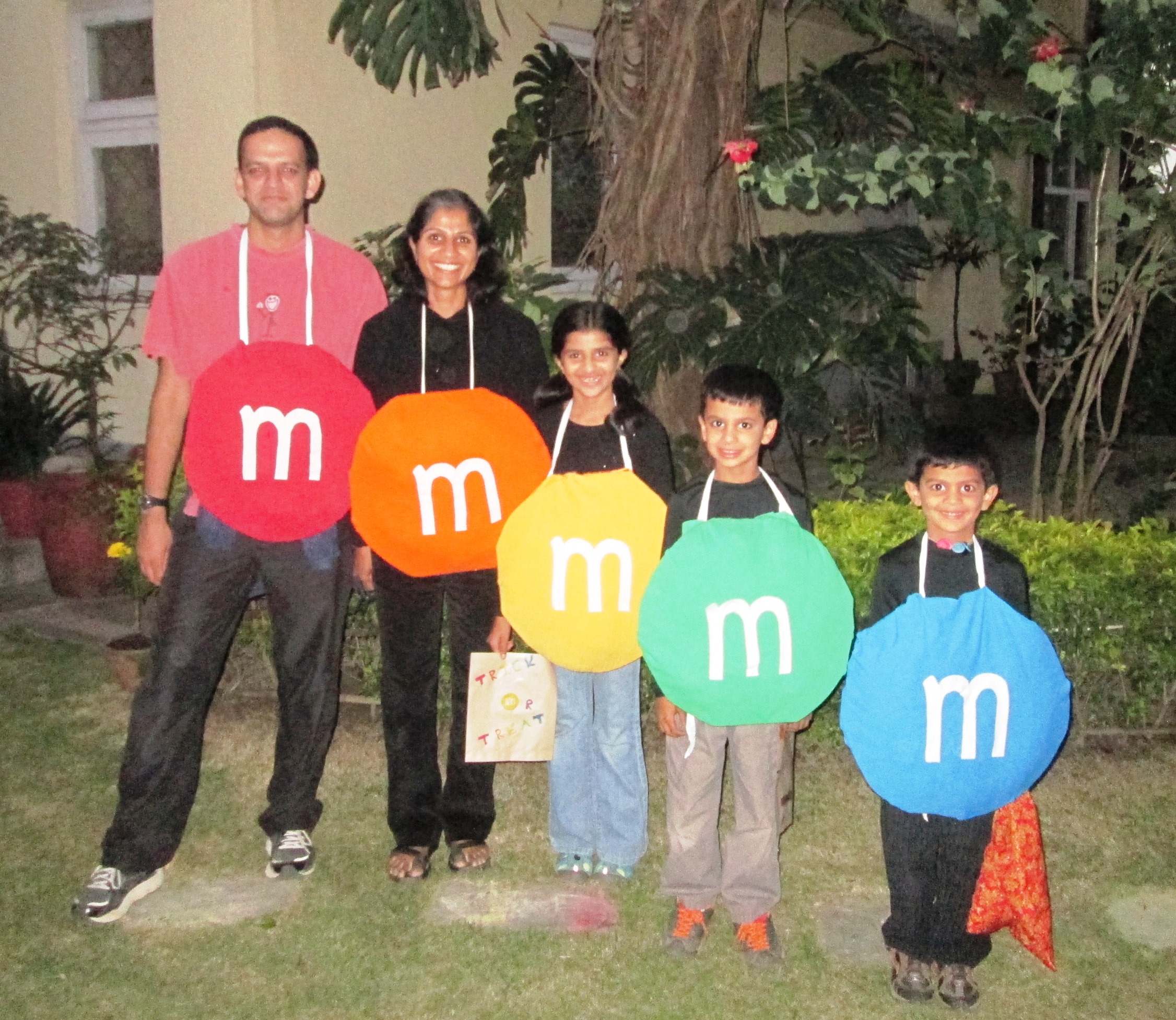
Home-made MnM costumes - colorful T-shirts, cardboard circles, cotton stuffing and a bit of white fabric - that's all it took!

Home-made MnM costumes – colorful T-shirts, cardboard circles, cotton stuffing and a bit of white fabric – that’s all it took!

At The British School, several kids and ALL teachers were in costume! All 6 PE teachers dressed as Incredible Hulk; several teachers had gruesome, blood-spattered, scary attire; there was a cowgirl and a few witches and several creative costumes from the teachers. The kids were equally gory, cute and creative – ghosts, witches, goblins, Harry Potter characters, and many more.

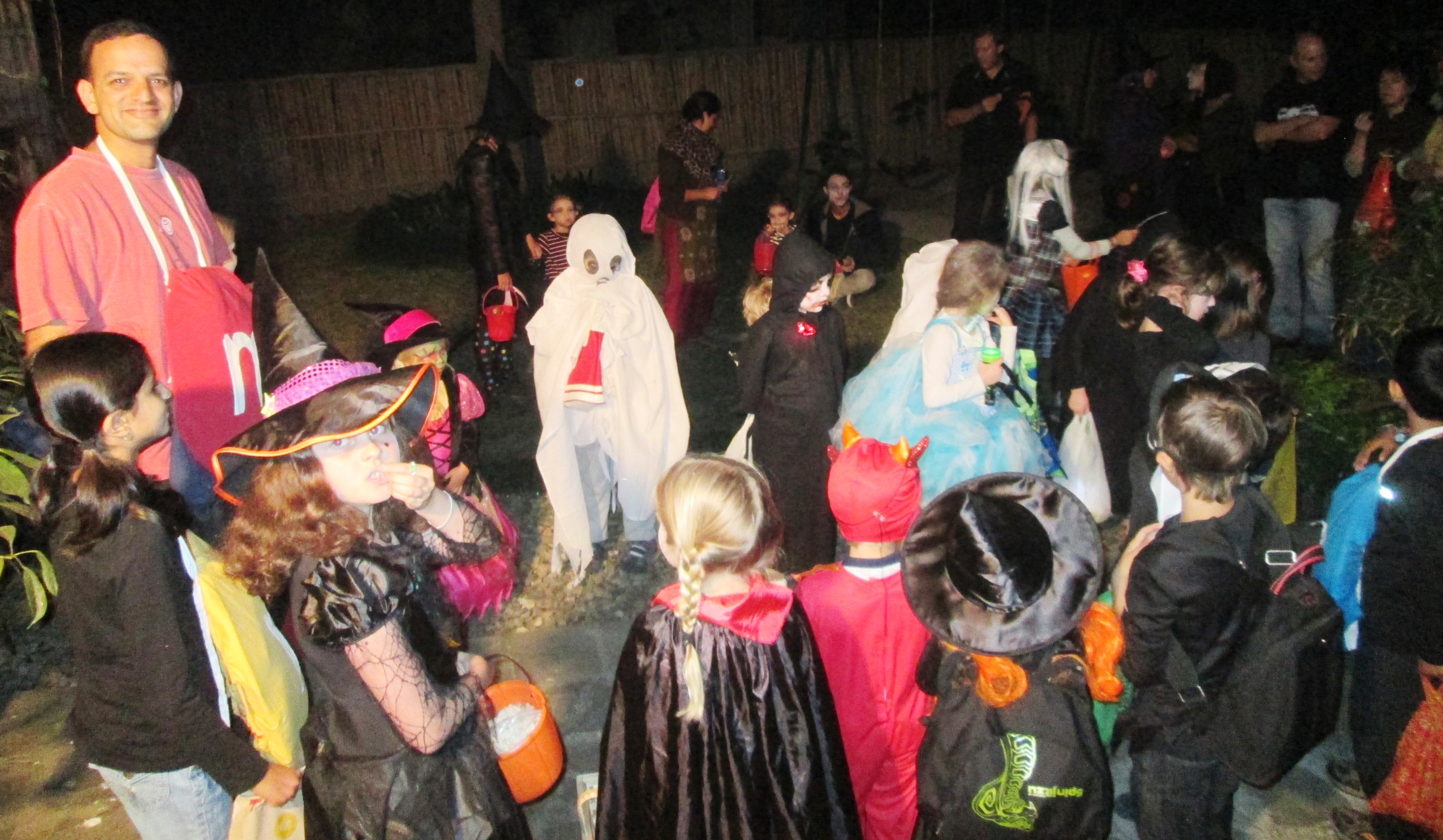
As is expected for Halloween, the fun began as the sun set… We participated in a walking, set-path, trick-or-treating event! About 15 families participated and we all had a ball. We met at House #1 and walked together to 7 other homes as a massive mob all decked out in our costumes! I think some locals thought we were crazy, some locals understood that we were celebrating a foreign holiday and some knew exactly what was going on and called out “Happy Halloween” to us!

Prakash leading the skeletons, goblins, ghosts and witches through the song, Have You Ever Seen a Pumpkin.  We learned this song years ago at the West Regional Library in Cary, North Carolina and remember it fondly each Halloween.

Prakash leading the kids through the song, Have You Ever Seen a Pumpkin. We learned it years ago at the West Regional Library in Cary, NC and remember it fondly each Halloween.

Since we were visiting only a few houses (as compared to the several dozen we would have visited in the USA), each family offered more than just a sweet treat for the kiddies. There were games, songs, and treats for the adults too: a neat game where apples are floating in a large bucket of water sitting on the ground and the child stands over the bucket with the back of a fork in their mouth, releasing the fork hoping to puncture an apple ; standard bobbing for apples game ; a really cool scavenger hunt over the front and back yard exploring for the sweet treats ; the “Have You Ever Seen a Pumpkin” song ; and French fries, pumpkin bread and wine for the adults. All in all, a great substitute celebration – complete with costumes, sweet treats and a trick or two! The only thing missing was bright orange PUMPKINS!

Charles joined us for the evening - he is an intern at ICIMOD and is in a "gap year" after finishing his undergrad at Harvard and before starting his PhD at MIT next fall.

Charles joined us for the evening – he is an intern at ICIMOD and is in a “gap year” after finishing his undergrad at Harvard and before starting his PhD at MIT next fall.

Trekking — Nepal’s Premier Recreation

Basic Stats * Duration: 5 days, 4 nights — September 28th to October 2nd * Route: Nayapul – Tikhedunga – Ghorepani (Poon Hill) – Tadapani – Ghandruk – Nayapul * Trekkers: 22 total — 5 moms, 5 dads, 1 college-bound student and 11 children age four to ten * Staff: 11 total — lead guide, assistant guide and 9 porters * Distance walked: 47 kilometers (29 miles) * Elevation gained: 2,200 meters (7,218 feet) * Highest elevation reached: 3,210 meters (10,531 feet) * Approx temperature range: 4 – 30 degrees Celsius (40 – 85 degrees Fahrenheit)

Our ENTIRE group!  Picture courtesy of Daeng  Kamkong

Our ENTIRE group! Picture courtesy of Daeng Kamkong

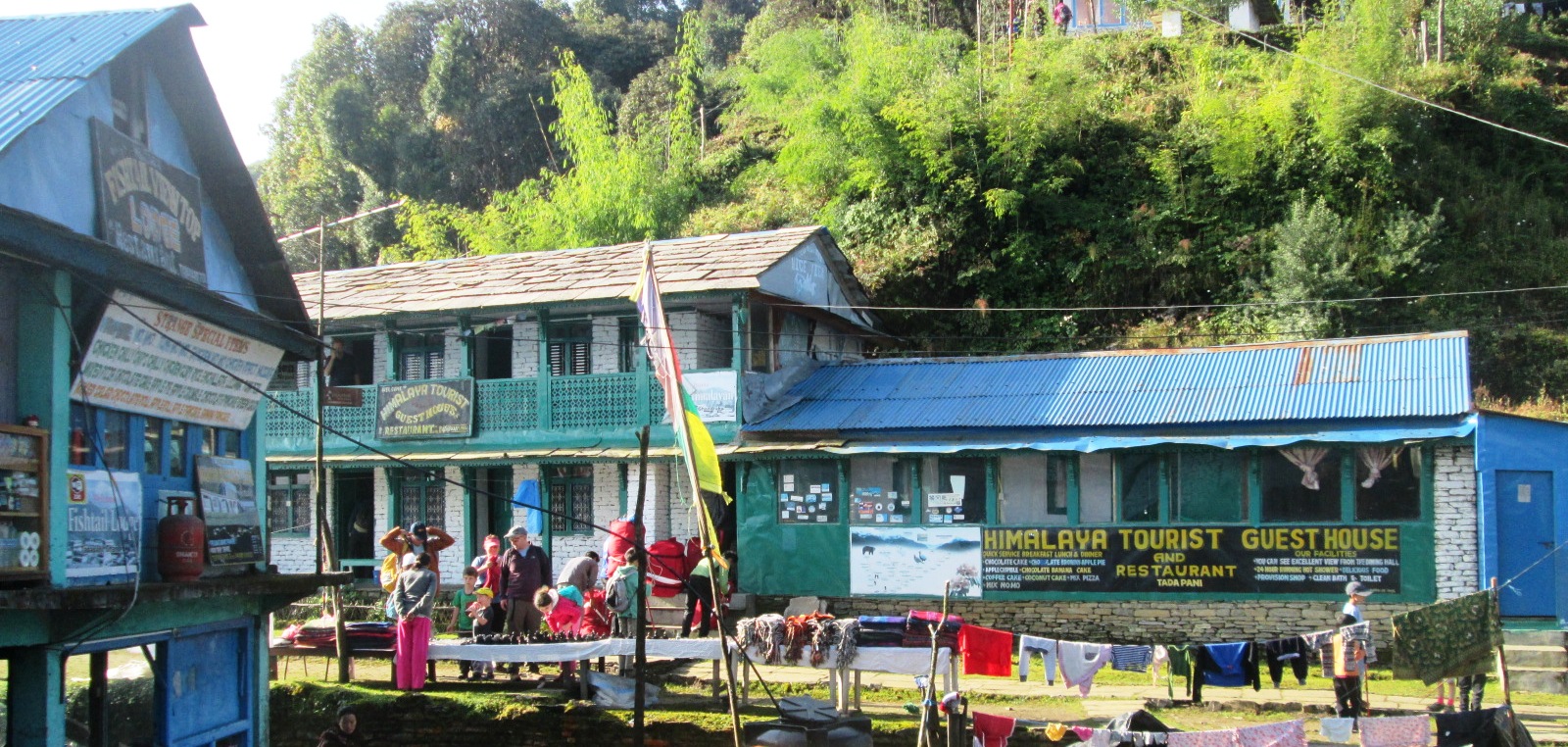
Modern day “tea houses”, strong, young porters, and well developed trails have enabled access along with comfort deep into the foothills of the majestic Himalayas. Where else in the world can you hike for miles and miles without carrying your belongings and view 8,000+ meter peaks while sleeping on a bed, eating pizza and momos and sipping your drink of choice? Only in Nepal… Our journey was smooth, comfortable, and relatively effortless. The hiking / trekking / walking was tough at times, but the trip itself wasn’t. Our guides, porters and lodge staff enabled this — and we were all so grateful…

Tea houses are usually made of brick and cement - they are relatively warm and have adequate facilities.

Tea houses are usually made of brick and cement – they are relatively warm and have adequate facilities.  Compared to a tent, it felt like 5 star living!!

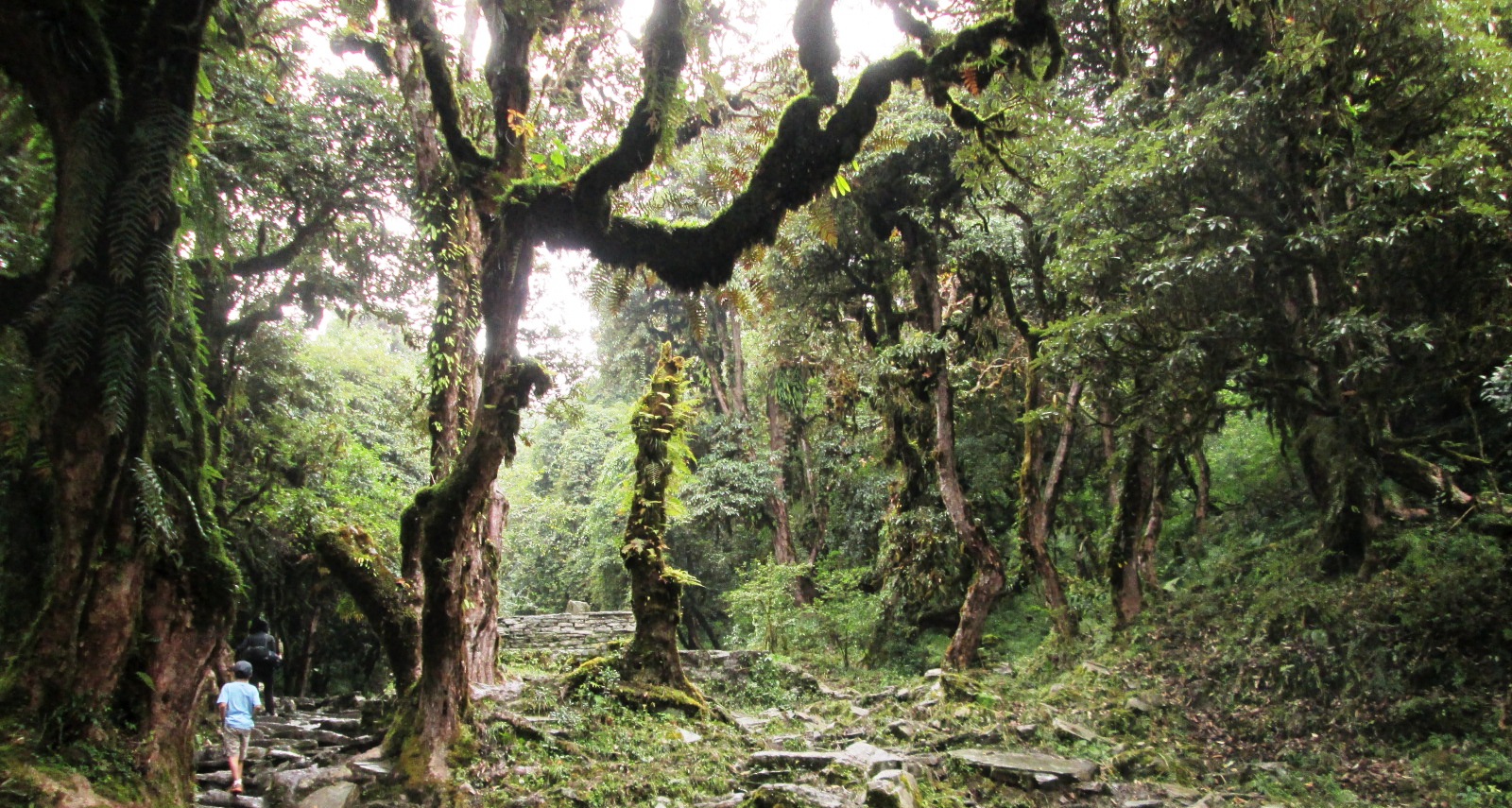
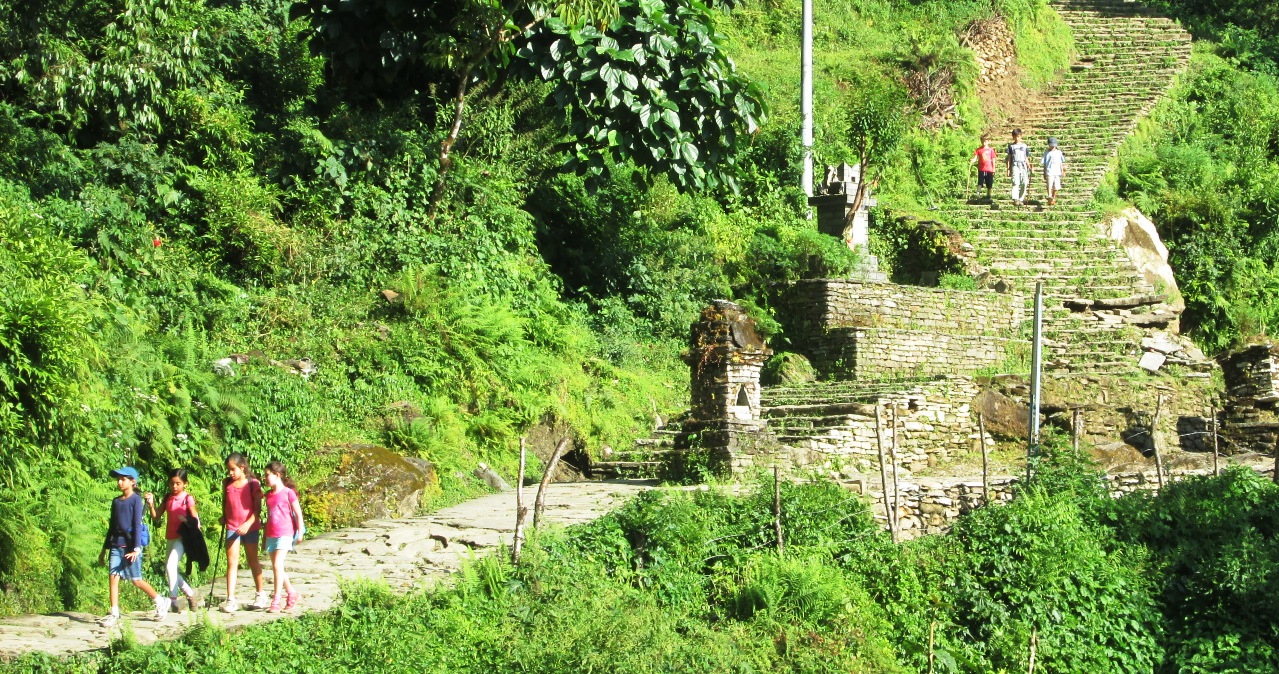
The Path Millions of stones have been painstakingly brought and laid to create miles of trails in the Himalayas. Our trail contained several thousand stone steps ascending and descending the hills and ravines. We also walked on narrow, uneven, dirt trails through beautiful Rhododendron rain forests (yes, rain forests!).

Beautiful bird songs, small colorful butterflies, delicate little flowers, and so much water!  Streams, waterfalls, creeks, puddles -- it was simply amazing...

Beautiful bird songs, colorful butterflies, delicate flowers, and so much water! Streams, waterfalls, creeks, puddles — it was simply amazing…

The trail for the first and last 7 kilometers of the loop was wide enough for jeeps. All trail in between, though, is only accessible by foot or mule. A friend warmly referred to the path as “the local highway” because so much activity happens on the trail – mules carrying supplies (occasionally carrying people), ladies selling fruits or drinks, local children gazing at the hoards of foreigners, and herds of goats walking descending towards the nearest town (preparation for animal sacrifice during Dashain, the biggest festival in Nepal). This “highway” connected several tiny villages — I was surprised how many small houses were scattered about the hillsides between the villages and imagined how difficult their livelihoods must be; a small trail from your house leads to the main trail which is a several hour walk to obtain any sort of supplies or services! Our group of 33 always left at the same time in the mornings but arrived at the lunch spot within a span of 1.5 hours – we had hugely varying walking speeds! Rarely did we encounter forks in the path, so often small groups of us, even the children, were walking without the guide or porters (or parents) nearby. There is a fair amount of trust and faith, for both the trekkers and the guides.

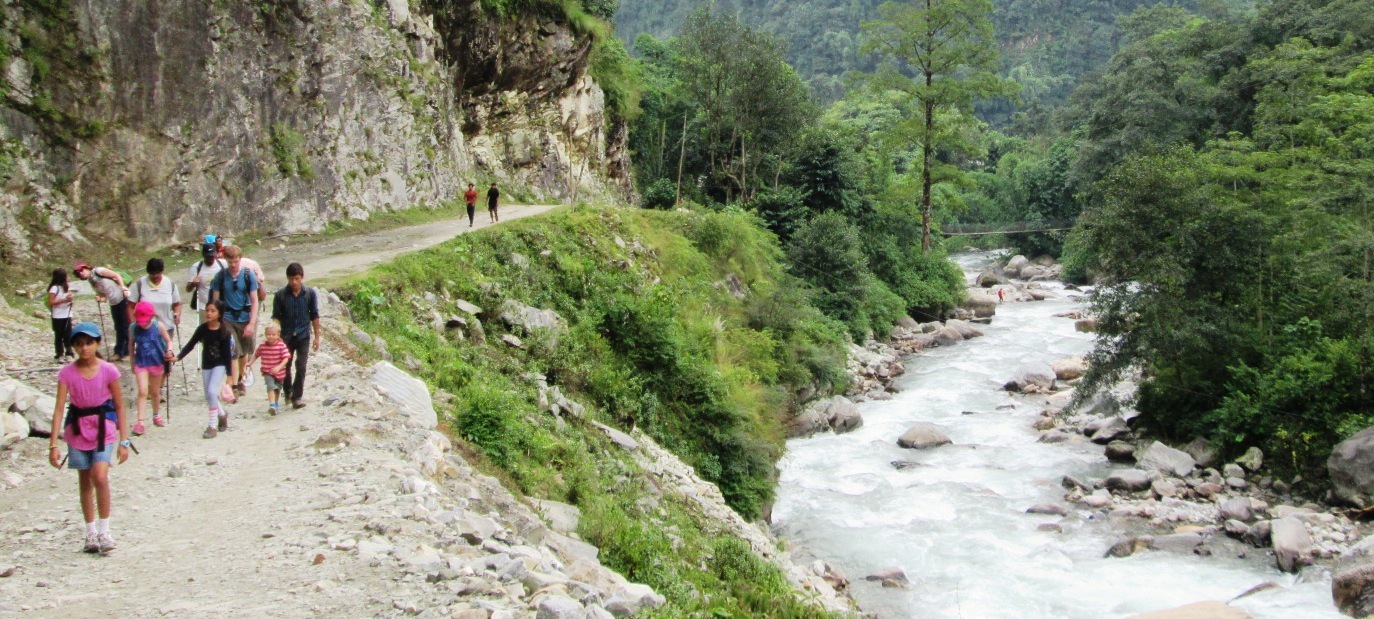
The kids walking along the path, without guide, porter or parent nearby... Trust and faith are viewed differently here -- its a whole different world (as compared to the USA)...

Our kids walking along the path, without guide, porter or parent nearby… Trust and faith are viewed differently here — its a whole different world as compared to the USA…

The People The vast majority of trekkers were foreigners, not native to Nepal. Most traveled with guides and/or porters in small groups (ours was by far the largest group!). Once in a while, we crossed paths with a lone backpacker – independent and carefree. Most all trekkers, guides and porters are friendly, offering a smile, a warm “Namaste” or even a few minutes of conversation – some who I remember include a man well into his 70s, traveling with a guide and a porter (usually the ratio is 2 trekkers per worker); a man from North Carolina; and 2 young porters from Gorkha, Nepal who I had a funny exchange with while they were stopped on the side of the trail… One was picking something out of the other’s hair and I asked, “Ke bhayo? Juka?” / “What happened? Leech?” And he responded… “Seto kapal!” / “White hair!” These young Nepalis were excavating a single white hair – ahhh I remember those days when there was just one or two!!. Unfortunately, we interacted very little with the families who live in the mountains. Usually they were quite busy preparing dinner or breakfast for our very large group. The few tidbits of dialogue we had reminded me of most other Nepalis we’ve had the pleasure of interacting with – simple, warmhearted, honest, content… priorities are on sustainability and family – really simple. The Scenery Breath taking, majestic, awe inspiring… just a few words to describe the beauty. How do I describe the scale, the air, the peacefulness? Massive, crystal clean and blissful — but experiencing it means so much more. When we’d gain elevation on the trail then glance behind to see the tips of the snowcapped mountains peeking through… WOW!

Notice the snowline, at about 5000 meters.  It looked so near, but was still ~2000 meters higher than we were!

Notice the snowline, at about 5000 meters. It looked so near, but was still ~2000 meters higher than we were!

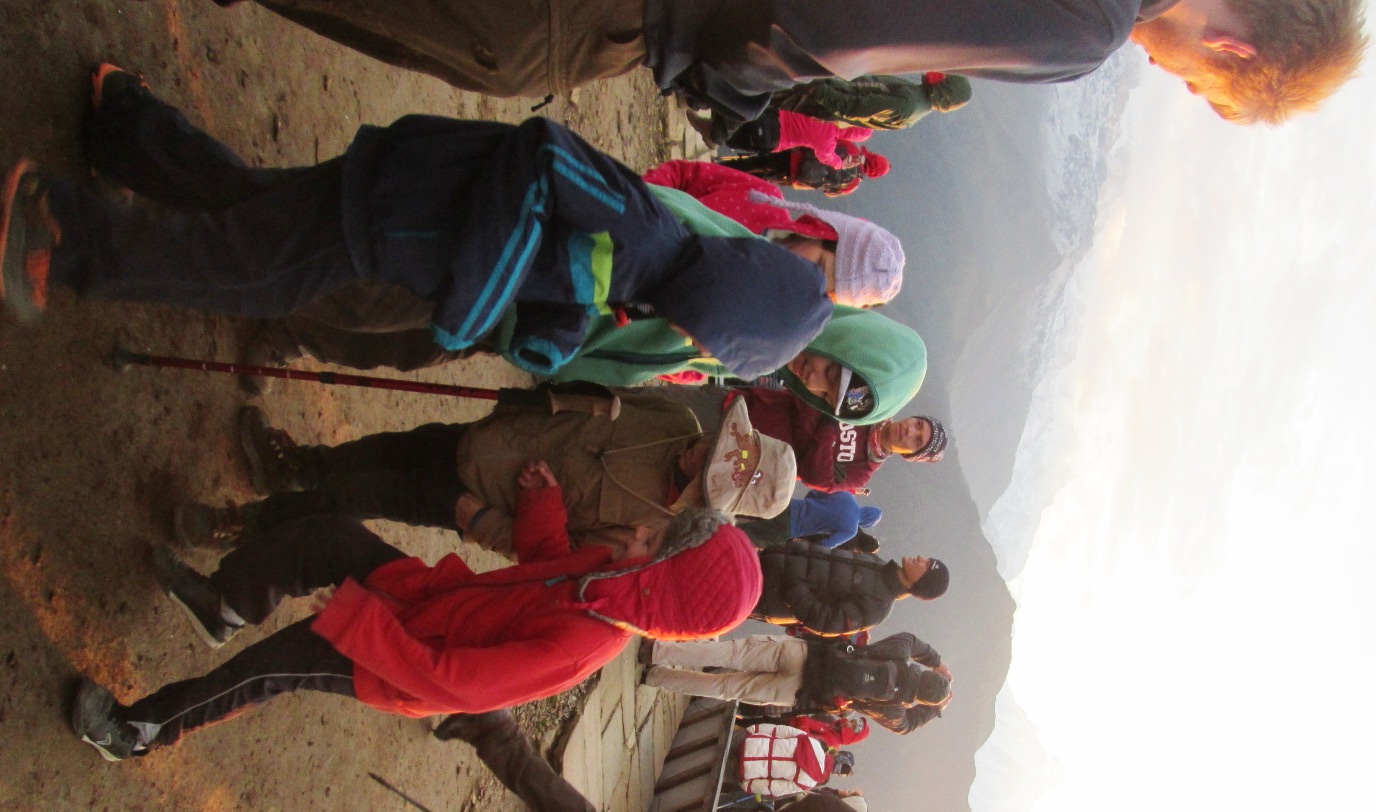
However, kids will be kids… When we summited Poon Hill, after gazing at the mountains for a few moments then taking several pictures, the 8 kids that made it up to the top were up the their normal antics! Running around, playing tag, finding cool rocks and sticks – they could have been on Poon Hill or at a regular neighborhood playground. It was all the same to them. At that moment, I was in awe of their simplicity and lack of discrimination…

They poked a walking stick into the ground and were playing all sorts of running games -- maybe the unintentional aim was to keep warm!

They poked a walking stick into the ground and were playing all sorts of running games — maybe the unintentional aim was to keep warm!

The Food A 5-10 page menu at each tea house – no kidding! Glance over the fact that the menus are relatively identical – noodles, fried rice, spring rolls, pizza, momos (Nepali steamed dumplings), daal bhaat (Nepali plain rice with lentil soup), french fries, eggs, porridge, pancakes, muesli, toast – a variety of hot, fresh and clean (safe to eat for Western bellies) food is a feather in the cap for Nepal’s tourism industry. Coca cola, tea, coffee, alcohol and clean drinking water are also plentiful. The taste of the food was rarely stellar, but I was very happy given that I wasn’t cooking, carrying ingredients / kitchen supplies on my back, or getting ill from consumption!

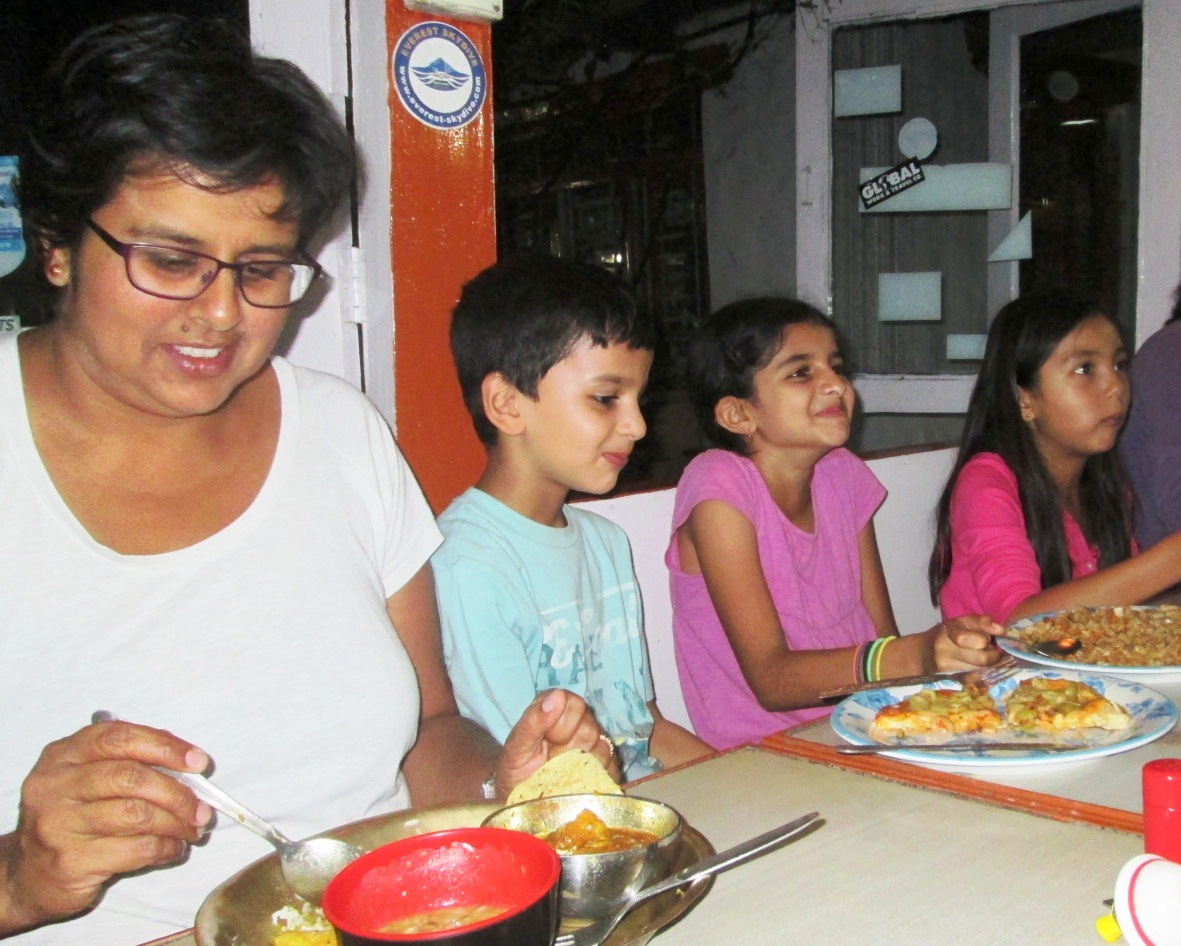
Arthi having daal bhaat, Sajjan having pizza, Janani having fried rice and Maya having chicken curry!  Miles and miles away from town -- it was unbelievable!

Arthi having daal bhaat, Sajjan having pizza, Janani having fried rice and Maya having chicken curry! Miles and miles away from town — it was unbelievable!

Meal times were sometimes chaotic – relatively small kitchens producing a variety of food for our 33 person group was at times challenging. Yet whether we were in the middle of the mountains or a large city, feeding that many people at the same time can be tricky. Often our guides and porters would double as waiters and cooks to help speed things along! The Challenges By Day #3, our bodies were really sore – feet, back and everything in between. Ibuprofen and all other muscle relaxers stashed in the groups’ bags were in full demand. Most adults in our group took a few days to a week to recovery to normalcy. The kids, however, are made of elastic and rubber and had no body aches whatsoever! They were un-phased and running on all cylinders before, during and after the trek. All else was smooth. We are so blessed. After Cyclone Hudhud hit Nepal last week (just two weeks after our trip), pounding the Annapurna Region with snow and heavy winds, killing over 30 trekkers and porters and injuring dozens, our gratefulness soared… Thoughts and prayers are with those and their loved ones. Next Time… As you read in Janani’s post, our next trek must be longer! And we hope to see other peaks like Langtang and perhaps Everest one day too…

TREKKING!!! by Sumanth, Sajjan and Janani

Chapter 1: Car to Pokhara
I saw lots of new things on the way. The only thing that was the same from Telluride was the Manakamana Cable Cars. I saw lots of bamboo swings on the way back. They were big. I also saw mini bamboo swings.

Enormous bamboo swings -- my Mom's turn!

Enormous bamboo swings — my Mom’s turn!

Chapter 2: Map
Our first lodge was Tikhedhungga. Our next lodge was Ghorepani. Our next lodge was Tadapani. And our next lodge was Ghandruk.

Chapter 3: Things I Saw on the Trek
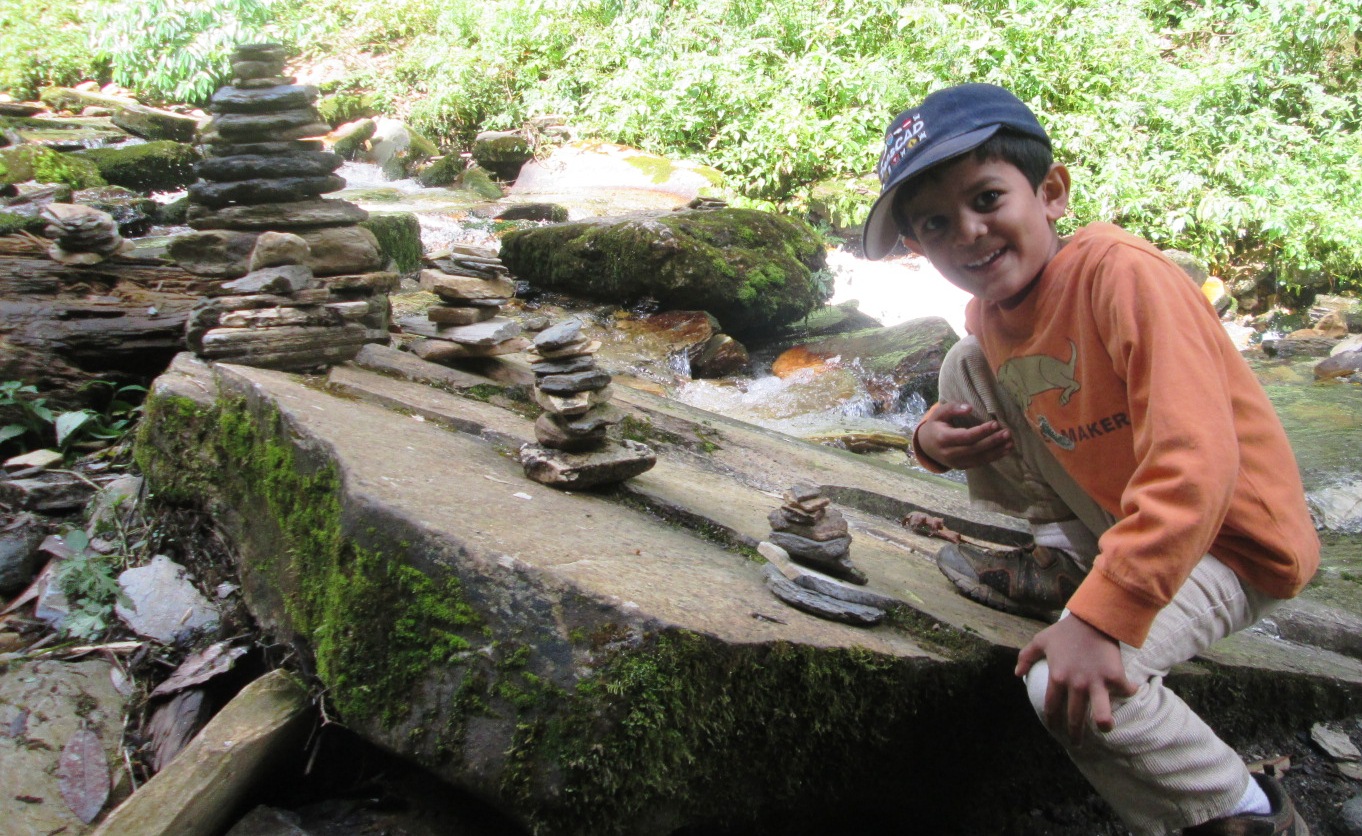
In my binoculars, I saw the first wobbly bridge that we went on. It was made out of metal and string. I saw lots of cairns – they are stacks of rocks and the rocks are really really flat. And when I saw cairns, I saw a big one and then I said to my mom, “can I make a cairn?” And then mine was really small, but then when my dad and sister and brother and my friend Dan came then we all made lots of cairns. On the last day of the trek I saw a horn of a buffalo. It was on the path. Lots of horses too. One time the horse whacked its tail into my eye.

Sumanth next to the cairn he built

Sumanth next to the cairn he built

Chapter 5: Games that we played
First we were playing this game that we should not get seen by anybody. Even the people in our trek. Then we played another game which we were all shooting everybody, but not the Nepalis. In the last lodge which was called Annapurna Lodge, we played this game that someone was the Zombie and if the Zombie or the guy who had the stick touched you then you had to be another Zombie. Then we played a game which was wrestling.

The End

by Sumanth
************************************************
Day 1
On the first day we had to walk along the river for the whole day. There were lots of switchbacks so there was lots of shortcuts. The trails were very bumpy. There was one river and there were lots of waterfalls coming into that one big river. We had a nice lunch then kept walking and fell asleep in the lodge in Tikhedhungga.

Trail following the river

Trail following the river

Day 2
We woke up after a quiet sleep. Our destination on that day was Ghorepani. The second day we had to walk half jungle and half not. Later on we saw some monkeys in the wild that looked like they had a long stripy tail of black and white and they were hanging on trees and jumping from tree to tree. There were even some little little ones. The monkeys’ faces looked extremely round. He had a very long tail. There were trees in the middle of the path so you could go around the trees in two different directions. Then we kept walking and slept at the lodge called Hungry Eye in Ghorepani. It had a fire so it was a warm lodge.

Day 3
On Day 3 we woke up at 4am. Then we put on lots of layers on us because it was very cold. It was dark so we used head lamps. I was one of the first people so when I looked back I saw a stream of head lamps. It was beautiful. On Poon Hill, we took lots of photos. On Poon Hill there was a flat cloud on top of a mountain so that made the mountain look like it had a flat top. The sunrise at Poon Hill looked like the same sunrise as Lion King with purple clouds.

Sunrise at Poon Hill...

Sunrise at Poon Hill…

The mountain children and how they survive up there is very interesting. Because there is basically nothing up there like toys, paper, clothes, swings, electricity, education, cars, bicycles, buses, trucks – they just have to get around by foot, everywhere. We don’t use the nature much as much as they do.

Day 4
On Day 4, we walked from Tadapani to Ghandruk. It was so short. The snow capped mountains looked very steep. We kept seeing the same set of snow capped mountains from different places and different elevations. The porters were very entertaining to the little kids. We ate lunch at the lodge. We did not do much walking so we had lots of time and lots of fun in Ghandruk. We played a game called Mille Bornes, a French auto car racing card game. We also played a wrestling game with the other boys in the grass.

Dan and Sajjan playing the Mille Bourne card game

Dan and Sajjan playing the Mille Bornes card game

Day 5
On Day 5, we walked from Ghandruk to Kilyu. We took a jeep from Kilyu to Birethanti. We ate lunch there and then walked to Nayapul and took a bus back to Pokhara. We walked 41 kilometers in total. Our highest elevation was on Poon Hill at 3210 meters from sea level.

by Sajjan
*********************************
My First Trek

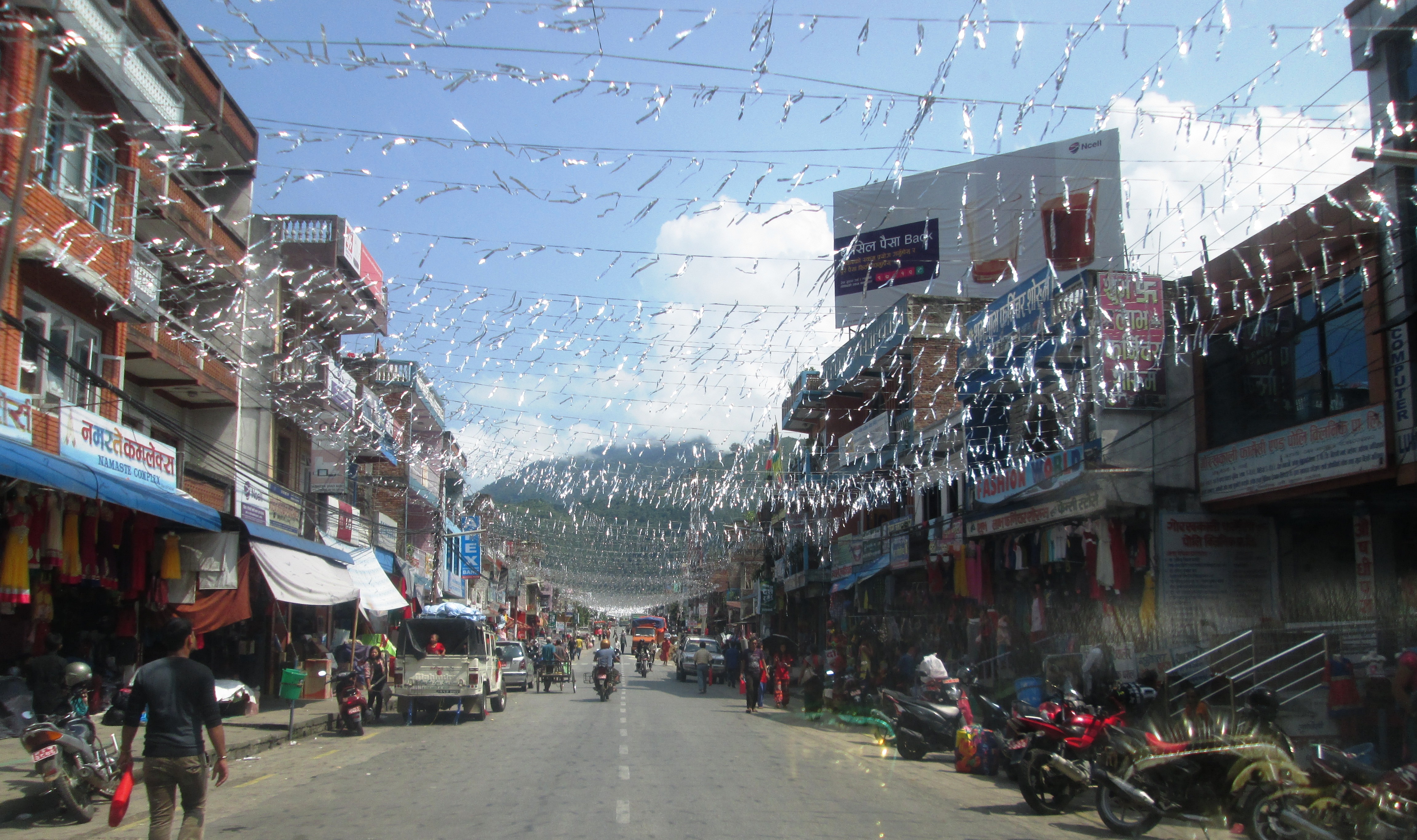
In my family there are three kids — me, Sajjan and Sumanth. All three of us wanted a video game called Wii. Our parents had explained to us that we had to walk 1,000 kilometers to earn the Wii. We decided to go on a trek. It was my first trek! I was very excited to walk a lot of kilometers and so were my brothers. At last, the first day of the trek arrived. We were on our way to Pokhara. In the car, I saw so many beautiful and interesting things. I saw a lot of brick factories, flowers, trees, forests, and even a few snow-capped mountains! We also saw some roads that were decorated for Dashain. It was like silver streamers hanging from long strings which were tied to poles next to the road. It was really beautiful.

Sparkling Dashain decorations

Sparkling Dashain decorations

After looking out the window, we watched a movie. The car that we were riding in was the first car that I saw in Nepal that was able to play movies! We all crowded around the screen as we watched The Lion King. I loved it. Then we stopped to take a walk on a bridge, over a massive river. We had to take stairs down to the bridge which I found very slippery. The bridge was huge! We only walked halfway across it before we came back.

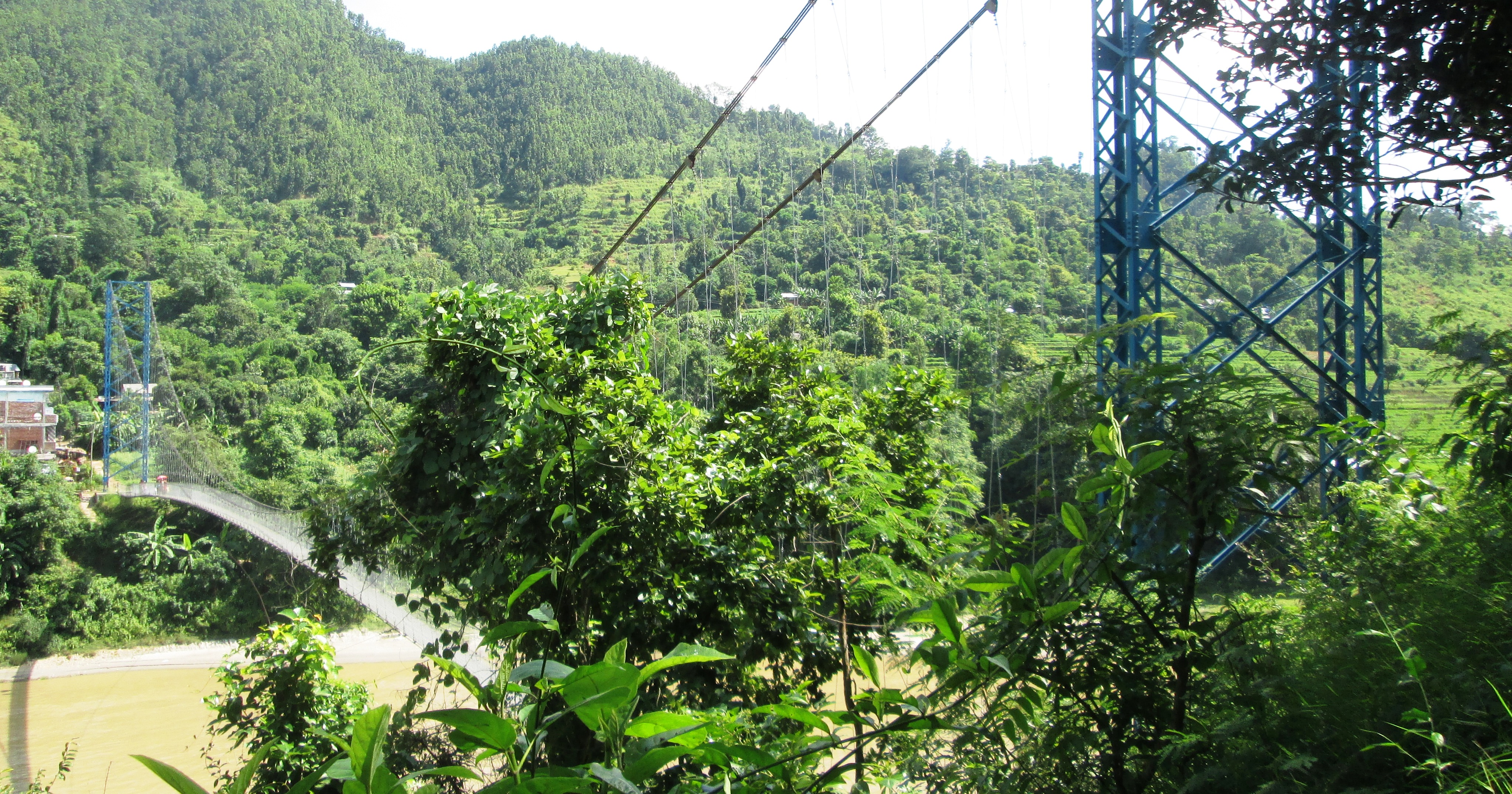
One of many pedestrian bridges across the river along the drive to Pokhara

One pedestrian bridges across the river along the drive to Pokhara

Then we got back into the car and drove to Gorkha, an old town. We ate lunch there at a restaurant called Rest and Test. We all ordered noodles which were very spicy. A man brought us tomato sauce and chili sauce. I wondered why he brought chili sauce when it was already so spicy. After that, our father told us a story about how the king of Gorkha united Nepal. It was very interesting. Finally, we reached Pokhara. We settled down in our hotel called Splendid View. Then we walked to a Punjabi restaurant for dinner. On the walk, I noticed a lot of differences between Kathmandu and Pokhara that I wasn’t expecting. The roads in Kathmandu are a lot busier than the roads in Pokhara. In Pokhara, there are a lot more tourists than in Kathmandu so there are more hotels, taxis, travel agencies, tourist buses, and many more things for tourists than in Kathmandu.

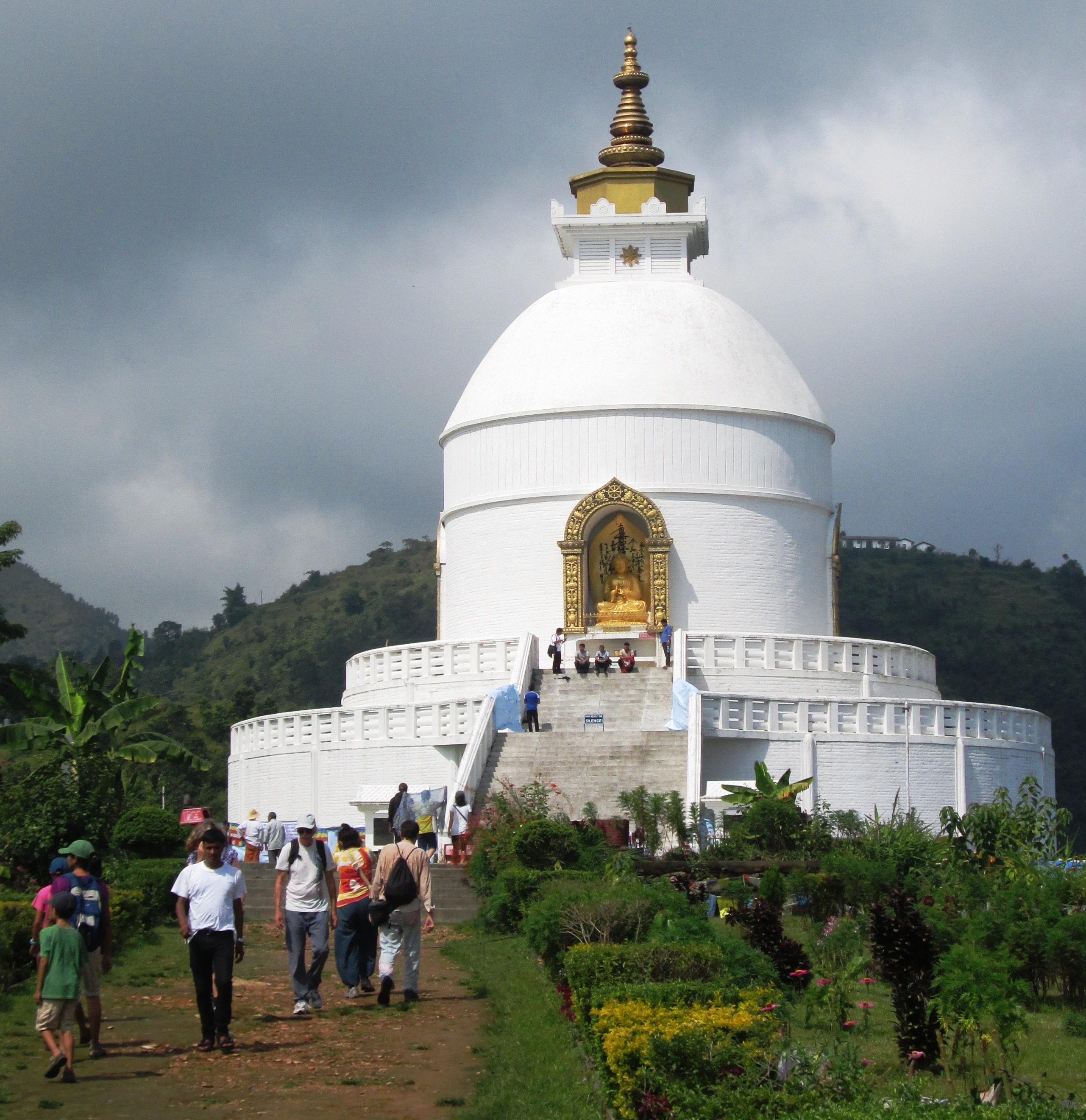
The next day, we took a boat ride to the bottom of the hill that the World Peace Pagoda is on. It was very beautiful. There was also an amazing view of Pokhara. It looked a lot like Kathmandu does from Swayumbhu (a temple in Kathmandu on a hill) except for a big lake in the middle of the town.

World Peace Pagoda in Pokhara, built by the Japanese

World Peace Pagoda in Pokhara, built by the Japanese

Then we ate lunch at a restaurant called Sweet Memories. We also went to Devi’s Fall which is an enormous roaring waterfall. There was a lot of mist which felt very refreshing. Then, we went to our friends’ hotel called Hotel Temple Tree. Our friends’ names are Maanav and Zoya. Maanav is 7 and Zoya is 2. We went swimming with them.

The next day was the start of our trek! We quickly ate breakfast and went to Hotel Barahi to meet our friends. There were four girls and seven boys – eleven children total. The girls were Charlotte, Maya, Riya and I and the boys were Sajjan, Sumi, William, Olli, Dan, Jack and Nicky. We all got into a bus and drove to Nayapul. On the way I saw a lot of goats walking down the road. What would happen is about 100 goats would come with 1 goat herd at the back. The goats would split in the middle and about half of them would go on one side of the bus while the other half would go on the other side. It was very cool but I wondered why the bus never stopped when the goats were passing. I found it extremely interesting because I never saw that many goats before.

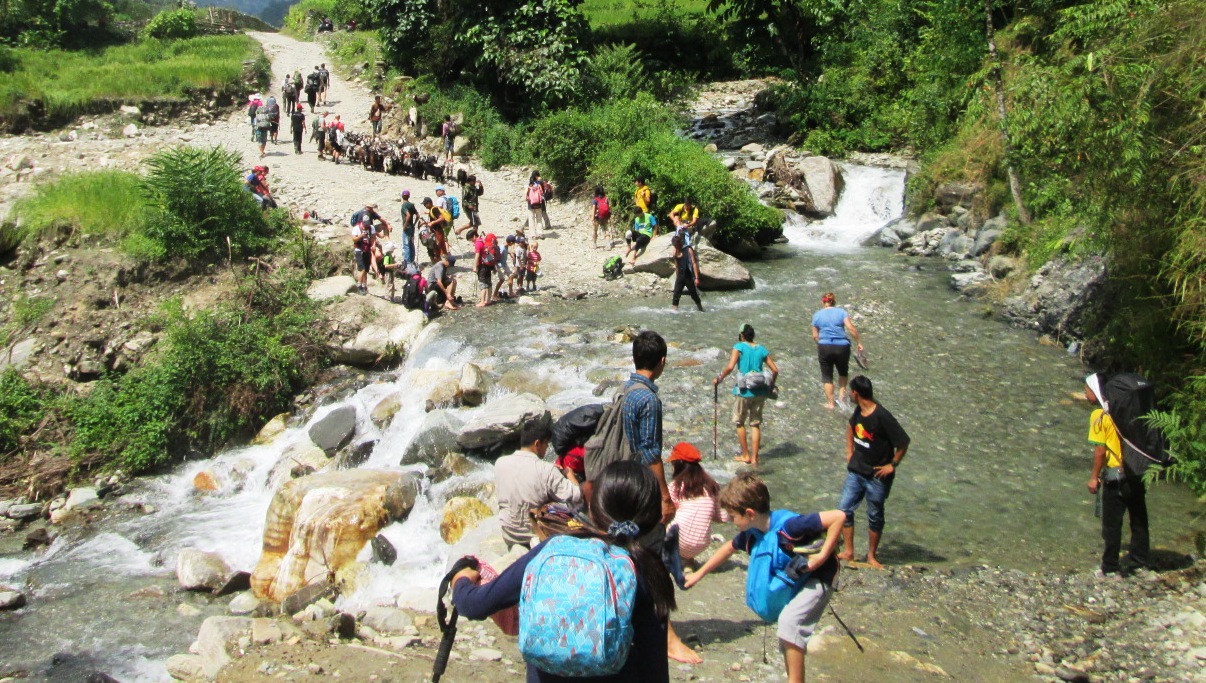
At last we reached Nayapul. We trekked mostly next to the river. There were a lot of bridges that we had to cross to get over the river. They were very wobbly so what I did is go on the bridge and move around a lot and then the bridge would swing a little bit. It was very hot but there were a lot of waterfalls so we could wash our face in them. The water was so clean compared to the water in the rivers in Kathmandu. You could actually see through them! One time, we passed such a big waterfall which was flowing across the trail so we had to take our shoes off to go through it. It was so fun but suddenly a bunch of goats came to cross the river so we had to rush to the other side of the waterfall and move to the side because we heard that if you get in a goat’s way, he will push you. The expressions on the goats faces were so confused. Some of them were about to jump into the next waterfall. It was so funny!

Crossing the trail in 8 inch deep water - see the goats on the other side?

Crossing the trail in 8 inch deep water – see the goats on the other side?

We continued going until we reached the lunch spot. I had fried rice and so did my brothers. I really liked it. The meals are so different from the USA because whenever we hiked there, we always picniced for lunch but in Nepal there are teahouses in the middle of the trails so we stop there for lunch. Saddly, when we continued to Tikhedhungga, Riya felt sick so she had to ride on a horse. I wish she wasn’t sick because Charlotte, Maya and I weren’t able to keep up with the horse. At the lodge, the girls and I played a lot of hand games. We played Concentration which is a hand game where you keep saying words that have to do with one topic and you cannot hesitate or repeat words. We also played a hand game that we made up and we kept making up different versions and were silly about it.

The next day was the hardest day. We had to gain 2,756 feet of elevation. Riya, the lead guide and I were the first to reach the lunch spot. A few minutes later, Ollie came with his porter and then some other porters came. And then a long time later, everyone else came. I was really proud of myself because I got to the lunch spot first and I had never reached first before. In the beginning, it was hot so I wet myself a lot in the waterfalls. But when we started gaining more elevation, I started feeling cold and sick. After lunch it started raining. That made me feel even worse. FINALLY we reached Ghorepani. The porters were the people who carried our things such as clothes, sleeping bags, medicines, small toys and some other things that we didn’t carry. They were men who carried big bags of our stuff on their heads with a little string. It was so amazing how they climbed all of the steep steps and went across all the waterfalls with those heavy bags on their heads.

Our porters were in their late teens or early 20s

Our porters were in their late teens or early 20s

The next morning we woke up really early to climb Poon Hill and see the sunrise. I was SO tired. Riya and Maya both didn’t come, so it was just me and Charlotte. At the top, the sunrise was beautiful and we were surrounded by snow capped mountains but I don’t think that it was worth climbing Poon Hill because it was dark when we started climbing and I was tired. We came back to Ghorepani and had breakfast. Then we went to Tadapani and on the hike we climbed up and down steep hills. I was VERY tired. I bought a box of Pringles and ate it as I waited for my friends who were behind me. When they reached, we made up a silly song called “My Butt’s Rubbin’ on the Wall”. We sang it until dinner time and then a few more times before bed time.
The next day was the easiest day. I hiked at the back of the line with Charlotte, Maya, Riya and William. We all pretended to be different people and change our names. Charlotte was Georgina. William was George. Maya was Clara. Riya was Ashley. And I was Molly. We started talking about things that were made up. I found it very funny. When we reached Ghandruk we had lunch. Then us girls went into the “girls room” to write songs. We wrote a lullaby and a Jungle Song. We preformed the Jungle Song with singing, dancing, acting, mouth noises, costumes and props. Then after dinner we sang the lullaby around our only camp fire on the trek. It was really fun.

Charlotte, Maya and Janani performing the Jungle Song

Charlotte, Maya and Janani performing the Jungle Song

The next day we were going to Nayapul. It was a long way but it was all downhill. On the way, we saw a bamboo swing. In Nepal, when it is Dashain, Nepalis build bamboo swings. The one that we saw was gynormous! It looked like it was as tall as someone’s house! It was really cool. We walked a little more and stopped to catch a jeep because we were too tired to finish the walk. The jeep ride was very bumpy because I was sitting with the three other girls. When we reached the restaurant we wrote a song while eating. We planned to perform it in Kathmandu. After lunch we walked to the bus which went to Pokhara and the next day we drove home.

I’m really glad that my friends came because when they were with me I felt like I walked faster because I was having fun. One other thing I really liked about the trek was the horse bells. When I saw horses passing by, they had bells on their necks and even though some of them were with the same shepherd, all of their bells were different. It sounded really nice when one would come after another and as they would pass by me, their bells would all make different sounds and it sounded like a song.

PS – Next time I want to go on a longer trek!

by Janani

Preparation for our FIRST trek in the Himalayan Mountains

Trekking the majestic Himalayan Mountains was one of the sweetest fringe benefits to our new location in the Kathmandu Valley — so thankful that Prakash works at ICIMOD and we live in this amazing little corner of the planet! In Nepal, there are two distinct trekking seasons — October-November and April-May — avoiding the frigid winters and wet monsoons. Needless to say, I am thrilled that our first trekking season is soon approaching…

It took us a while to make the main decisions: which range to visit (Annapurna Range out of Pokhara or the Langtang Valley out of Syabrubesi; we are not ready for the extreme elevations in the Everest Region), how long of a trek to execute (4 – 9 days), and whom to trek with (friends and relatives from India, just the five of us, or with local friends). The final plan is the Poon Hill trek in the Annapurna Range for 5 days with six other British School families!

Our family has hiked for about two years (of course, Prakash and I have enjoyed hiking for decades). It kicked off while preparing our 7, 5 and 3 year old children for a summer trip to Telluride, Colorado. We’ve been hiking as a family ever since. But we’ve never trekked, or backpacked, or done any sort of grueling exercise for several days in a row. So with 6 weeks until our trek, we started preparing! Our aim was to walk 8-12 kilometers at a stretch each weekend. Since even the tail-end of the monsoon season brings hoards of leeches to the hillsides, we opted for urban walks instead. It doesn’t offer the exact feel of trekking, but gives our legs the experience of being stood on for hours at a time. Let’s kill two birds with one stone, we thought, and walk to some of the local tourist sites we haven’t yet visited…

Pashupati Nath Temple (Aug 10): Our first walk – Prakash and I were excited! From the kids, there was a mixture of confusion (why exactly are we doing this?), reluctance (do we have to do this?), mild enthusiasm (we’ll be in the mountains soon!), and crankiness (I feel like crying and complaining and there is nothing you can do to change my mind!). Prakash studied Google Maps in detail the night before and had our route precisely chalked out – maximizing distance on smaller lanes and alleys and minimizing distance on larger, noisier, more polluted roadways. We were off, with 2 fanny packs (bum bags), 3 water bottles, a few snacks, and over a dozen pieces of candy (our version of Scooby Snacks – after every 45 minutes, a sweet reward awaits each child). One of the neat aspects of “urban walks” is getting unique glimpses of Nepali culture.

Here a young Nepali boy is offering blessings and a thread to those who approach him - perhaps he is in training to become a priest.

Here, a young Nepali boy is offering blessings and a thread to those who approach him – perhaps he is in training to become a priest.

This is the main gateway into the Pashupati Nath Temple.

This is the main gateway into the Pashupati Nath Temple.

Three long hours later, we finished 8.5 kilometers and reached Pashupati Nath temple, along with a thousand or so other folks – it was SO crowded! This is one of the most famous Shiva temples in the world. After checking out the major spots, we caught a taxi to the kids favorite pizza restaurant, Roadhouse Cafe. Famished, we guzzled down all they served then slowly completed the remaining 3 kilometers back home. Overall, a successful walk!

Swayambhunath Temple (Aug 17): Often, knowing what to expect is half the challenge… The kids did remarkably better on the second hike: less uncertainty and more willingness. Also, by this point, Prakash strategically offered a challenge to the kids — after walking a total of 1000 kilometers (approximately 333 kms for each child), they’ll earn a Wii (we are REALLY stingy when it comes to electronics in the house) — large payoff led to enthusiastic little legs!

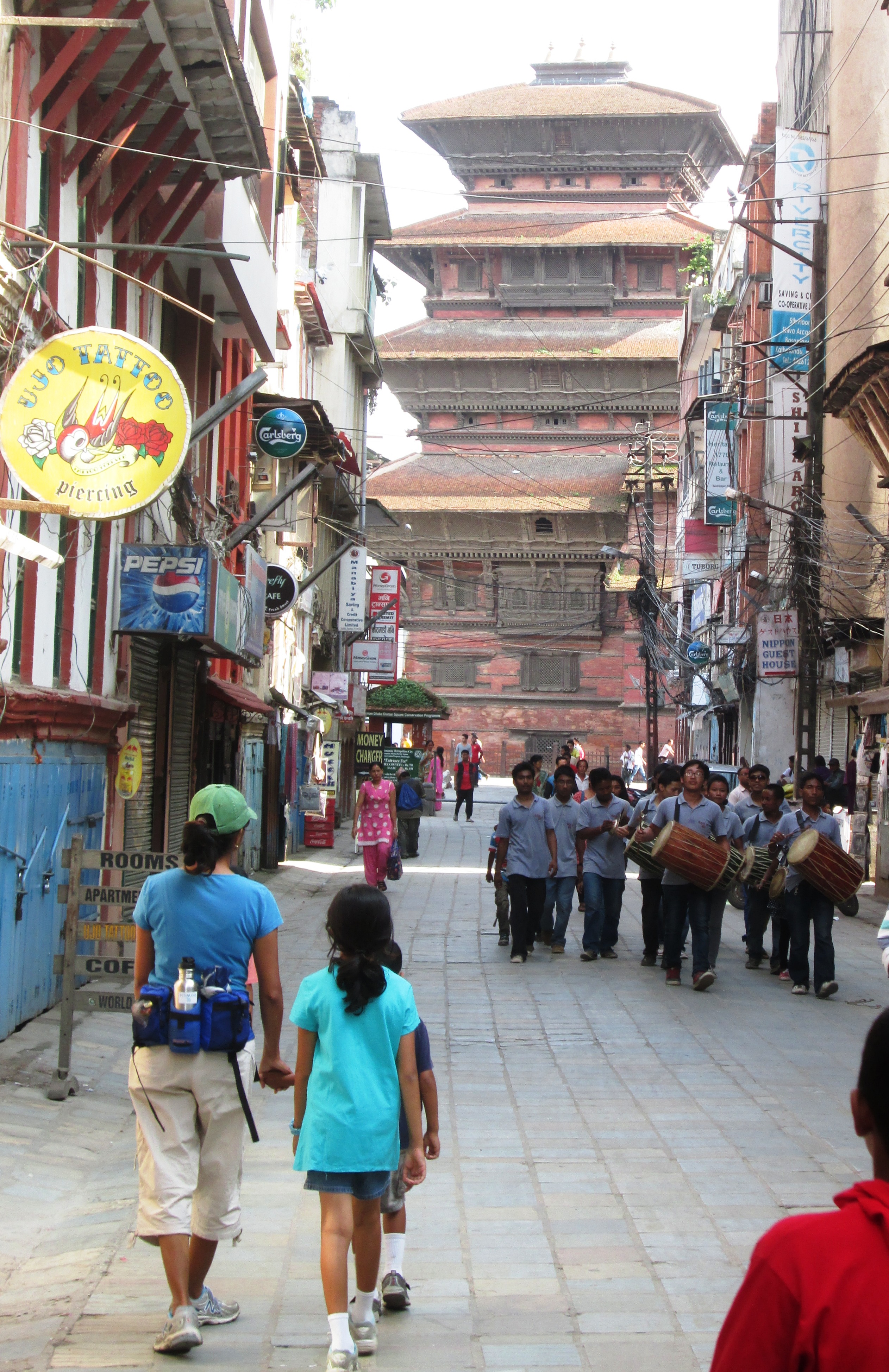
Approaching the Kathmandu Darbar Square, we saw a marching band comprised of percussion instruments played by high school age children.

Approaching the Kathmandu Darbar Square, we saw a marching band comprised of percussion instruments played by high school age children.

An uncommon sight -- a poster at the Kathmandu Darbar Square encouraging people to not litter.

An uncommon sight — a poster at the Kathmandu Darbar Square encouraging people to not litter.

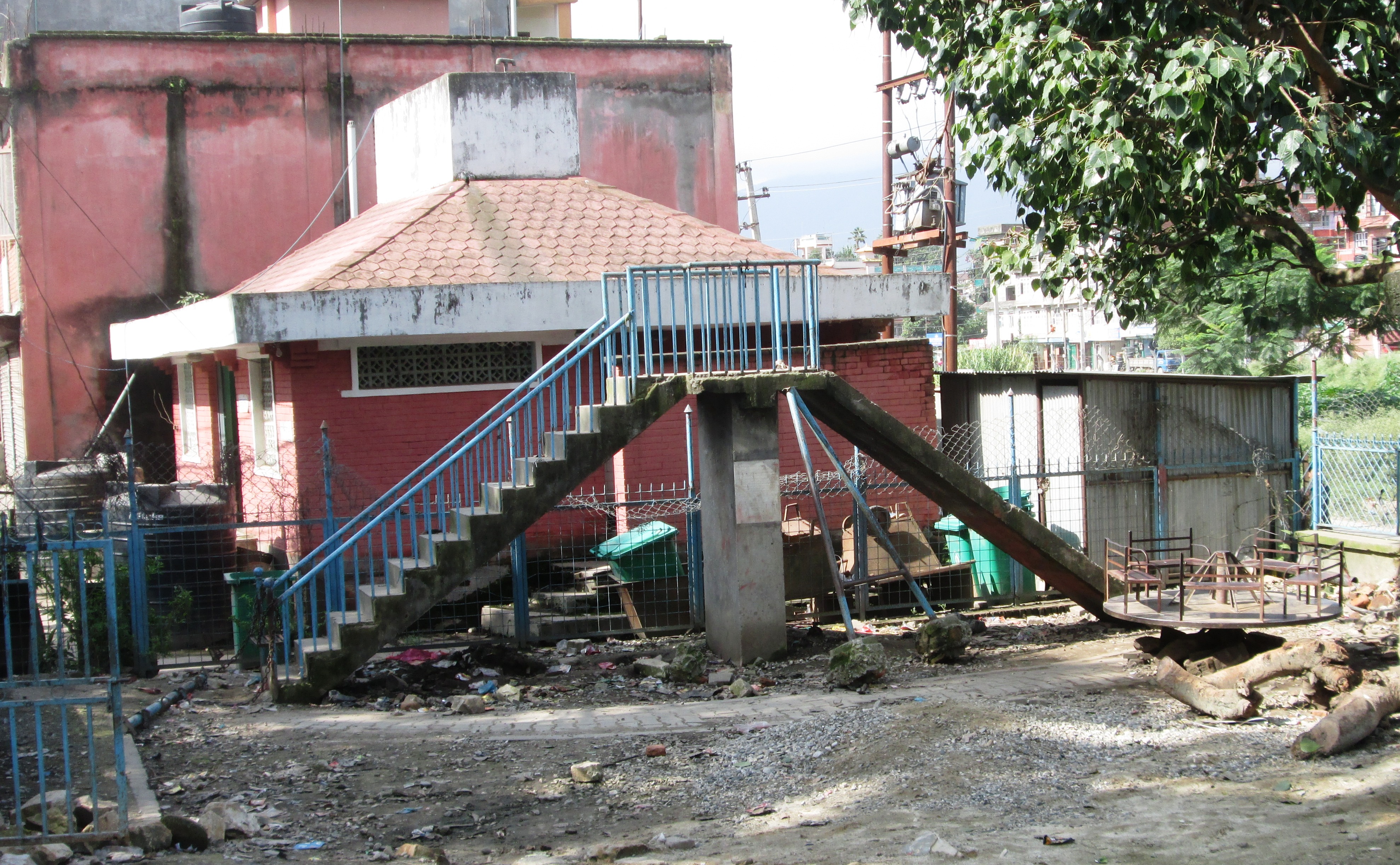
Few bits and pieces remain at this children's playground -- in the west we are blessed with amazing facilities for little people...

Few bits and pieces remain at this children’s playground — in the west we are blessed with amazing facilities for little people…

Prakash and the kids in front of 3 golden Buddha statues.

Prakash and the kids in front of 3 golden Buddha statues.

After climbing the 365 stairs to the top of the temple, interacting with the dozens of monkeys and walking the parikrama (circle) around the hill, we completed shy of 7 kilometers. All were eager for the taxi ride to a local sandwich shop, Cafe Soma, for lunch. After the walk home from the restaurant, we completed 9.5 kilometers – with almost no crying, whining or complaining!

Boudhanath Temple (Aug 24): This is the location of the largest stupa in Asia! A stupa is a large white dome and is a common element at Buddhist temples. Numerous interesting sights and experiences awaited us along this 9 kilometer walk.

We crossed the river along an old, narrow, wooden pedestrian bridge.  Low and behold, after we walked over, a motorcycle daringly went across the 2-foot-wide, rickety passage!

We crossed the river along an old, narrow, wooden pedestrian bridge. After we walked over, a motorcycle daringly went across!

Resting in the shade and gazing at the tip at our final destination about 1-2 km away.

Resting in the shade and gazing at the tip at our final destination about 1-2 km away.

Here, we are standing at the first elevated level of the stupa.

Here, we are standing at the first elevated level of the stupa.

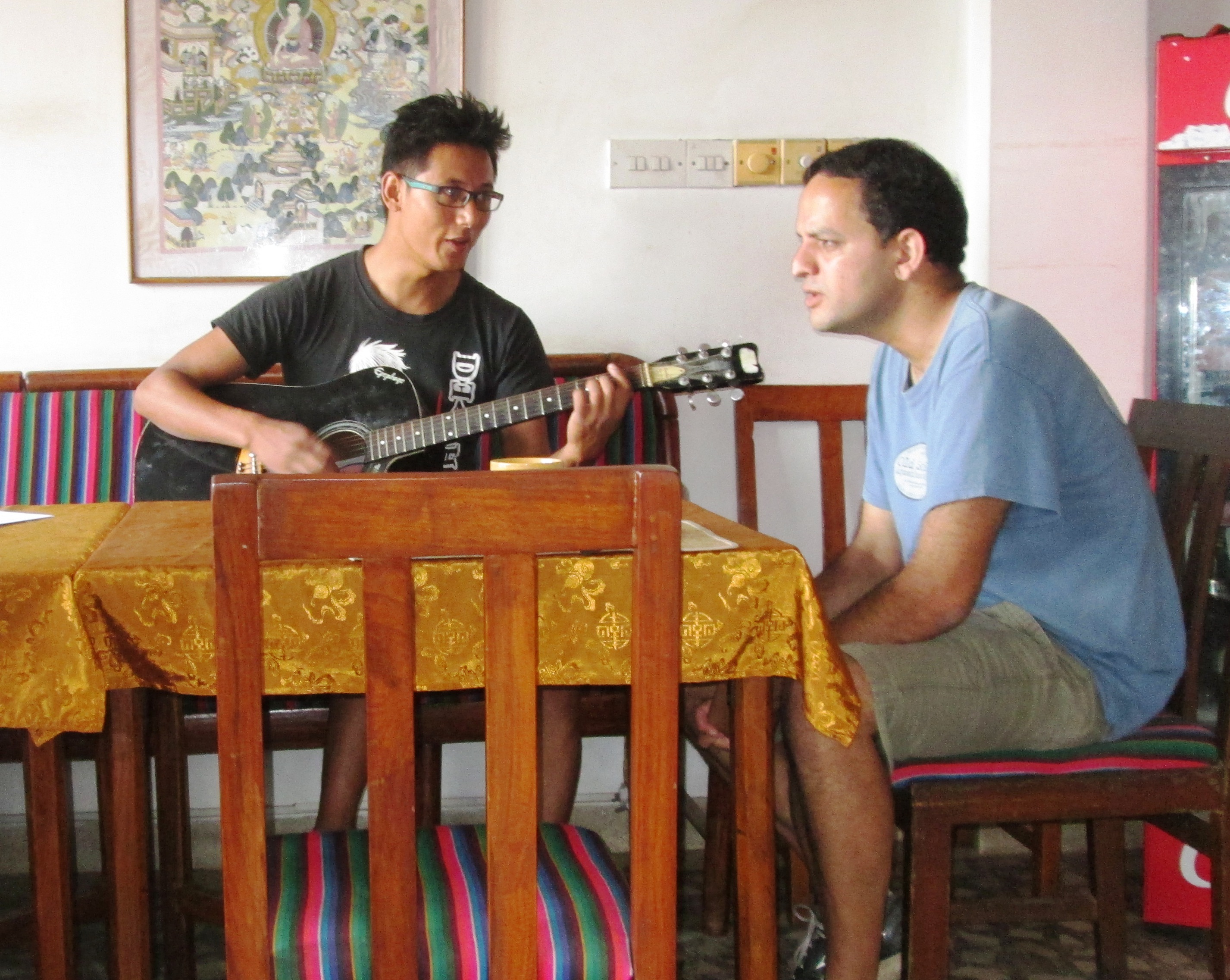
At the restaurant, Prakash approached a local strumming on his guitar.  They jammed together singing U2, James Blunt and Adele!

At the restaurant, Prakash approached a local strumming on his guitar. They jammed together singing U2, James Blunt and Adele!

Since we ate at one of the numerous adjacent restaurants, we taxied straight home. All in all, a great walk!

Seto Ghumba (Aug 30): Tika Dai was impressed with our weekly rendezvous and was suggesting other destinations that are off the beaten path. Seto Ghumba (White Monastery) is one of the most famous Buddhist Monasteries in Kathmandu. It is only open to the public one of the seven days each week (I checked online and learned that Saturday was the day for visitors). He was excited that we took his advice to visit Seto Ghumba and asked if he could join us – what a treat for us! Not only did he teach us various tidbits about Nepali culture along the way, he also carried Sumanth anytime he felt tired.

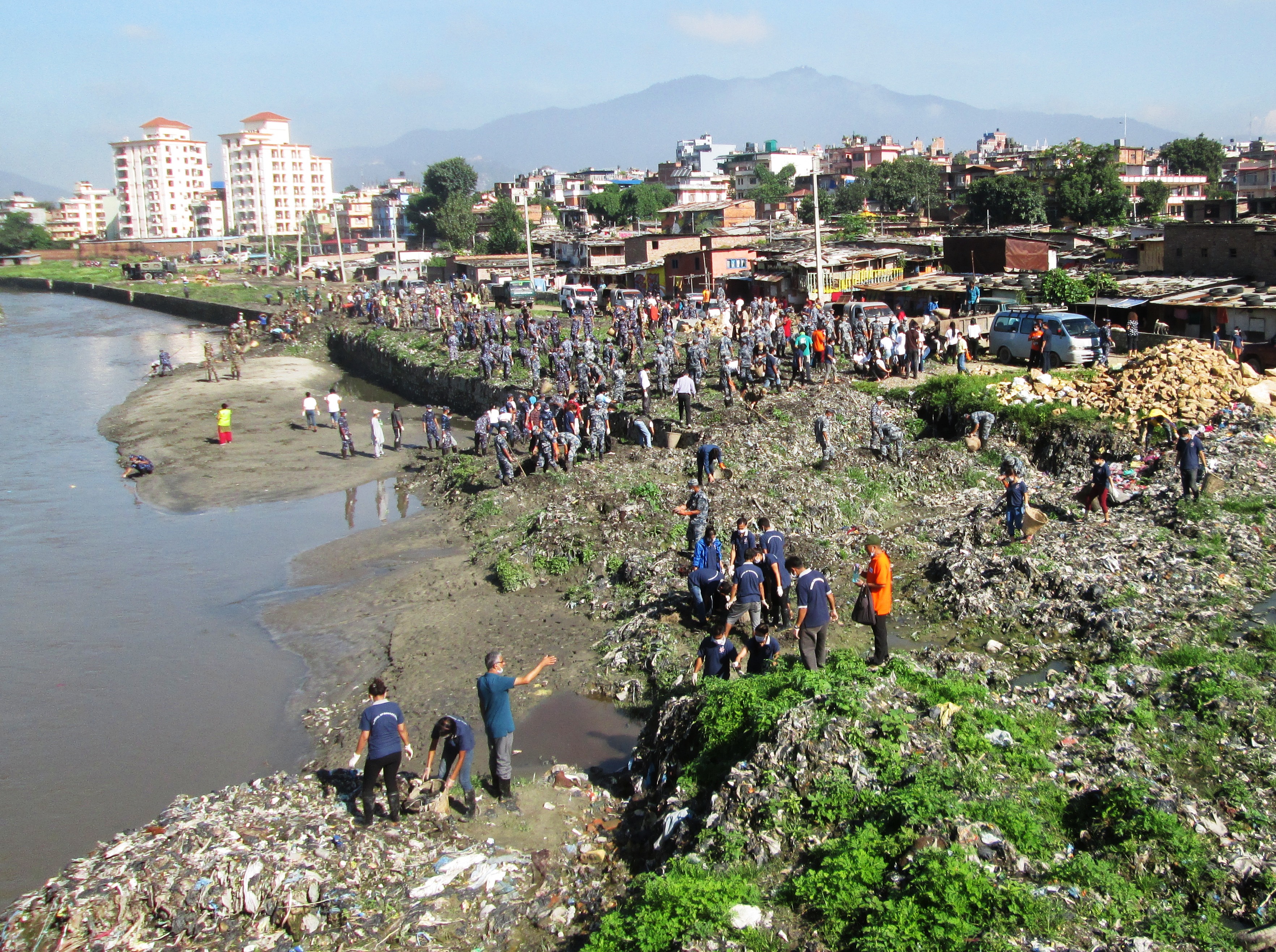
A massive river cleanup effort by the Nepal Army, Police and local students - unfortunately, the rivers here are used more as dumping grounds than special resources that need protection.

A massive river cleanup effort by the Nepal Army, Police and local students – unfortunately, the rivers here are used more as dumping grounds than special resources that need protection.

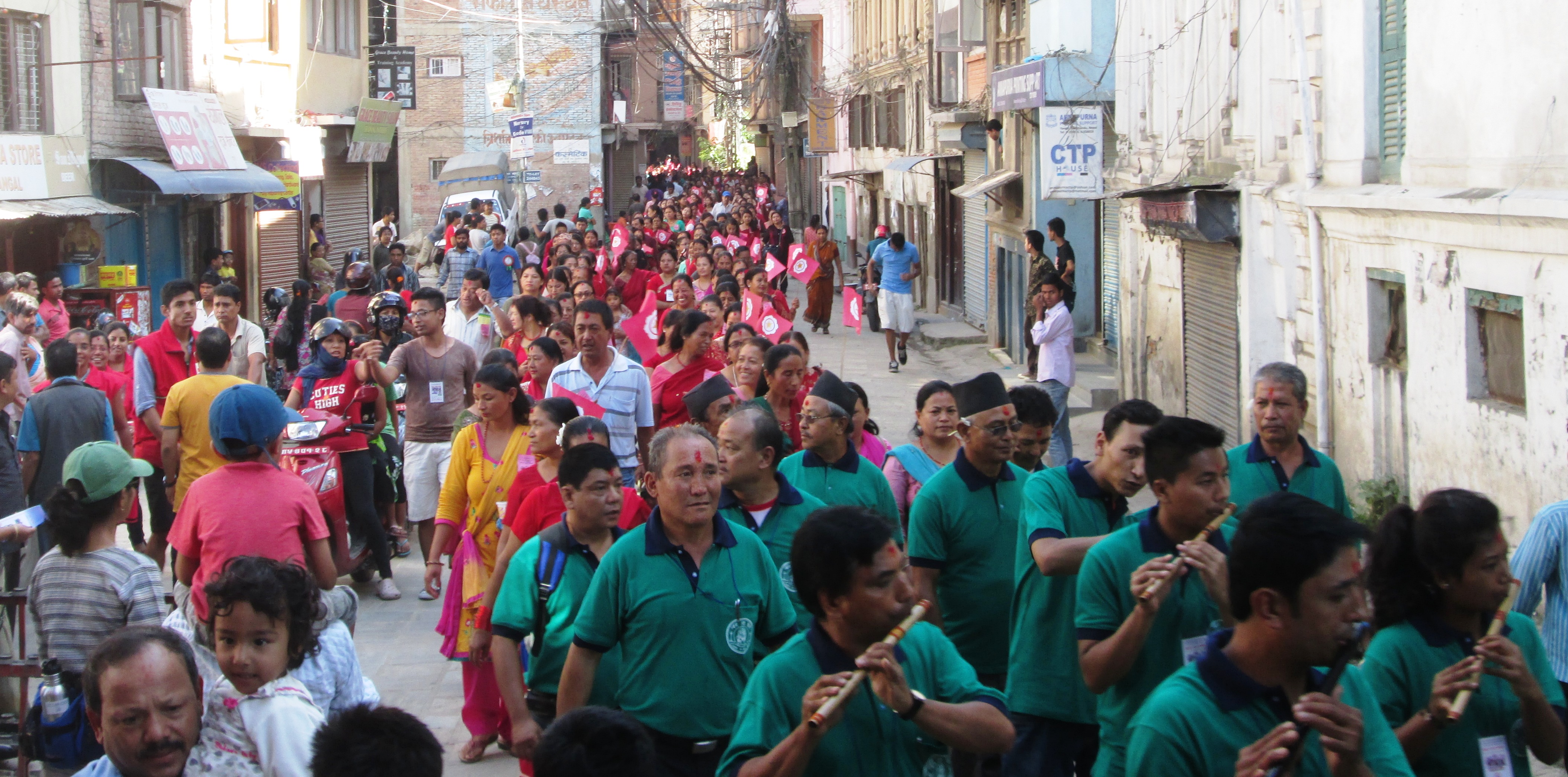
We crossed paths with over 700 people on a religious parade - Tika Dai swiftly elevated Sumanth so he wouldn't get swallowed by the crowd while I had my hands on Janani and Sajjan.

We crossed paths with over 700 people on a religious parade – Tika Dai swiftly elevated Sumanth so he wouldn’t get swallowed by the crowd while I had my hands on Janani and Sajjan.

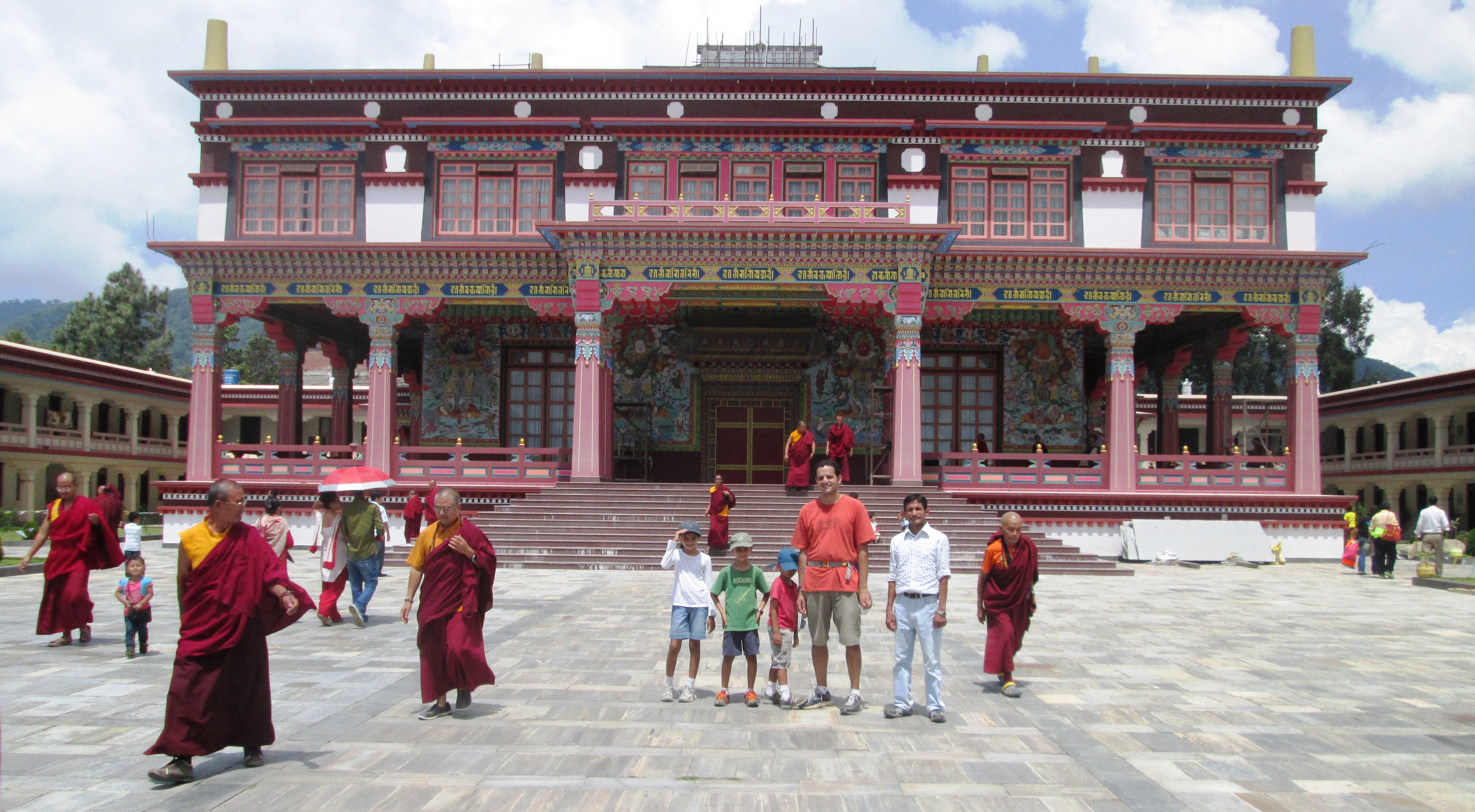
Buddhist nuns and monks shave their heads and wear robes of mustard and maroon.

Buddhist nuns and monks shave their heads and wear robes of mustard and maroon.

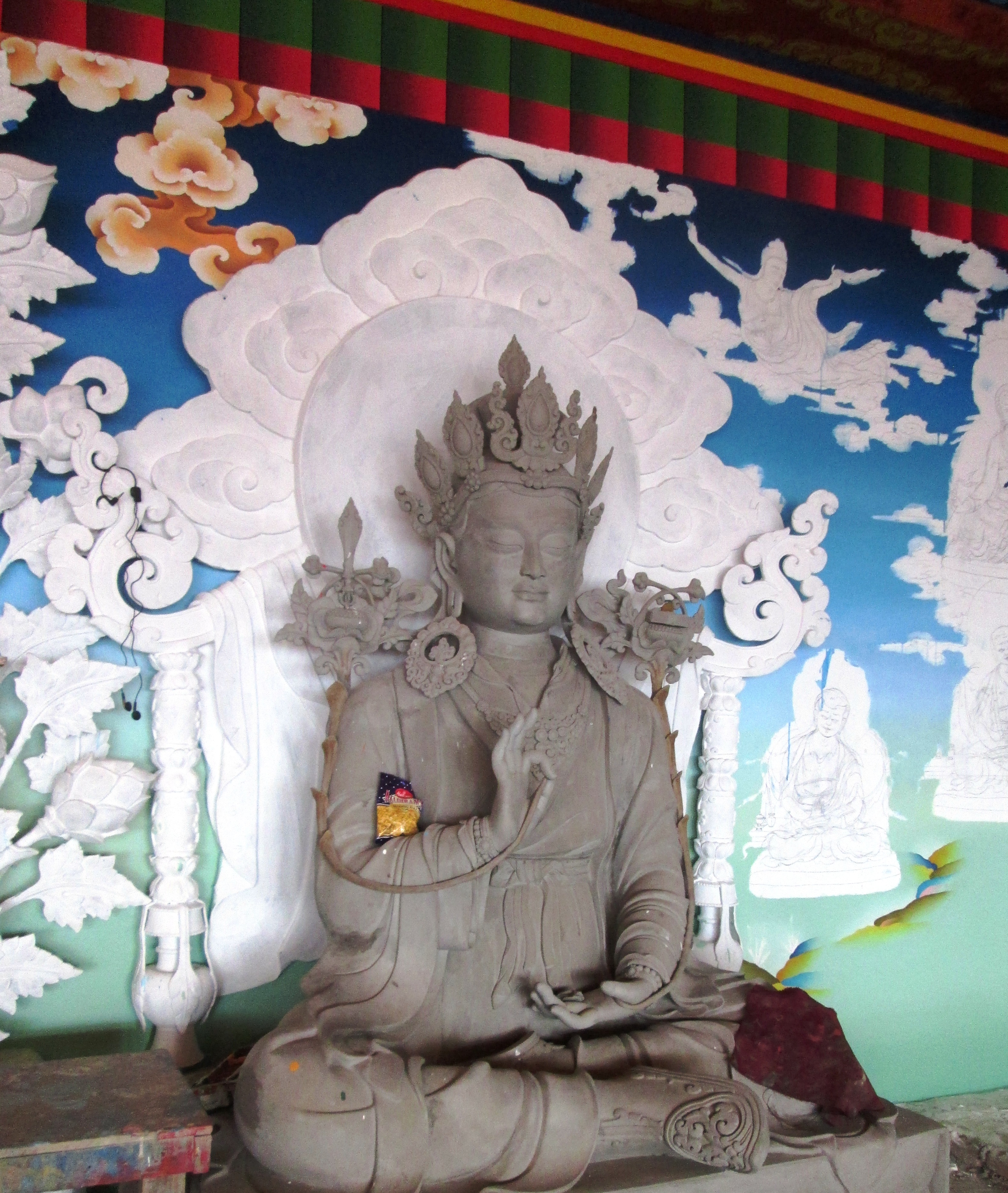
This monastery is in the process of expansion and we peaked at the unfinished upper levels - amazing statues and intricate paintings!

This monastery is in the process of expansion and we peaked at the unfinished upper levels – amazing statues and intricate paintings!

This walk was the most representative of trekking as we climbed over 1100 feet in elevation. Unfortunately, just the previous week the visitation day was changed from Saturday to Sunday – it was closed! However, another beautiful Buddhist monastery near the top of the hill was open, and that became our final destination. Thankfully we found an available taxi that took us to our favorite (and the only) Mexican restaurant in the KTM Valley, The Lazy Gringo. After the walk home, we completed 12 kilometers – all were proud, happy and tired :-).

Chobar (Sept 7): All six of us had a ball together last week, so Tika Dai joined us again. This week’s walk was to the top of Chobar mountain and back – no taxi required. It rained quite a bit the night before which resulted in 1) spectacular views of the snow-capped Himalayan foothills (our camera simply doesn’t do justice, but the glimpses of the icy peaks are heavenly), and 2) very muddy pathways! We had biked to Chobar before on the straight forward roads, so this time, Prakash wanted to take a more scenic path along the river. We saw quite a few interesting things along the way.

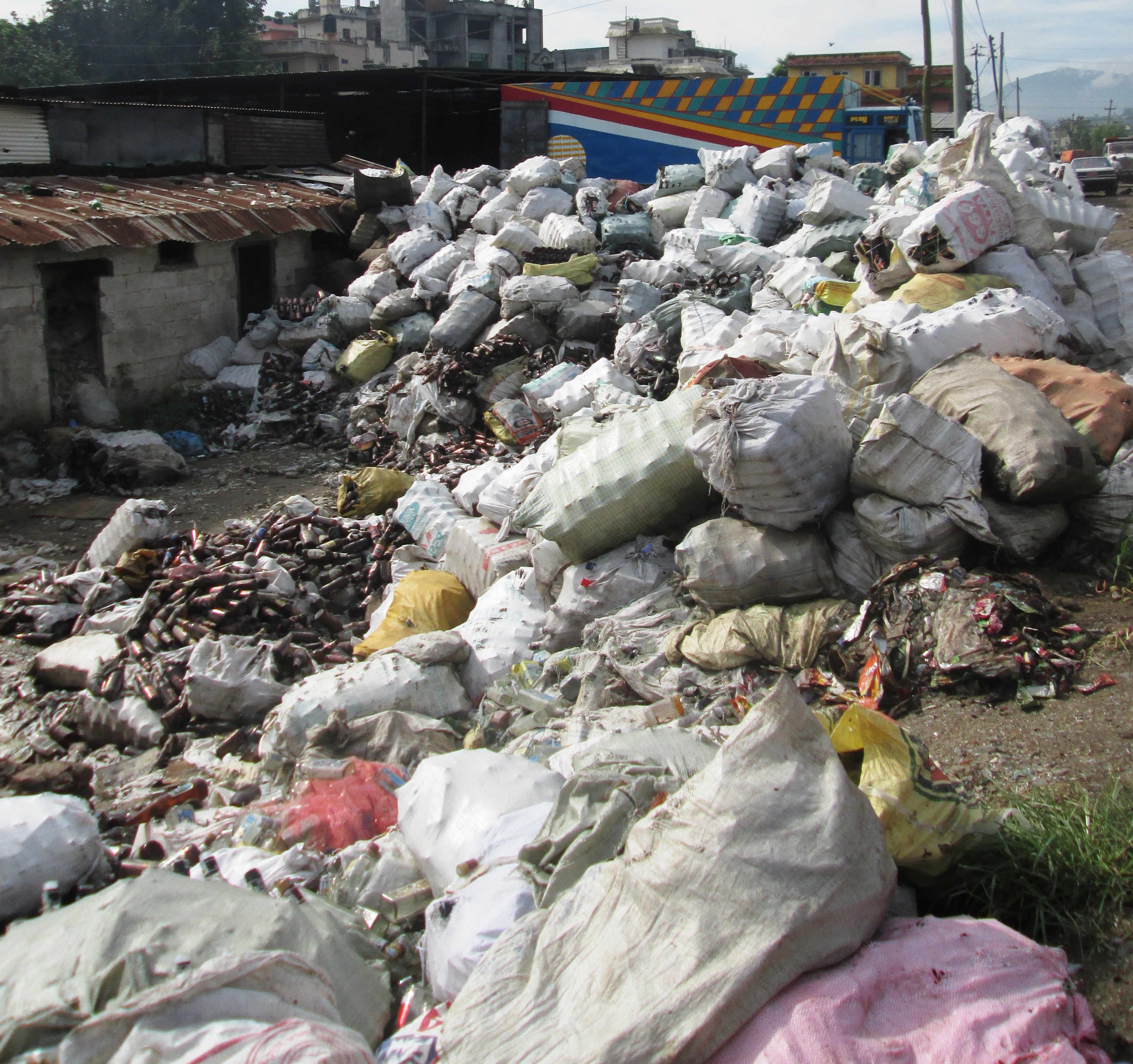
There were several massive recycling centers along the riverside where plastics and glass are collected then trucked to India for processing.

There were several massive recycling centers along the riverside where plastics and glass are collected then trucked to India for processing.

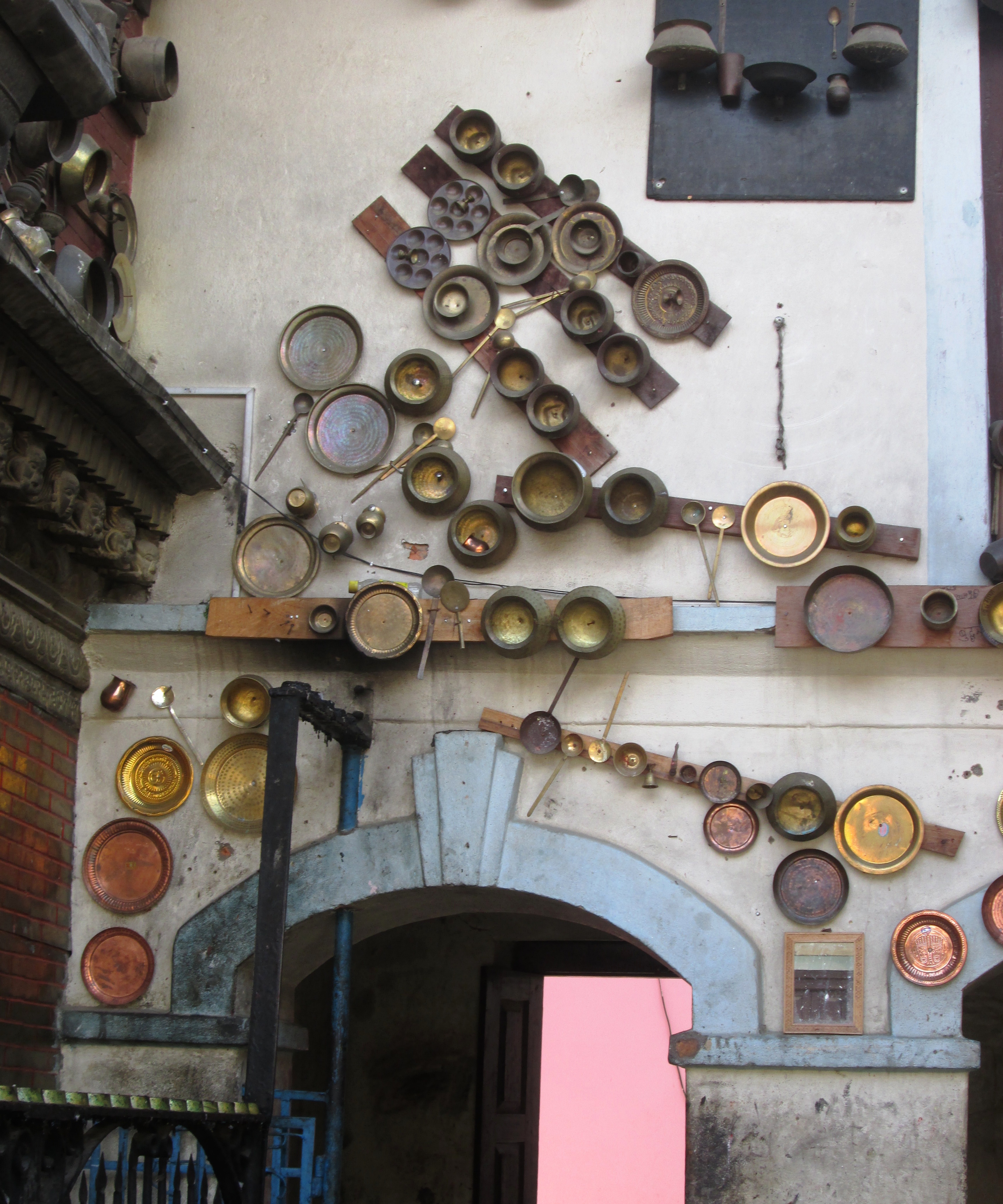
The temple at the top of Chobar Hill has intriguing iron and brass decorations - a relatively costly kitchen item is given to the temple in the memory of recently deceased family member and nailed to the facade.  The tradition has been going on for years therefore thousands of plates, bowls, spoons, pots and other kitchen are visible.

The temple at the top of Chobar Hill has intriguing iron and brass decorations – a relatively costly kitchen item is given to the temple in the memory of a recently deceased family member and nailed to the facade. The tradition has been going on for years therefore thousands of plates, bowls, spoons, pots and other kitchen wares are visible.

We convinced the kids that we didn’t need a taxi to transport us the remaining few kilometers and eventually made it to a Nepalese restaurant near home. After several Cokes, Fantas, Sprites and plates of chow mein and momos, we walked home completing 11 kilometers.

Unfortunately, it rained most of last weekend so our walk didn’t transpire. The tentative plan for this weekend is a 10 kilometer walk to Kirtipur, a small village at the southwest edge of the Kathmandu Valley. And that will round out the preparation for our trek. I’m really looking forward to seeing grand mountain views, meeting rural Nepali folks, walking along the age-old seasoned paths, breathing clean pollution-free air, and enjoying our first-ever trekking experience…

Motorcycle Adventure to the Fish Farm!

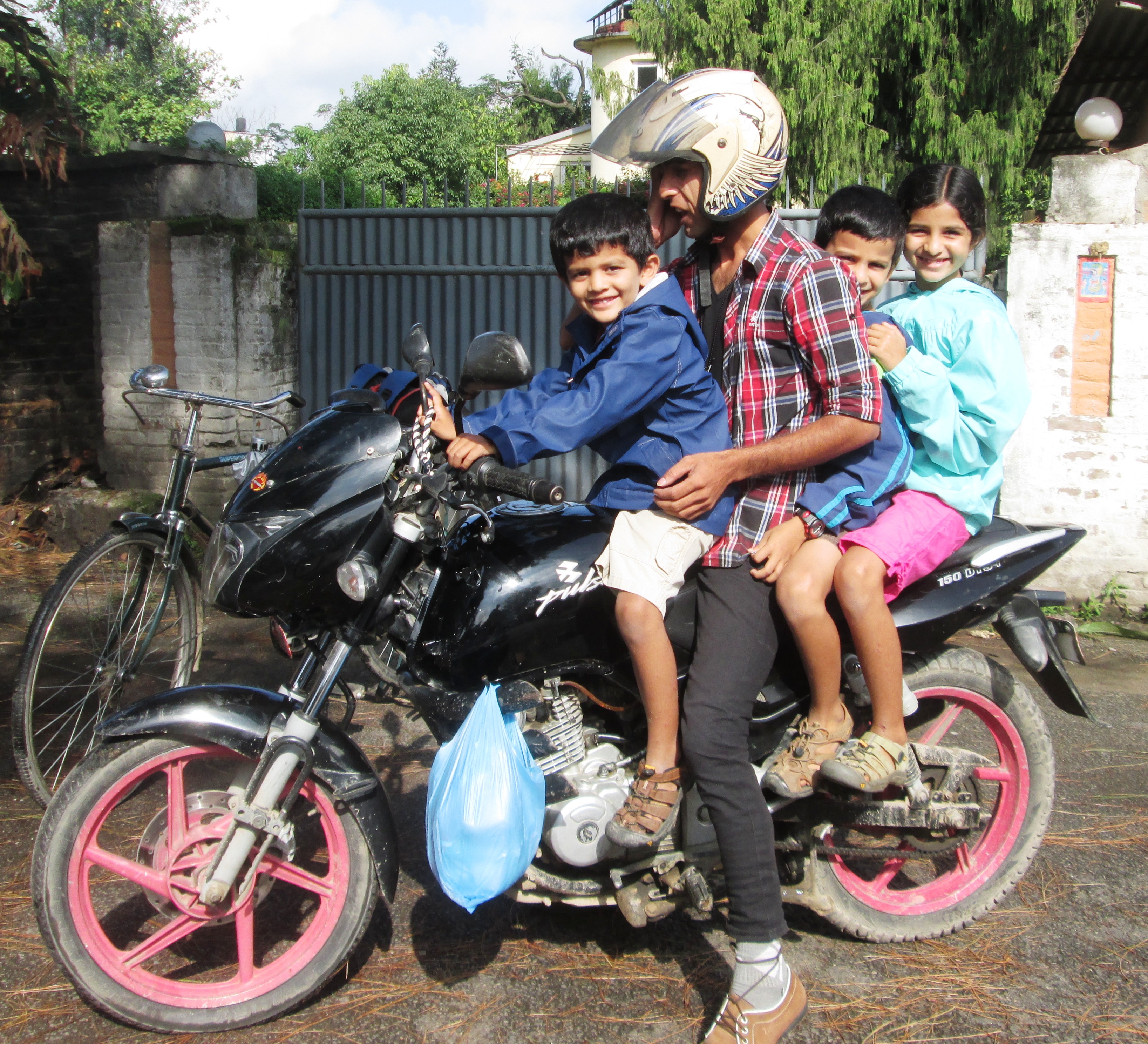
Tika Dai, our house helper, has very quickly become like a member of our family… He suggested that we all go for an outing to Godavari, a beautiful forested area in the southern part of the Kathmandu Valley. His Didi (didi = elder sister, not necessarily your own sister, but even a cousin or close family friend) lives there and wanted to have us over for lunch. We eagerly accepted the invitation as one of our desires here is to get to know and learn from local families. Godavari is approximately 10 kilometers away and one of the first questions was, “how should we get there?” Now a days, approximately 90% of our transportation is by bicycle, another 7% or so by foot, and the remainder by taxi. I suggested we try the local bus! Prakash has experimented with it a few times on his way to work, but the kids and I haven’t tried them yet. Tika Dai was a bit apprehensive about bus because our outing was on a Saturday, and this is the only day off in the week for most Nepali’s – so the buses may be overly crowded with hoards of locals also venturing out to the neighboring, scenic areas. Tika Dai had an alternative suggestion – he, Prakash and I would ride our bicycles, and his son, Siva, would take our 3 kids on his motorcycle! My initial mental response was, “no way! are you out of your mind!”, but I tactfully responded in my broken Nepali, “I’ll ask Prakash and get back to you”… Amusingly, Prakash’s initial response was, “what a great idea! the kids will have a ball!”. I quickly fired back with, “they won’t be wearing helmets, how will all four of them fit, we haven’t even met Siva, are you crazy?!?” Something inside told me to just go with it and not resist… So the plan was set!

Unfortunately, Tika Dai fell sick Thursday night, but after resting most of Friday, he said he’d be up for the outing. I barely slept Friday night just imagining my 3 little munchkins, riding on a MOTORCYCLE, with a man I don’t know, going to a place I’ve never been, to a family’s house we’ve never met!!! But my gut told me to just relax and TRUST… I did my best…

We woke up Saturday morning and had breakfast. Tika Dai looked okay; he was not 100% recovered but made up for it with his endless enthusiasm and optimism. Siva reached our place around 8am and the kids were all smiles, ear to ear – their first-ever motorcycle ride! Needless to say, they’d reach before we would (especially because Godavari is roughly 300 meters higher than where we live in the valley). We quickly mentioned to them before they sped off that we’ll get there, but it will take us a while longer… They weren’t worried one bit! I think Siva could sense my tension as I quickly called out, “Bistaarai bistaarai jaanus!!” (Please go slowly!)

The adventure begins - here we go!

The adventure begins – here we go!

We locked up and left within minutes. The gradual uphill climb was difficult but manageable for Prakash and me as we have 21-speed mountain bikes. Tika Dai, however, has a locally-made single-speed bike that really isn’t meant for hilly climbs.

Tika Dai in the red hat and me in the green.  Prakash is quite skilled at clicking photos while riding his bicycle!

Tika Dai in the red hat and me in the green. Prakash is quite skilled at clicking photos while riding his bicycle!

His insufficient bike and lingering illness proved to be very arduous for him. After an hour or so, Tika Dai was really suffering, so he called his son to come help. It was a sight to see – two men on one motorcycle, pulling along a bicycle!

These seemingly unusual sights are more common that you'd expect!  Almost anything goes on roads in developing Asia...

These seemingly unusual sights are more common that you’d expect! Almost anything goes on roads in developing Asia…

We reached 45 min or so after the kids. Komala Didi greeted us then continued to prepare lunch. Her husband works for the Central Government Fish Farm – their home was located within a large government compound along with several ponds with hundreds of fish and one large office building. His duties likely include caring for the ponds, managing the fish supply and maintaining the water quality within the ponds. On Saturdays he holds a second job and works in a corner store there in Godavari. They have two children, a twelve-year-old daughter and a 4 year-old-son. His combined salary is sufficient enough for the children to attend a private English-medium school. Her conversational English skills, surprisingly, were one of the best we’ve heard among the children of the working class!

The exterior of the pressure cooker is coated with a layer of mud to make cleaning easier!  The blackened areas wash off easily along with the mud.

The exterior of the pressure cooker is coated with a layer of mud to make cleaning easier! The blackened areas wash off easily along with the mud.

They suggested we all take a short walk up to the highest point of the compound where a small family of deer are maintained. A few friendly visitors were hiding in the wet, grassy path – yup, more leeches! We each had a few hop into our sandals, but they are easily detected as a mild wetness in a corner of your foot. They are fairly harmless, however after the first was detected, we were more focused on our feet than enjoying the beautiful views. The boys couldn’t get enough of the motorcycle and raced up and down the road with Siva. After a bit, we all gathered to start eating.

Shiva is Sajjan and Sumanth's new best friend!!

Shiva is Sajjan and Sumanth’s new best friend!!

The Nepali lunch was delicious! It always begins and ends with a large base of white basmati rice (bhaat). The second main dish is a savory lentil soup (daal). Nepal has a huge variety of leafy greens and a side dish of these sautéed with garlic is very common (saag). A special vegetarian dish usually served to guests is curried cheese cubes with vegetables, in this case bell peppers and tomatoes (paneer ra thulo khursani tarkari). Another curried vegetable dish with soya beans, peas, eggplant and potatoes was also served (mixed tarkaari). A cool salad – cucumbers spiced with cumin, and pickled vegetables – tomato and radish, rounded out the meal (salad and achaar). Cucumber slices are available in case the spice level gets too high (those were gone by the end of the meal!).

Typical Nepali Meal - daal, bhaat, tarkaari, saag and achaar.

Typical Nepali Meal – daal, bhaat, tarkaari, saag and achaar.

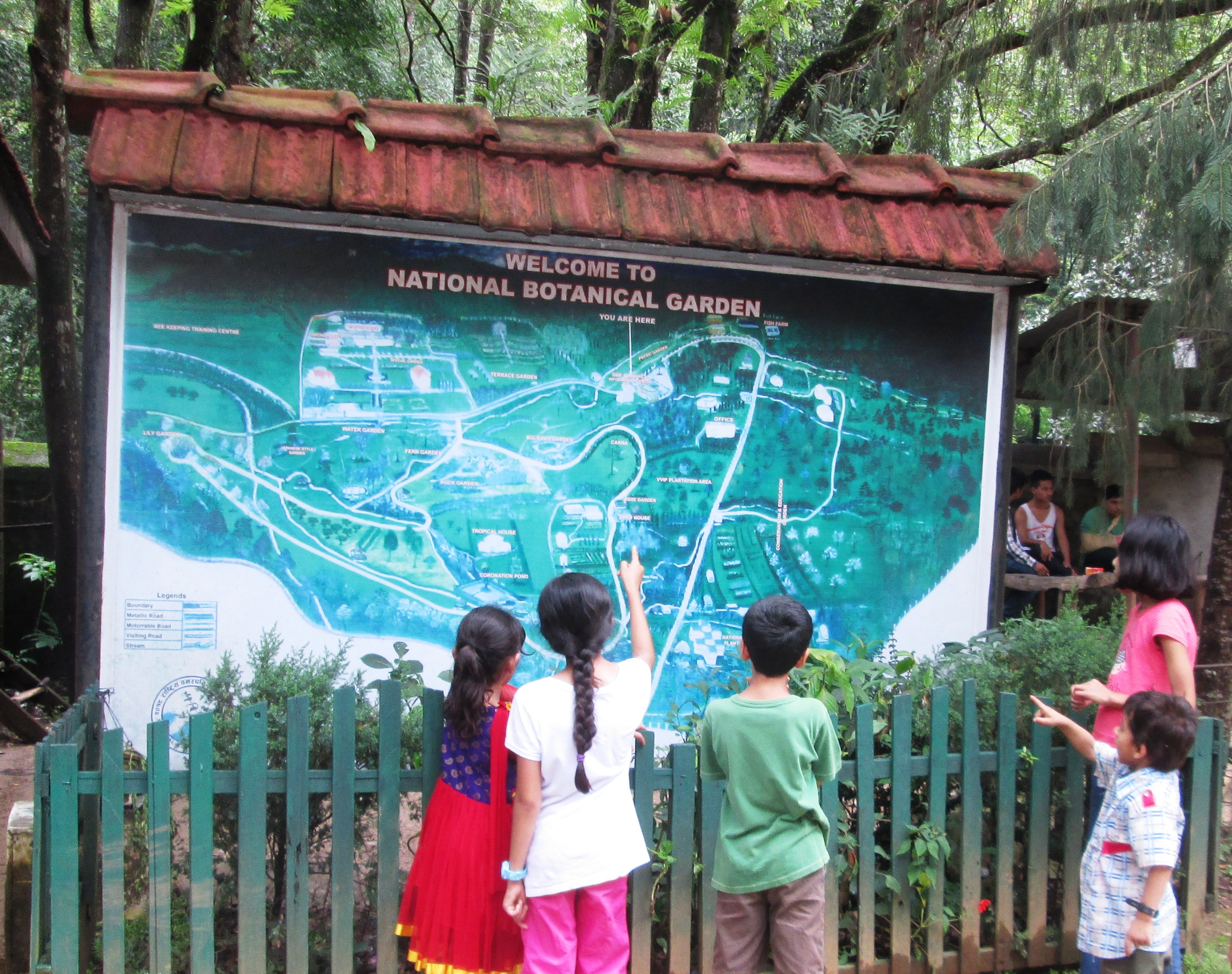
After lunch, we walked over the National Botanical Gardens – a beautifully protected space with numerous species of plants from all around the world. Tika Dai was correct – dozens of families and hundreds of youngsters (high school and college age kids) were out enjoying their one day off in the week.

The main map showing the rock garden, cactus garden, tropical garden and other sections.

The main map showing the rock garden, cactus garden, tropical garden and other sections.

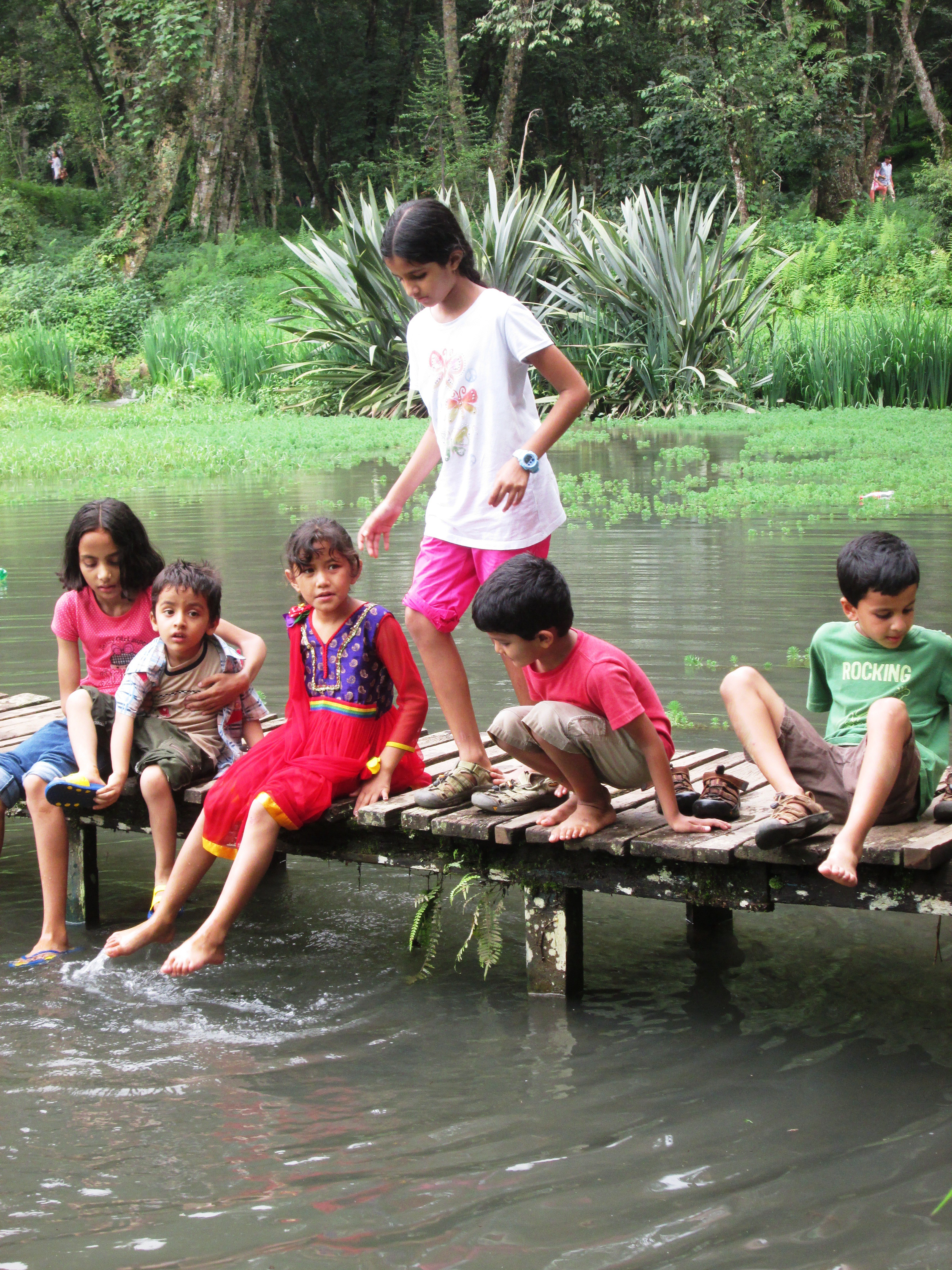
Prakash commented on how young romantic couples in Nepal go to the Botanical Gardens to spend time together; in the US, you would find these couples at the movies, restaurants, beaches, fun parks… but not at a botanical garden!! Our kids had a ball running around and frolicking in the water.

The children playing on a small pier leading to a temple in the middle of the pond.

The children playing on a small pier leading to a temple in the middle of the pond.

As usual, I was rushing everyone… we needed to leave the garden so we could get back to Komala Didi’s house, get our bikes and start our downhill ride home (and I still had to prepare dinner for the night)! I wanted to make sure we reached before darkness came – we surely did miss the night but were drenched with rain instead!! One of the strongest rain falls this season started when we were about half way home. We went through puddles over 6-inches deep and as wide as the entire road! We reached home dripping wet, but were welcomed by a warm bath, dry clothes, and 3 happy (and wet) children :-).

Overall, a very out-of-the-box, unique and special experience…

Found new meaning for a “rainy day”

— Written by Prakash

Growing up in California, it was impossible not to notice a cloudy day let alone a rainy one. My first memories of the downside to rainy days are from swimming competitions. During rainy swim meets, I could never set a personal best. Years later, I remember when my older brother returned from his first year of college in Pittsburgh and told me of the gloom he felt after not seeing the sun for several weeks in a row that past Winter. It was something we’d never experienced. On my summer evening commutes from Novato to Berkeley, I recall the daily crossing of Richmond Bridge – leaving the blue skies of Marin County in my rear-view mirror and entering the cloudy East Bay. What a drag!

These early experiences alerted me of the psychological impact that clouds and rain can have. I later learned that my personal experiences are affirmed by scientific studies of nightshift workers who miss the sun and non-natives of the Arctic Circle who decide to live there for a winter. Now in Kathmandu, I have a heightened awareness to the physical effects of clouds and rain. By comparison to other parts of South Asia, the summer monsoon in KTM is pretty mild. But occasionally, we’ll have a string of rainy days without a trace of blue sky in between.

For our family, two consecutive cloudy days results in getting no hot water at home because we rely exclusively on solar power for water heating. We also rely on the sun and wind to dry our clothes, so a couple days of rain can result in a severe laundry backlog. For me individually, rainfall equates to an extra slow and wet commute to/from the office. After the rain, most of the roads are muddy so those post-rainfall rides have me speckled with dirt by the time I reach my destination.

An average KTM lane after the rain, submerged in muddy puddles

An average KTM lane after the rain, submerged in muddy puddles

Of course, these consequences can be avoided. We could purchase a gas- or electric-powered water heater, and even a fan-assisted clothes dryer. Catching a taxi to work on rainy or muddy days is also well within my means. But for most KTM residents, the negative consequences of clouds and rain have to be faced.

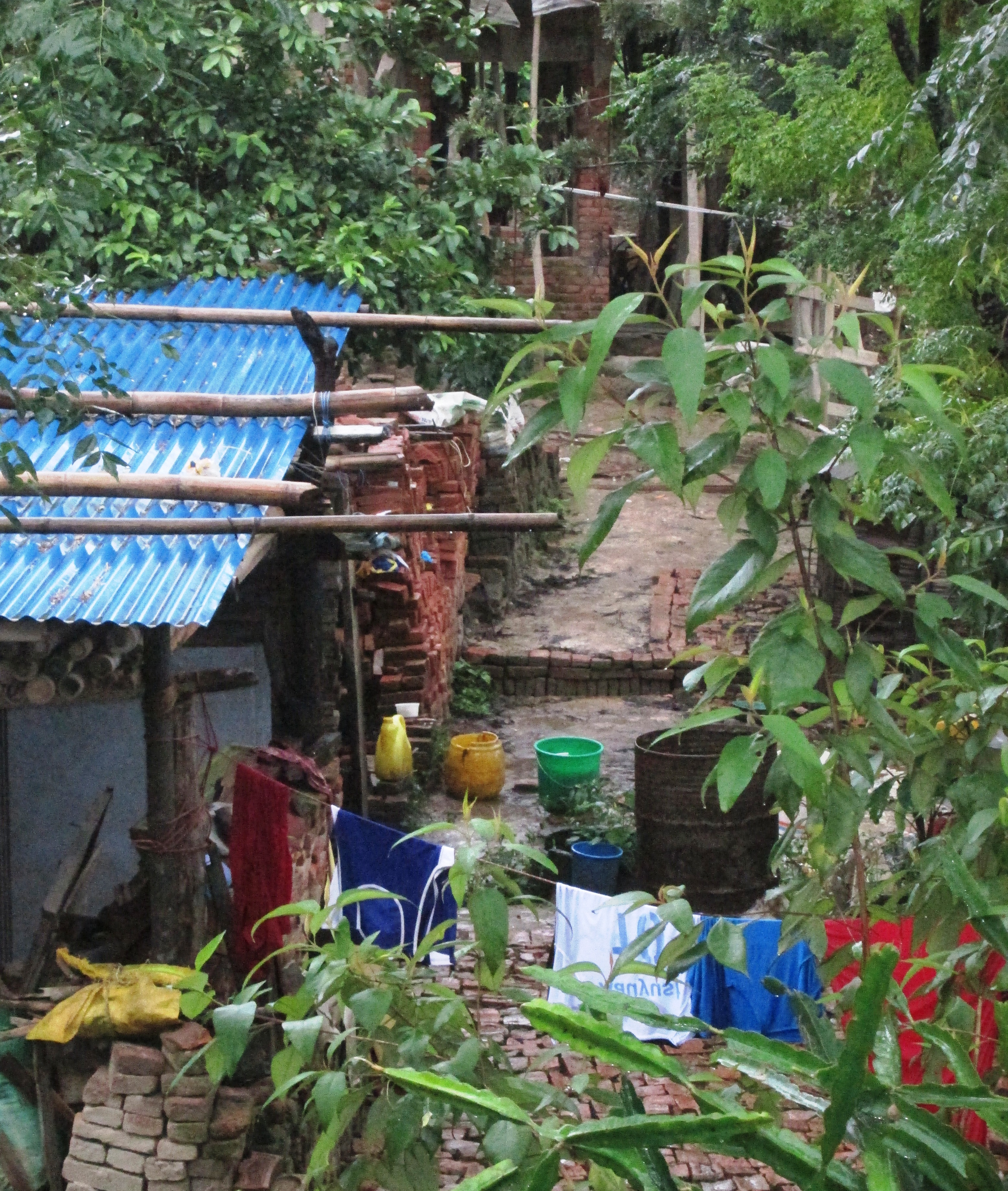
The outdoor washroom of our lower-income neighbors, with clothes drenched from last night's rain

The outdoor washroom of our lower-income neighbors, with clothes drenched from last night’s rain

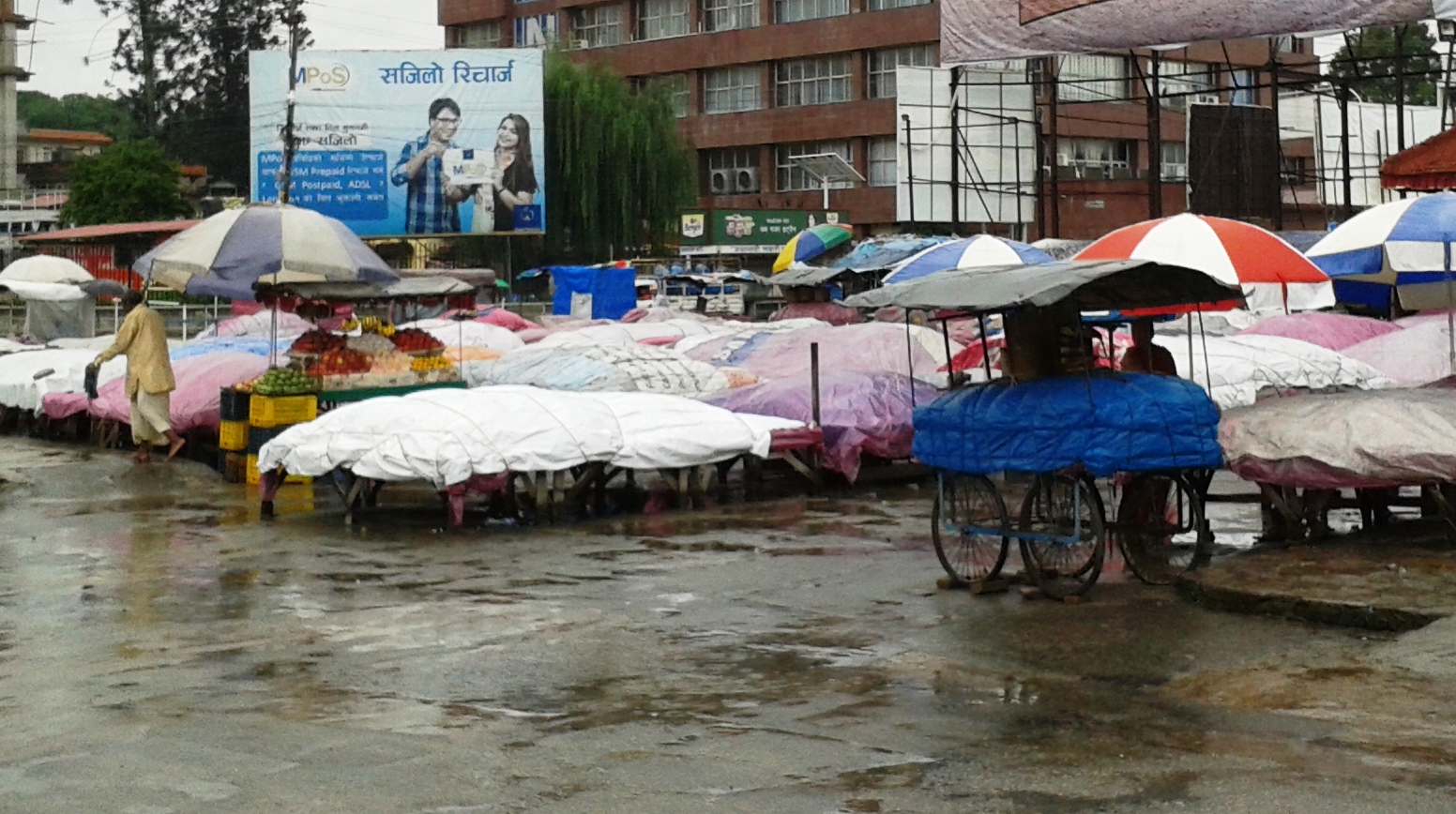
A lone fruit vendor longing for some customers on this rainy morning

A lone fruit vendor longing for some customers on this rainy morning

 A homeless man takes shelter while eating his morning meal

A homeless man takes shelter while eating his morning meal

These images flashed through my mind all evening long. I feel grateful for the lukewarm bucket bath which cleansed my face and legs of mud spots, for the wardrobe full of clean and dry clothes that are sure to outlast this rainy episode, and for the roof over our heads as we fall asleep tonight.

We moved!!!

WOW!  This was one of the smoothest, most effortless moves we have ever executed…  Largely because our belongings (clothes, books, toys, kitchen items, bathroom items and few electronic items) currently fit within 13 suitcases and a dozen small reusable bags; we also have 5 bicycles, but at the moment, we have NO furniture, cars, or any cardboard boxes!  During our six previous moves, Prakash and I have never had so few items to move.  Yes, we did downsize tremendously, but the majority of our remaining belongings are in an air shipment on its way to Nepal; it contains 60 cardboard boxes, 1 queen size bed and 1 rocking chair (a family favorite we’ve had since Janani was born, none of us felt like parting with it).

I was able to pack up our belongings in less than 1 day – record time for me!   Several people helped us on the day of our move (July 1) which made for extra smooth sailing… Ribika, the driver of our Dutch friends from ICIMOD, Flip and Houk, helped us with a mini-SUV.  Bharat (the body guard of our old landlord’s brother who is a Member of Parliment) and Tilak (a jack of all trades employee of our old landlord) helped load our heavy suitcases into the car.  We drove the short 1 mile distance to our new house and Tika Dai and Sonu Didi (our new house helpers) helped transferred the bags inside the house.  That’s it – within 2 hours, the move was complete!

This house however, is very EMPTY!  I did purchase over 2 dozen household and furniture items from the previous family, but it still looks like a blank slate.  We made a list of some initial necessary items (cleaning tools and fluids) and Ribika and I went to Bhat Bateni (our version of Super Target + Sears).  I stocked up on groceries too knowing that I didn’t have to cycle them back home.  By afternoon, I unpacked most of our belongings and brought the kids to our new home!

The rest of the week went by in a flash…  Getting acquainted with the new house, remembering where I put everything, figuring out which electric switches worked which lights, and packing for our trip to India (July 9 – 29).

Let me introduce Tika Dai and Sonu Didi – our family of 5 now feels like a family of 7!  Sonu Didi takes care of washing clothes (by hand and with a machine, hangs them up to dry, collects the clothes, irons and folds all), some cooking (all basic Nepali cuisine including lentils, curried vegetables, rice and salad), cleaning (floors, bathrooms, dusting).  She is enthusiastic, pleasant and pays attention to detail.  Tika Dai performs a wide variety of tasks including gardening, running errands, paying bills, cleaning large items, playing with the kids, making morning tea, and washing dishes.  His personality and work ethic are remarkable – always happy, content and ever ready to do any task swiftly, efficiently and effectively.  Neither speak English, so my Nepali is coming in very handy.

Here are a few highlights of the house from the kids:

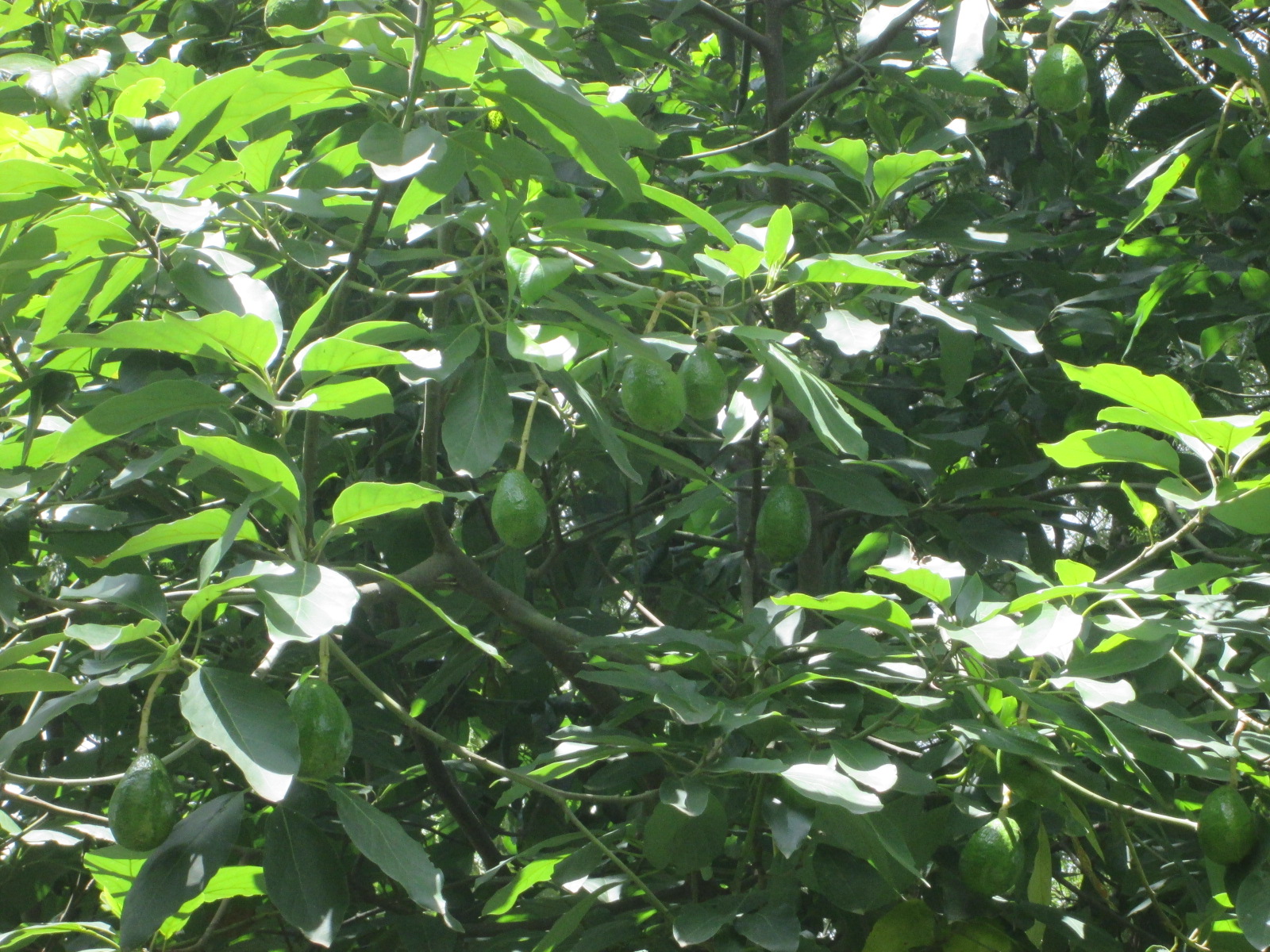
A — Avocado trees — they are big and they have lots of avocados; they are small babies now but will be ready in a few months

IMG_3238

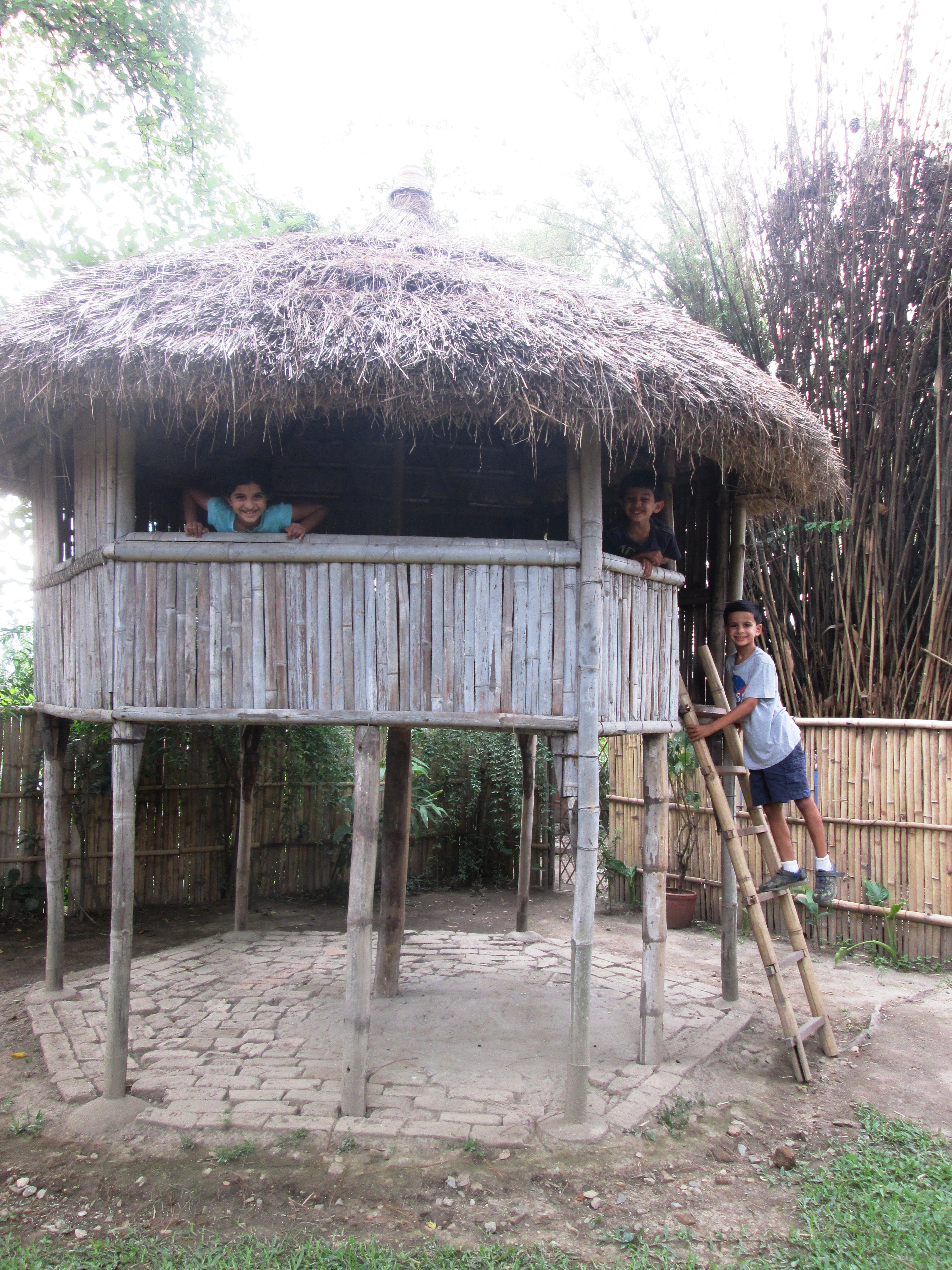
B — Bamboo tree house — in our front yard, there is a tree house made of bamboo, but it isn’t a real tree house, because it isn’t attached to a tree

???????????????????????????????

C — Chicken house — there were lots of chickens, but one day a cat came and killed them, so now it is empty; Tika Dai is going to clean and paint it for us as a play area

???????????????????????????????

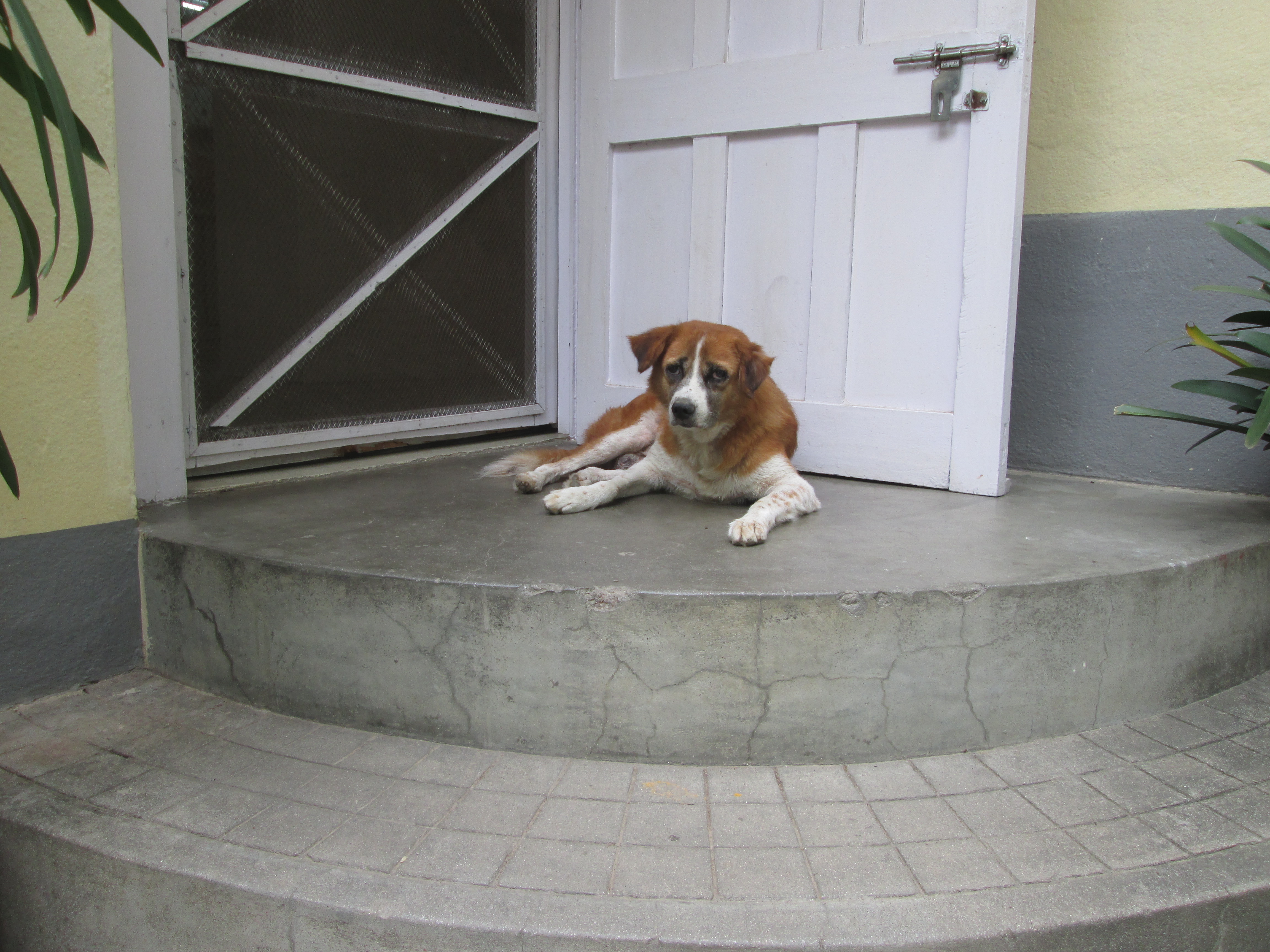
D — Dog — the dog always comes and sits on the front door porch ; the dog is very peaceful, friendly and quiet

IMG_2769

E — Excellent sunlight — even in the rainy season, we get so much sun pouring into the house

F — Ferret — we’ve seen a fast, furry, brown ferret scurry around in the garde

G — Garden — the most mature, beautiful, abundant garden we’ve ever had – in addition to avocados, there is a huge veggie patch, lots of flowers, and many herbs

IMG_3236

H — Hospitality — our house helpers make it feel almost like we are living in a hotel – cleaning, laundry, gardening, simple errands and some cooking are all taken care of

I — Internet — Aai uses the computer lots of times like for blog posts; the internet connection came really fast

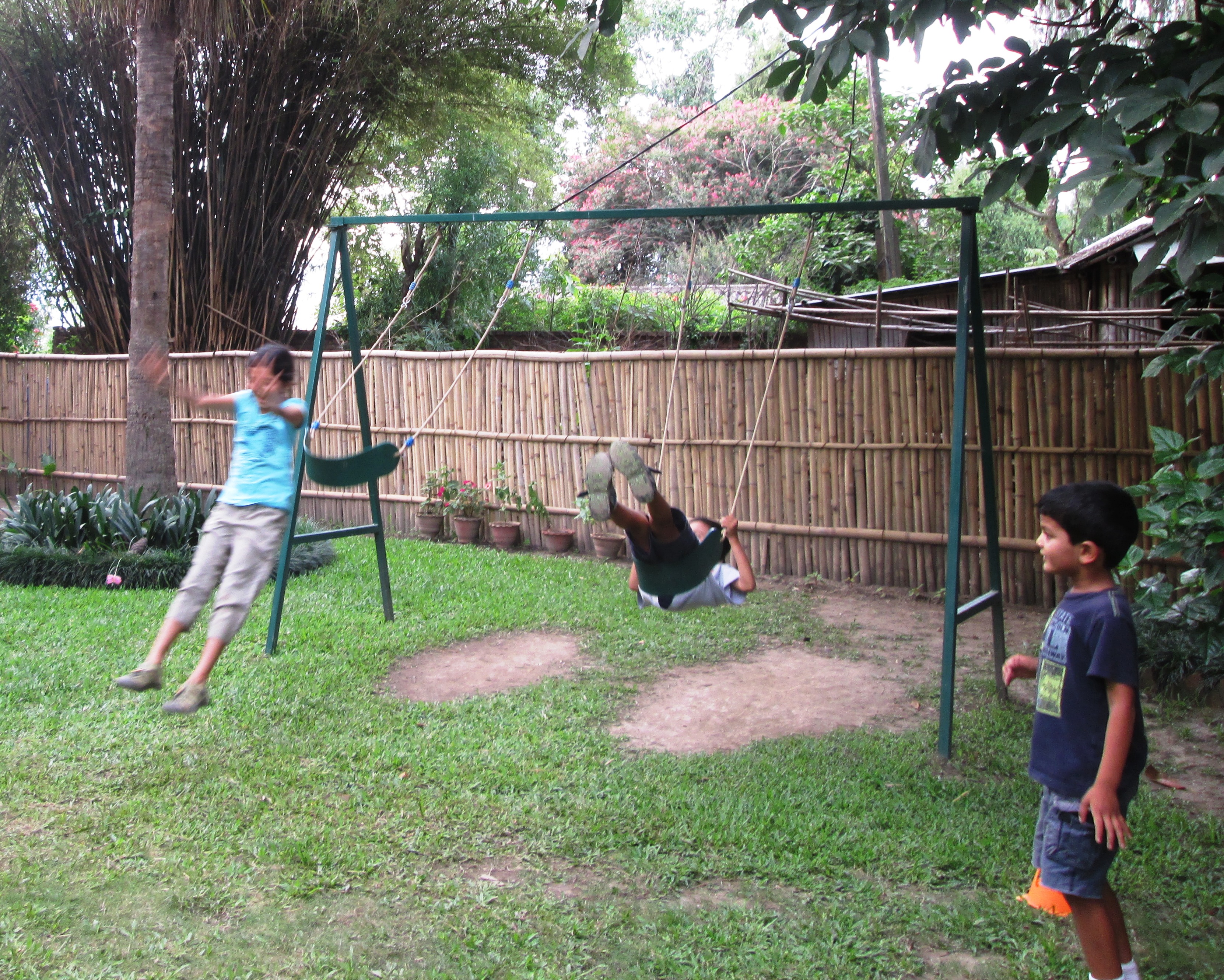
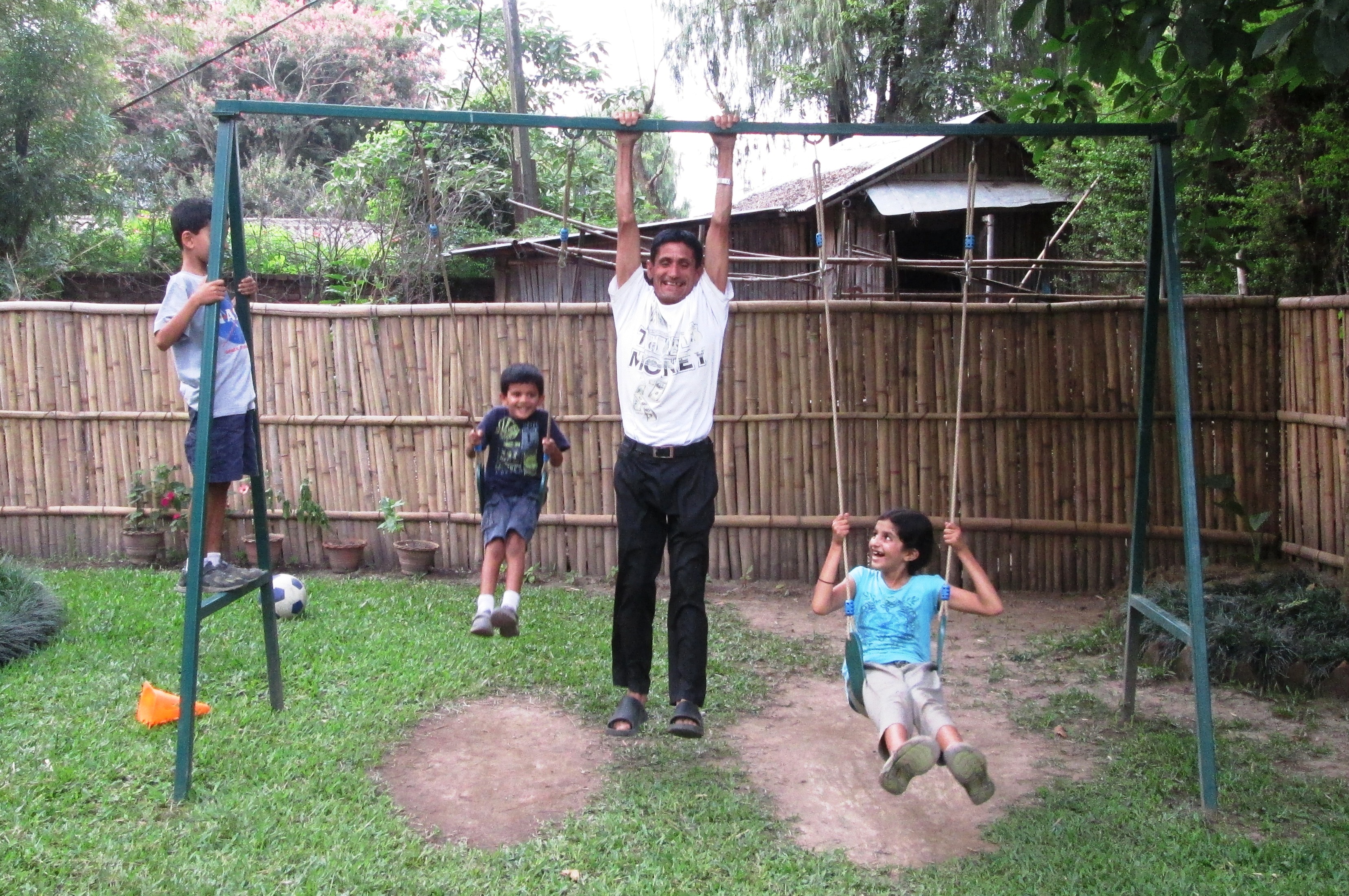
J — Jumping from the Swings — in our garden there are two swings which we swing on and jump off of and we take turns swinging and jumping and it is really fun

???????????????????????????????

K — Kitchen — the kitchen is very nice and even has a separate room for the pantry and fridge

???????????????????????????????

L — Lizards — Janani and Aai saw a baby lizard one day behind the kitchen door

M — Mosquitoes — in our house, there are much less mosquitoes than there were in the apartment

N — Natural — there is no air conditioner or heating, just natural breeze from the many windows

???????????????????????????????

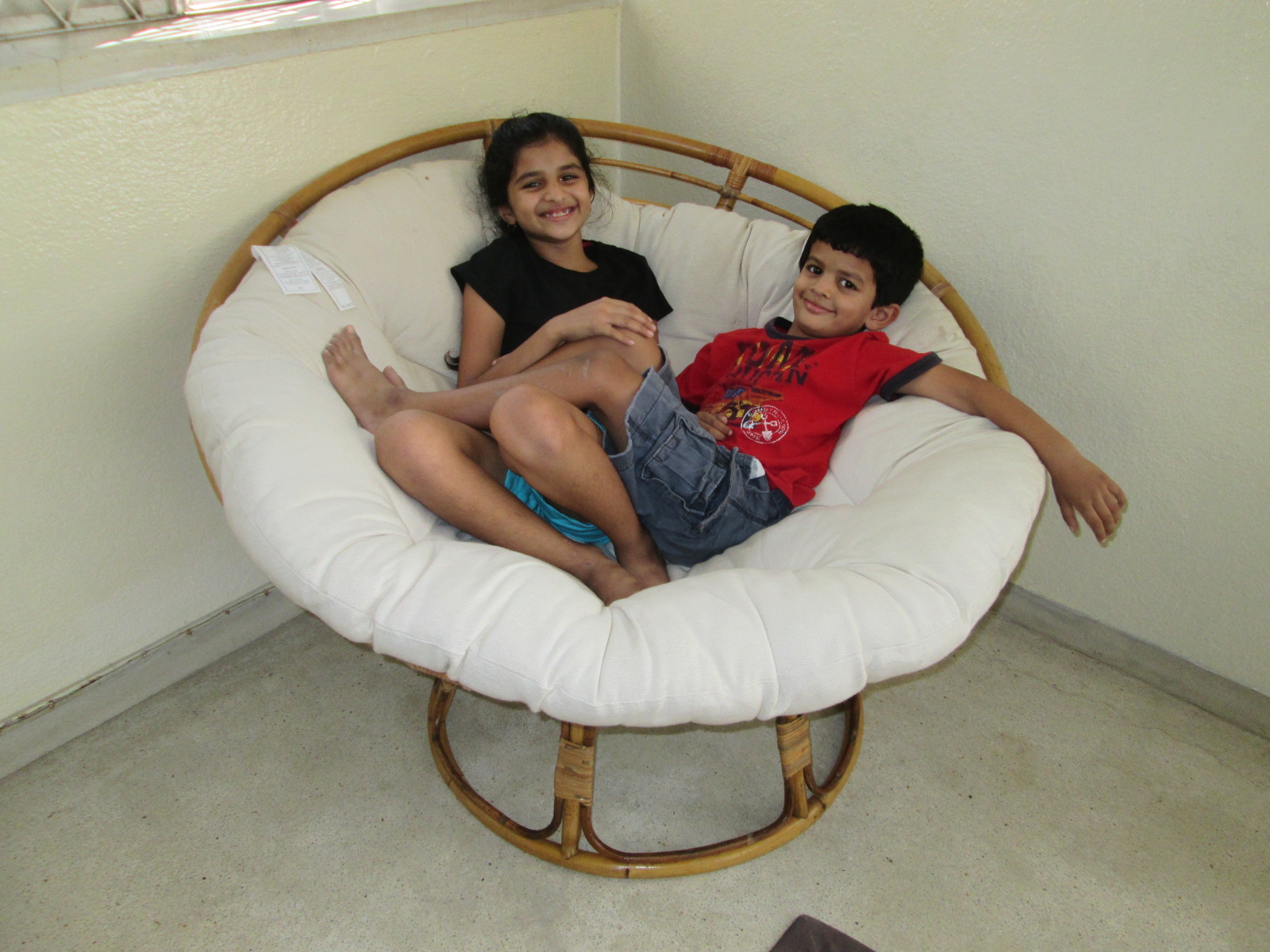
O — O-Shaped Chair — when we cuddle, it is so big that 2 or 3 people can fit in the chair

IMG_3246

P — Paintings on the Wall — it is a long line that is near the ceiling of the stairwell and it has vegetables, plants and trees on it

???????????????????????????????

Q — Quiet Street — our house is on a very quiet street; there isn’t very much cars or motorcycles that go on it because it is a dead-end road

???????????????????????????????

R — Room of beds — there are 3 beds in one room and we all 5 share 3 beds ; sometimes people even sleep on the yoga mat

S — Sonu Didi — she is nice, helpful, polite and gentle

???????????????????????????????

T — Tika Dai — he is brave, strong, energetic, fun and always has a good attitude

IMG_2783

U — Unfurnished — our house feels very empty because there is not much furniture and our shipment is yet to arrive

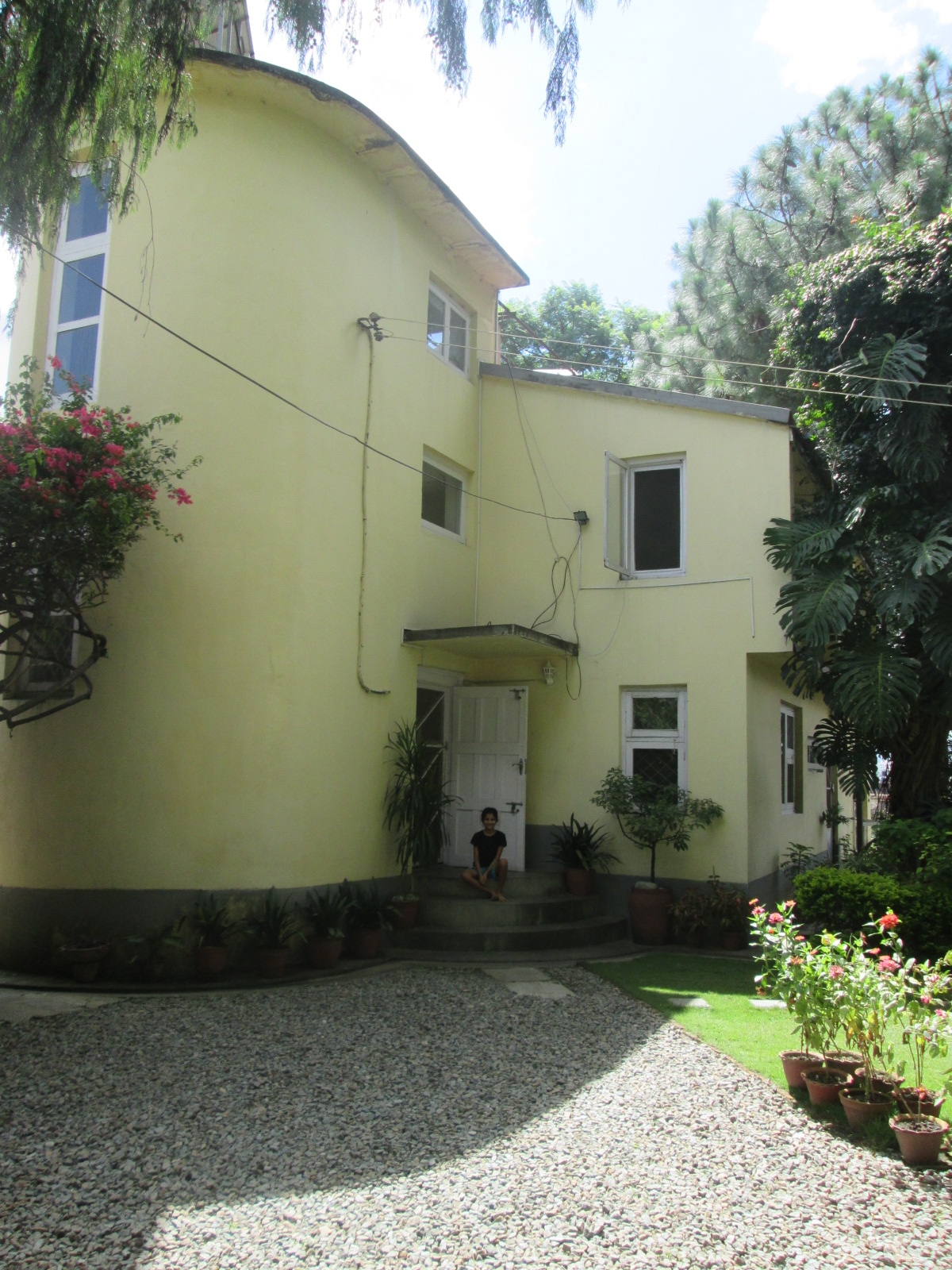
V — Very Old House — our house is very old; you can tell because the plants in the garden have grown so much

IMG_3245

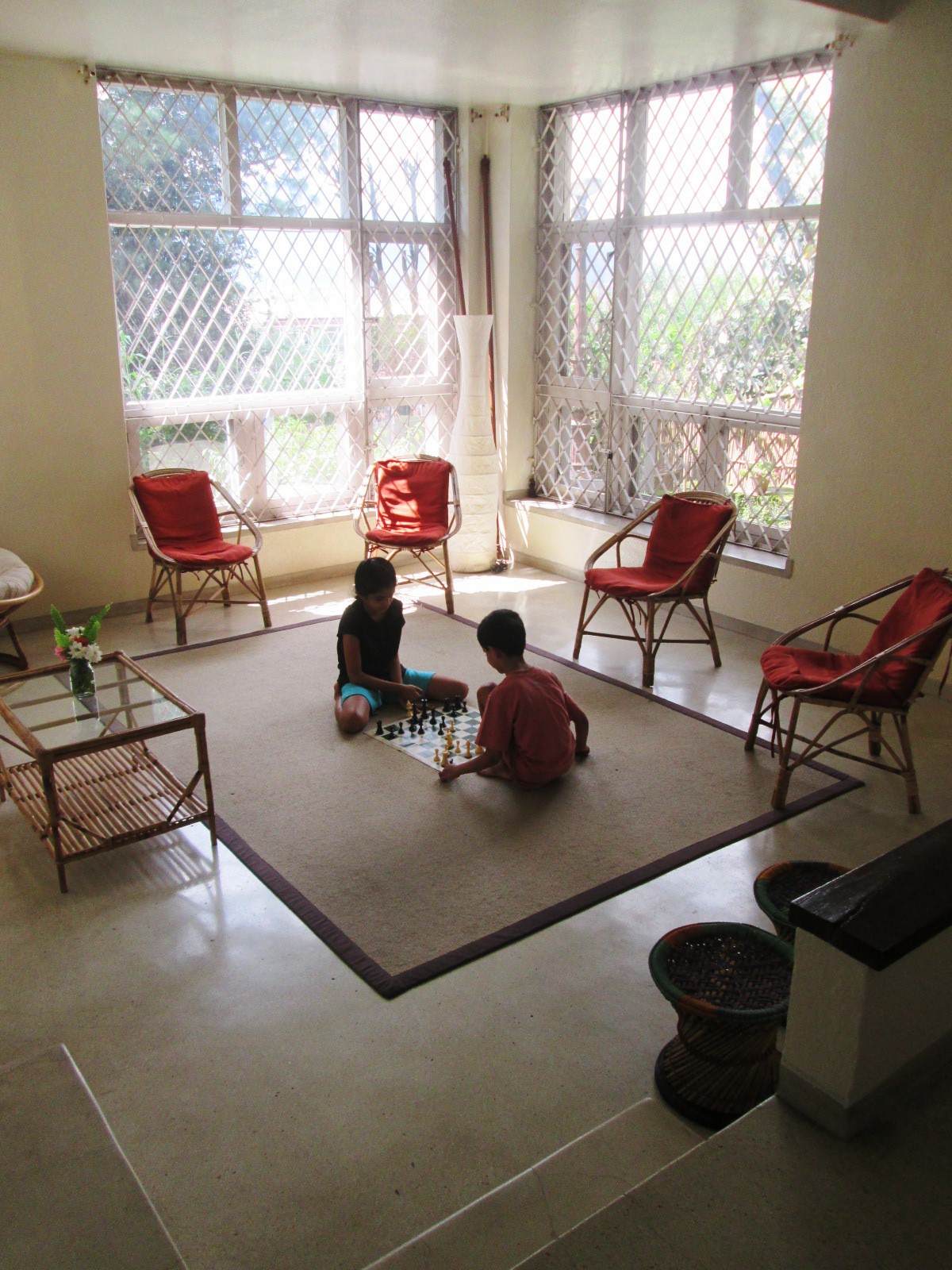
W — Windows — there are so much windows in our house and it is so much fun looking out

???????????????????????????????

X — eXtraordinary House — we have a tree house, swing set, and a big garden

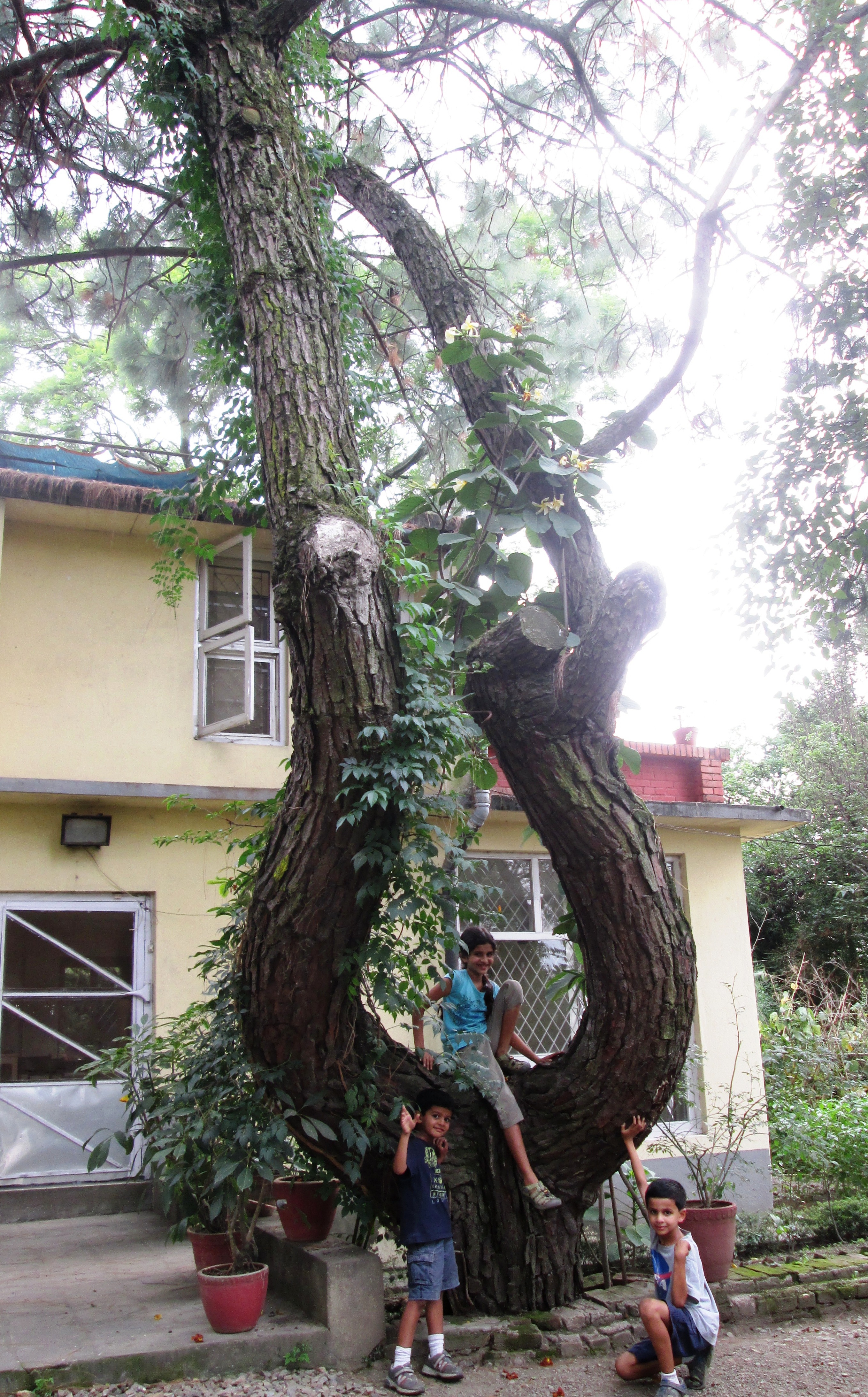
Y — Y-Shaped Tree — there is one tree in our garden that Janani is able to climb; it is a pine tree and is shaped like the letter Y

IMG_2775

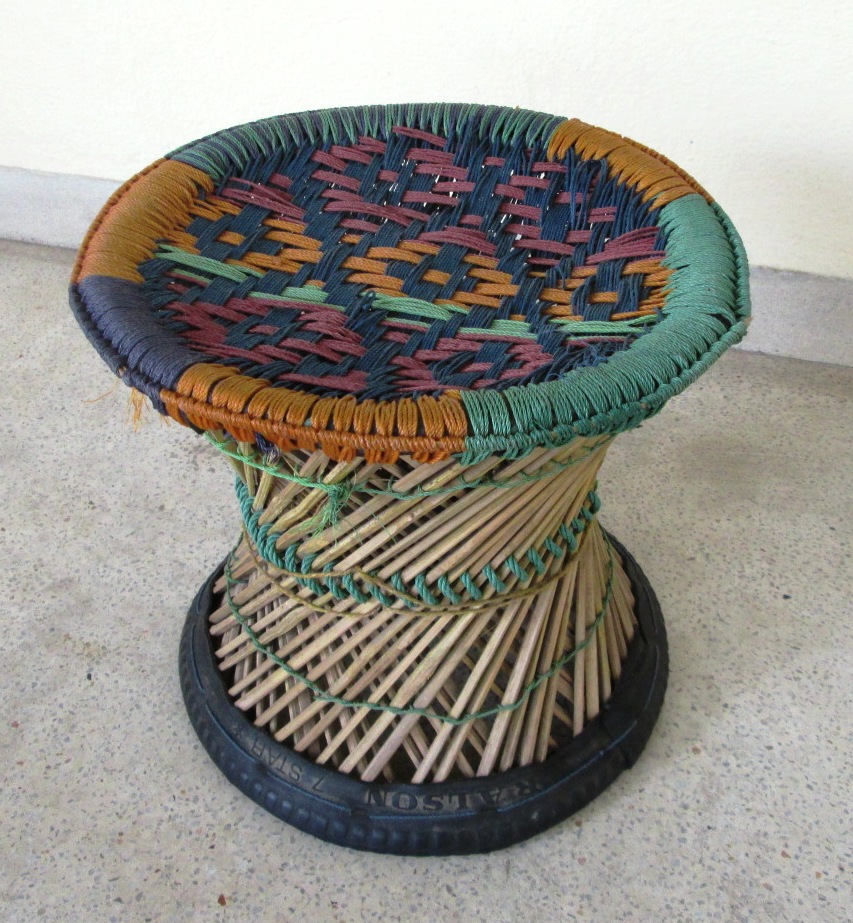
Z — Zig-zag stools — we have two colorful Nepali stools made out of bamboo with a zigzag design and a broken tire at their base

???????????????????????????????

Hope you come visit soon!

Second Visitor!! Our friend, Dinesh Shenoy…

Another excellent visit from an old friend of mine from UCSD! His visit can be summarized in three parts — historic tourist sites, relaxed family time, and meeting new friends. First, I’ll tell you a bit about him…

Dinesh and I met over 15 years ago while I was an undergraduate at UCSD and he was working in San Diego after completing his Bachelors at UC Berkeley. We had the same group of friends back then and routinely frequented the same restaurants, beach spots, and friends’ living rooms. Over the years, we kept in touch and meet every few years in NC or California. He has been working in Asia for the past 4 years and made an extended weekend trip to Kathmandu before shifting his career back to California. He is insightful, entrepreneurial, kind and genuine.

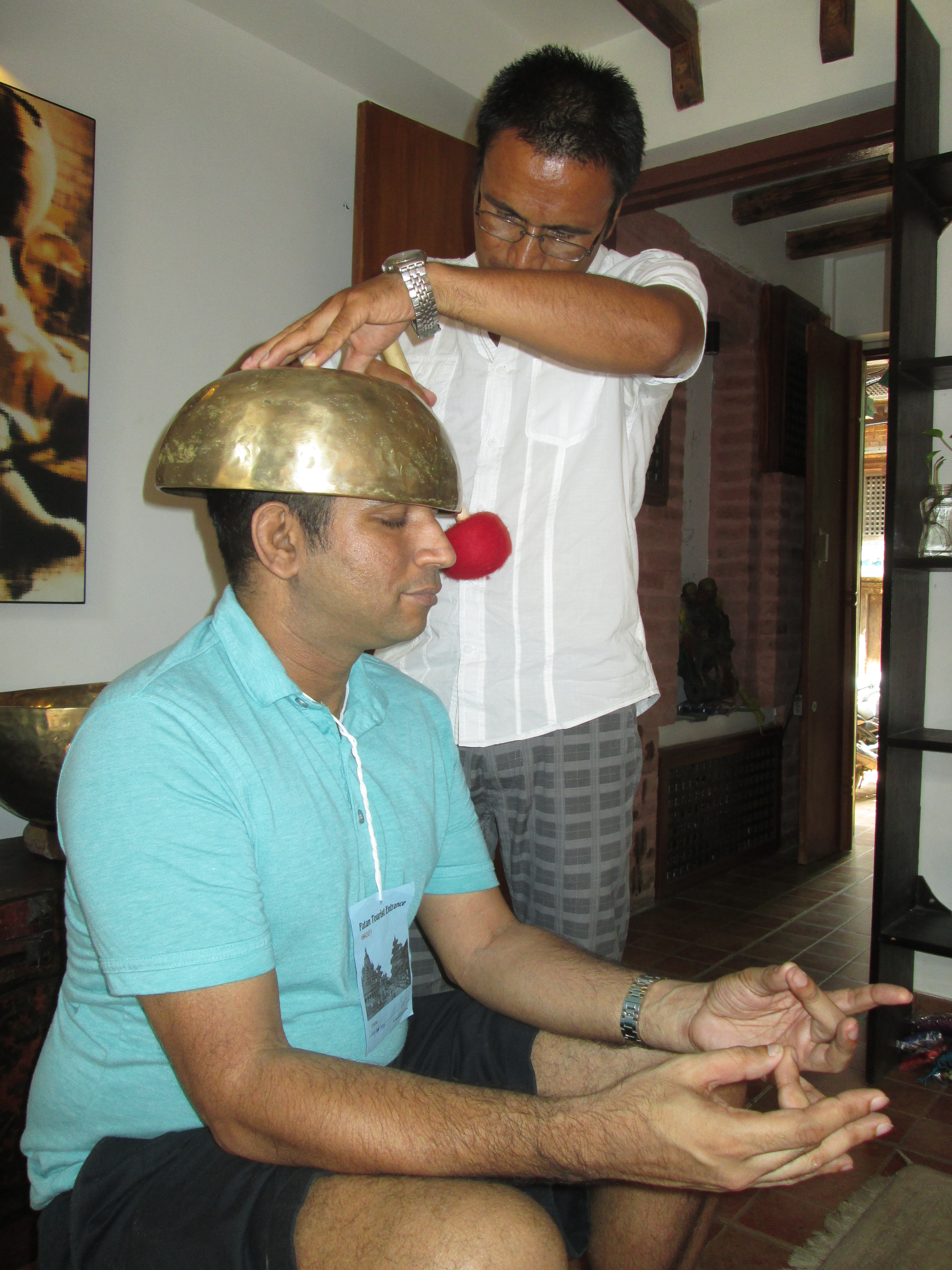
We visited 3 main sites of historical and cultural significance. Patan Darbar Square was the religious, cultural and political center of Patan centuries ago. Now it is the main tourist site in southern Kathmandu (Patan) and has numerous temples in a variety of styles – Newari, Pagoda, and the South Indian style too. Our guide shared tidbits of current and historical information such as: Patan is known for its metal works; 108 animals are sacrificed within the temple grounds during the Dussera / Dashain festival in October; the profile of the 2-tiered Pagoda style temple resembles the shape of the current Nepali flag ; the healing bowl is made of 7 metals and can be used for massage, relaxation and therapy.

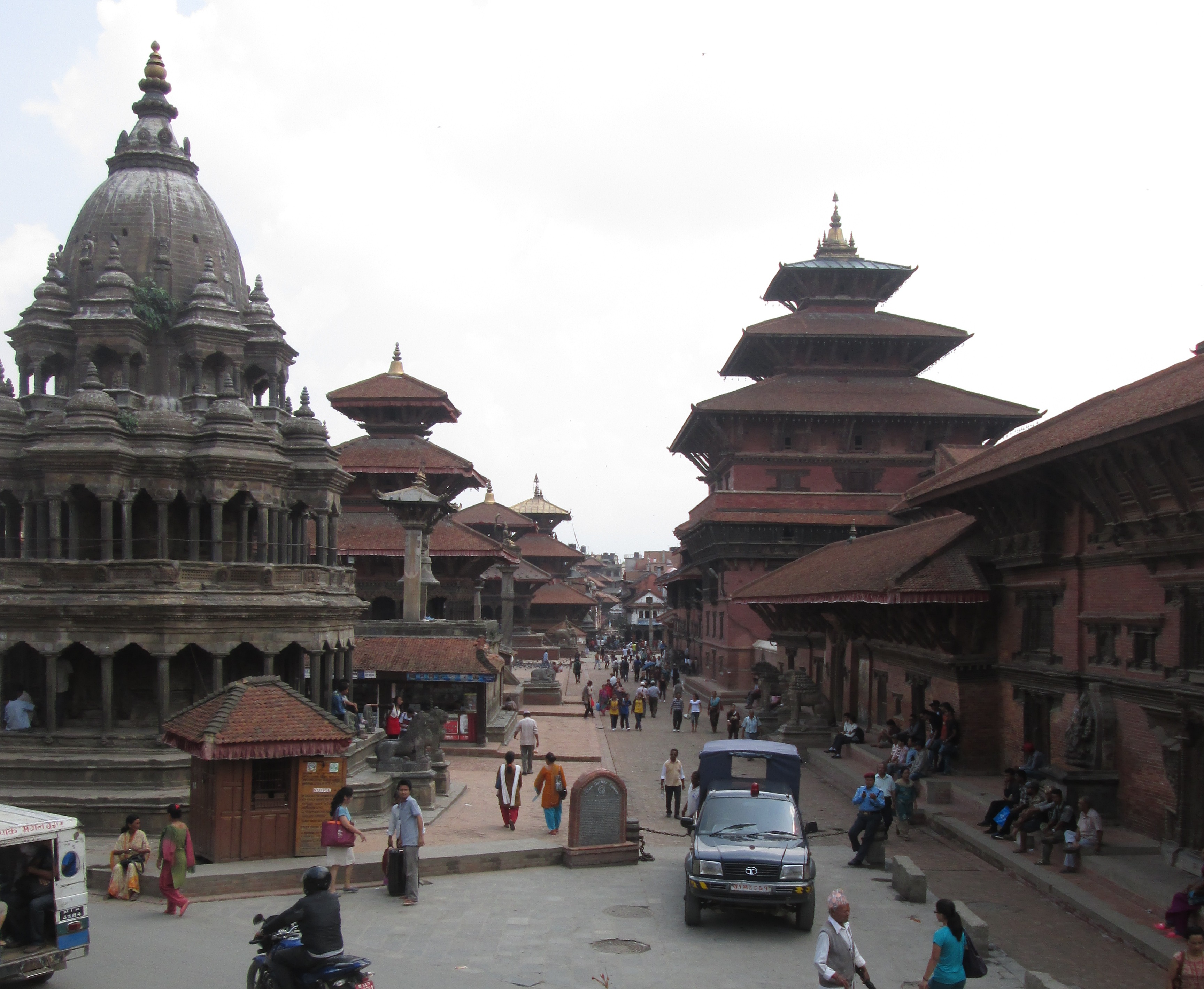
Patan Darbar Square

Patan Darbar Square

Dinesh receiving therapy from a healing bowl specialist.

Dinesh receiving therapy from a healing bowl specialist.

We also toured the Narayanhiti Palace in Kathmandu. The 2001 Royal Massacre occurred in this palace. Shortly after the monarchy fell as a result of the revolution, the King was asked to leave the palace and Nepal was declared a republic. A few years later, the Palace was converted into a museum. Inside, lavish interiors including furniture, paintings, animal skins / heads, wall paper and fine china can be found within the numerous rooms — bedrooms, lounges, libraries, banquet halls, entertainment halls, and tea rooms. Outside, expansive gardens cover acres and acres of land within the massive plot outlined by a tall cement wall. Previously it was grand and well manicured, yet currently it is poorly maintained… Photography is strictly prohibited (they collected all belongings and frisked us before we could enter!) so no photos.

Last element of historical significance from this weekend was a visit to a popular tourist destination just east of Kathmandu. Bhaktapur is a small village with narrow alleys, several temples, large community squares and billions of bricks! All surfaces seemed to be made of bricks – houses, temples and all roadways too! Our guide showed us a paper making factory, wood carving workshop, and the tallest temple in Nepal. The kids were troopers on the ~3 mile walking tour throughout Bhaktapur. We ended the tour with a sampling of juju dhau, sweet yogurt, a specialty of the village.

Walking down a narrow alley in Bhaktapur.

Walking down a narrow alley in Bhaktapur.

This is the tallest temple in Nepal!

This is the tallest temple in Nepal!

A unique element of friends visiting us in Kathmandu is the quantity and quality of time we get together! Traveling the long way to this corner of the globe necessitates staying for longer than a weekend (4 days for Dinesh). And we are the only family that our guests know in the area, so we get their undivided time and attention! This is a HUGE difference from the typical visits with long-distance friends back home — catching a quick lunch while rushing through Southern California, attempting to visit half a dozen other friends before the weekend is over! Quality time with the family and Dinesh was very relaxing and enjoyable… Tossing the Frisbee around in the courtyard, playing board games after school, helping Janani complete her WW2 term project, chatting up on the terrace, exposing the kids to laser tag in the local mall and going through old photos from our previous visits together.

Sumi beating Dinesh in a game of Blink!

Dinesh letting Sumi beat him in a game of Blink!

Sajjan beating Dinesh in a game of chess!

Sajjan beating Dinesh in a game of chess, for real!

The last significant element of Dinesh’s visit was two unique, entertaining gatherings with new friends! Our five-some plus Dinesh joined two other families for the Germany-USA World Cup match. Caleb, Emily and their boys (family who builds the Portal long-tail bicycles) and another couple, Geoff and Momo, who works with the American Embassy in KTM rounded out our group. At 9:45pm (yes, crazy late for the kids!), we went to a local restaurant to show support for our home team – we were hugely outnumbered! Even though we lost, watching a sports event televised from South America with dozens of Europeans and North Americans in the middle of Asia was awesome!

Geoff, Dinesh and Caleb watching the Germany USA World Cup match.

Geoff, Dinesh and Caleb watching the Germany USA World Cup match.

Prakash’s boss hosted a potluck for their work group that our five-some plus Dinesh also attended. What an enjoyable evening — a variety of delicious menu items, children bubbling around sharing their colorful personalities, beautiful foothill views from the garden, picture-perfect picnic weather, instrumental and vocal musical entertainment, and even a small volleyball game!

Prakash and Aman entertaining the crowd.

Prakash and Aman entertaining the crowd.

Janani singing in the garden.

Janani singing in the garden.

All in all, an incredibly fun, relaxing and enjoyable visit :-). Imagining your visit to Kathmandu?!? I hope so…

By the way, MOVING DAY is tomorrow! We will shift from the apartment to our new house!