Initial Thoughts on Nepal… By Sumanth, Sajjan and Janani

Here are the kids initial thoughts and observations on Nepal…  This is a LONG OVERDUE post, and I hope to include more of their words in the upcoming posts.  Here, I’ve included a piece that each of them wrote soon after we arrived.  In addition, I interviewed them asking questions like: Tell me about Nepal ; What do you like about school ; Tell me about some of the work you’ve done at school ; What do you miss from home ; What are the names of your classmates…  This is completely unedited — all their words!  I added a bit in brackets when explanation was helpful.

Please feel free to leave your thoughts in the comments section!  I will share it with the children 🙂

Sumanth:

Writing (late April): I laaic Nepal. On the rods in nepal thar is dust. today i am going to start sccool. My school is cold the british scool. my clas is cald fawndashun. the end. Translation: I like Nepal. On the roads in Nepal, there is dust. Today I am going to start school. My school is called The British School (TBS). My class is called Foundation. The End.

Interview (mid June): These are the things that I really like about Nepal. I like getting books from the book stores in Nepal, and I like going to birthdays at Moksh [this is a FUN place with several businesses – restaurant, book store, music school, yoga studio, art studio, cycle shop, rock climbing wall, and coffee shop] and going to Swayambhu. In Swayanbbhu I like the monkeys and I like the beautiful view when you get up the stairs and go to that golden thing. Some of my favorite things about British School are that Dr Moore [school principal] said we can play inside a field that the workers were making and I’m very excited that the workers are making my class a new playground and I like that I have an old big playground that I get to play in.

Sumanth getting a horse ride at a recent birthday party.

Sumanth getting a horse ride at a recent birthday party.

I like getting house points. Getting a house point is like doing something good and getting a house point. Like you can write all of the colors that you know on the white board or write how high you can write from zero on the while board or A B Cs all the way to Zed. [There are 4 houses at TBS: Makalu, Dhaulagiri, Kanchenjunga, Annapurna.  All children are placed within a house and various school competitions occur between Houses.]

I am learning all about mini beasts at school and mini-beasts are bugs. Even we have done research about them, even we have maked our own information about mini-beasts. We have learned about wasps, bees, spiders, ladybugs, leeches, all kinds, and caterpillars.

Sumanth showing his bug research laboratory!

Sumanth showing his bug research laboratory!

The kids in my class are Miles, Ollie, Prathista, Nadeen, Phorpa, Jhumpai, Samaira, Tanuska, Nimarose, Freya, Poppy, Norzen, Ariya and Yuvaan.

Sajjan:

Writing (late April): My thoughts about Nepal. Nepal roads are not as dusty as India at all. Nepal has much more variety of trees than North Carolina. The water from the tap you can’t drink. You will get sick if you drink tap water. You have to drink filtered water or bottled water to not get sick. The ground is dusty so you have to wash your feet before you go to bed. There is no traffic lights so the road is loud. The road is loud from all the beeping. We only have 12 hours of electricity per day.

Interview (mid June): I like British School because it is almost the same as Heartwood [Montessori school the kids attended from 2010-2013] and schools in North Carolina. The similarities are that in both schools they speak English. Both schools I like. I like British School because even though we are in Nepal, we don’t have to speak Nepali in the school.

I like Nepal because we can walk closely to our school, we don’t have to bike or drive or ride a car. And I like my school because everyone is nice to me. I enjoy playing football on the football field. And I enjoy football club. Football club is on Thursday. I like tennis club and craft club and all my clubs!

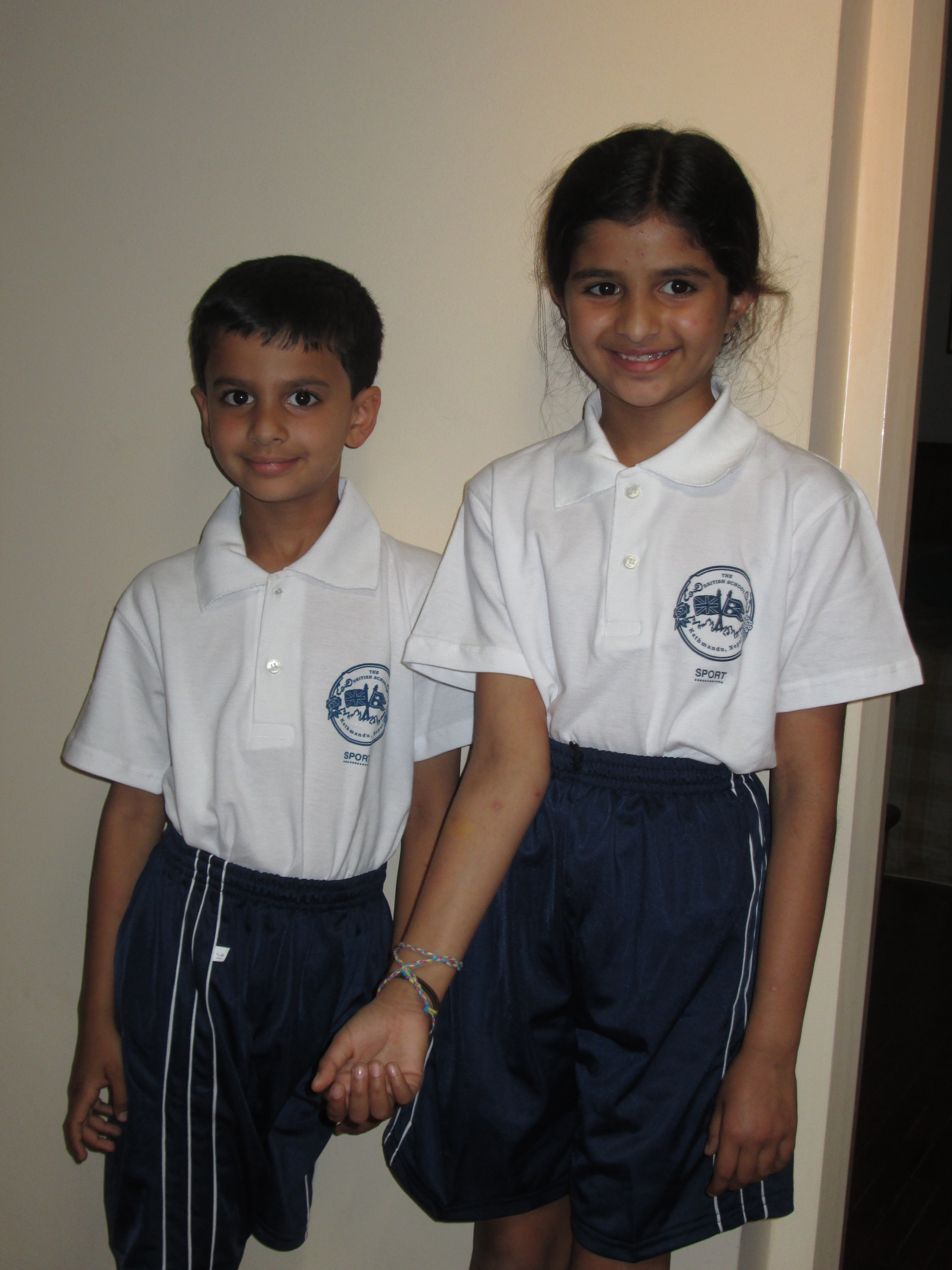
Janani and Sajjan in their PE Uniforms.  They only have uniforms for PE, not for the school day.

Janani and Sajjan in their PE Uniforms. They only have uniforms for PE, not for the school day.

We were learning about nature and we all stood in a circle and we got into pairs of two and we each got a thing. Like we could get water, the sun, the trees, the birds, some part of nature. And then there was this big ball of yarn. The yarn started with the sun and then the tree needed the sun and then the sun passed the yarn to the tree. And we kept passing the yarn. The tree passed the yarn to the plants. And then the plants passed the yarn to the soil and then the soil passed it to the tiny little animals and the tiny little animals passed it to the water and then the water passed it to everybody again. And that’s how we feel that nature is all connected but climate change is destroying it so we have to make it better.

I miss from NC the fun parks and the water parks like Great Wolf Lodge. And I like getting books from the book store, but what I don’t like about Nepal is that there is no library so we just have to get books from the book store. And I don’t miss my house because we are going to get another house!

The kids in my class are Yulo, William, Shaurya, Ishat, Max, Anna, Iona, Keito, Honami, Hanon, Emily, Jack, Nitesh, Musa, Fayaz, Aayan, Seoyoon, Kirsten and Sangye.

Janani:

Writing (late April): Nepal is very cool! It is very different from USA. One big difference is that there is two power-outs a day. Power-outs are when there is no power so the refrigerator and the lights don’t work. But in our house, there are windows on the roof so in the daytime, we get lots of light. It is so awesome when everything is dark! Another small difference is grocery stores. Most grocery stores in Nepal are very small but they can fit lots of things in it. Also the people in Nepal pay with Nepali Rupees instead of dollars. Nepal is so different from the USA.

Interview (mid June): Some things that I like about Nepal is that our house isn’t that big but we can have so much things in it and it is easier than living in a big house. And at school, I go to the British School and it is really fun because we do lots and lots of different things very often. And we have breaks very often and we do fun things very often. And just last week, I went to a soccer game to play against another school and it was really fun! We do projects, big projects, so my teacher gives us the projects after half-term and we have until the end of term to do them. And for this term, we’re going to do three big projects about WW2 and I am going to make a collage on a picture of WW2, and I’m going to make a fact file about kids in WW2 and I’m also going to make a board game that involves facts of WW2.

Janani playing defense at the soccer match.  TBS lost 3-2 against KISC.

Janani playing defense at the soccer match. TBS lost 3-2 against KISC.

At Bristish School, we have a lot of unique assignments. In English we watched a film with no words and it was very interesting and it had music. Then we were supposed to make our own film that only used music, no talking, and the film had to use the music that the film that we watched, that one use. So we had to create a film and act it out and make a video of it and it was really cool and it make us think a lot. Math is not that unique. And I don’t really remember the math assignments…

In Nepal there’s lots of differences than North Carolina. We have to clean lots of things like body parts and things that we buy before we eat them or play with them or do anything with them. For example, when we come home we have to wash our feet unlike North Carolina because it is so dusty. And I’ve noticed that there’s much less buildings than NC. Well, like the buildings, there are lots of buildings but not very much of them are very big. And they all seem to be made out of the same things – bricks. And they don’t look very new, they all look so old. And the weather is very hot, not like NC [remembering how NC felt in April when we left!!].

There are lots of things that I miss from NC. The thing that I miss the most is all of my friends and also I miss how clean it was and that we could just like drink any water, like from the tap or whatever and that we didn’t have to wash our feet when we came in from school. Well, one thing that I don’t miss that much is our car because I feel so good when we are biking and walking everywhere because we don’t like use so much pollution, I mean make so much pollution. It’s really fun biking and walking, it is much more fun than sitting in a car doing nothing. I kind of miss school because there is not so much British accent and people that don’t understand me or I don’t understand them because of their accent and because the words the words that they use like loo, trousers, trainers [toilet, pants, sneakers] and all that!

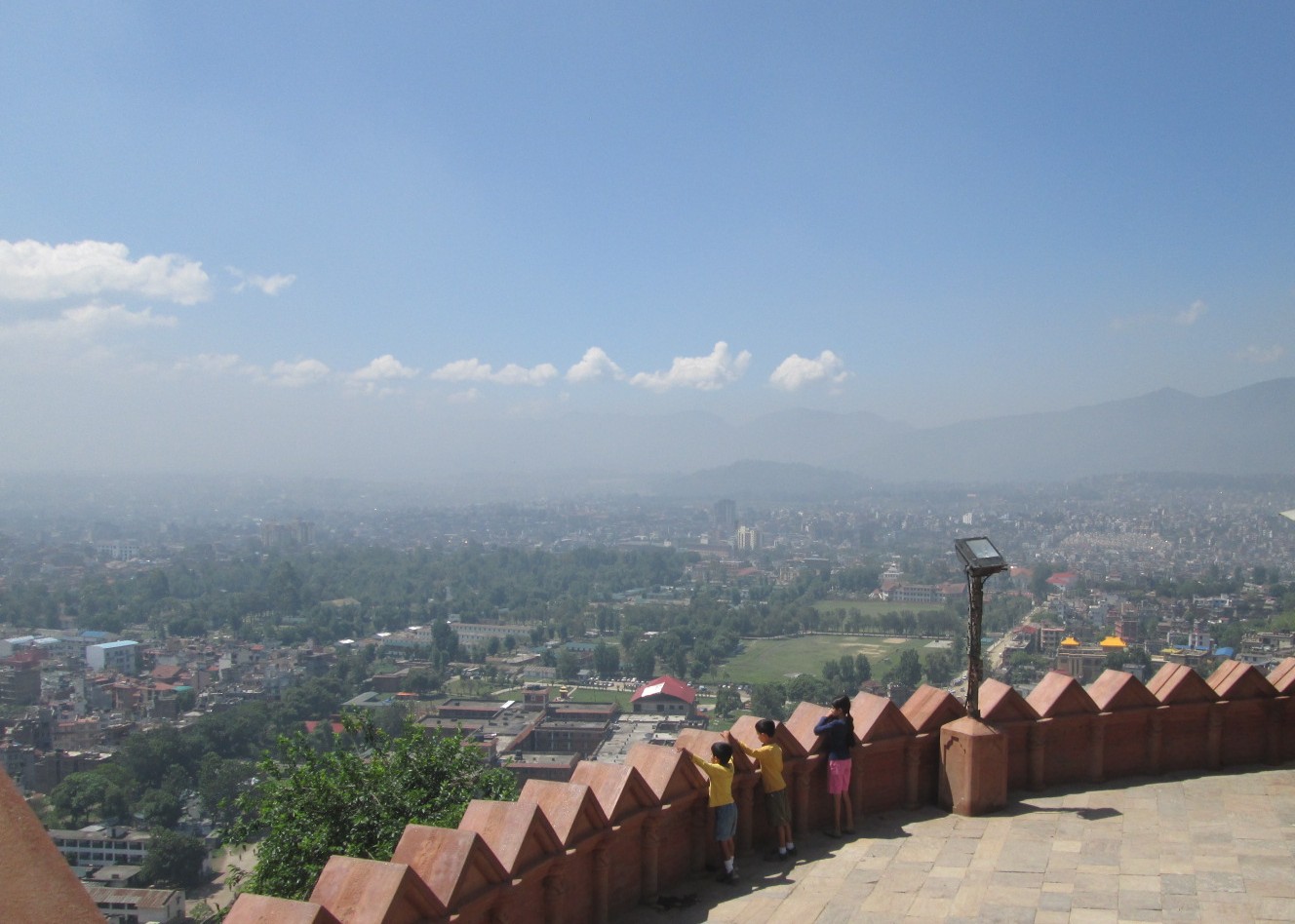
A birds eye view of the dust and pollution within the KTM valley.

A birds eye view of the dust and pollution within the KTM valley.

The people in my class are Yashasvi, Sana, Mina, Yuriko, Harira, Soyun, Jini, Miyu, Chinyue, Prama, Charlotte, Isabella, Amodini, Shloka, Samir, Dan, Daniel, Dorjay, Rosheen, Karou, Kyoungmin, Letti.

Behind Every Dark Cloud is a Silver Lining…

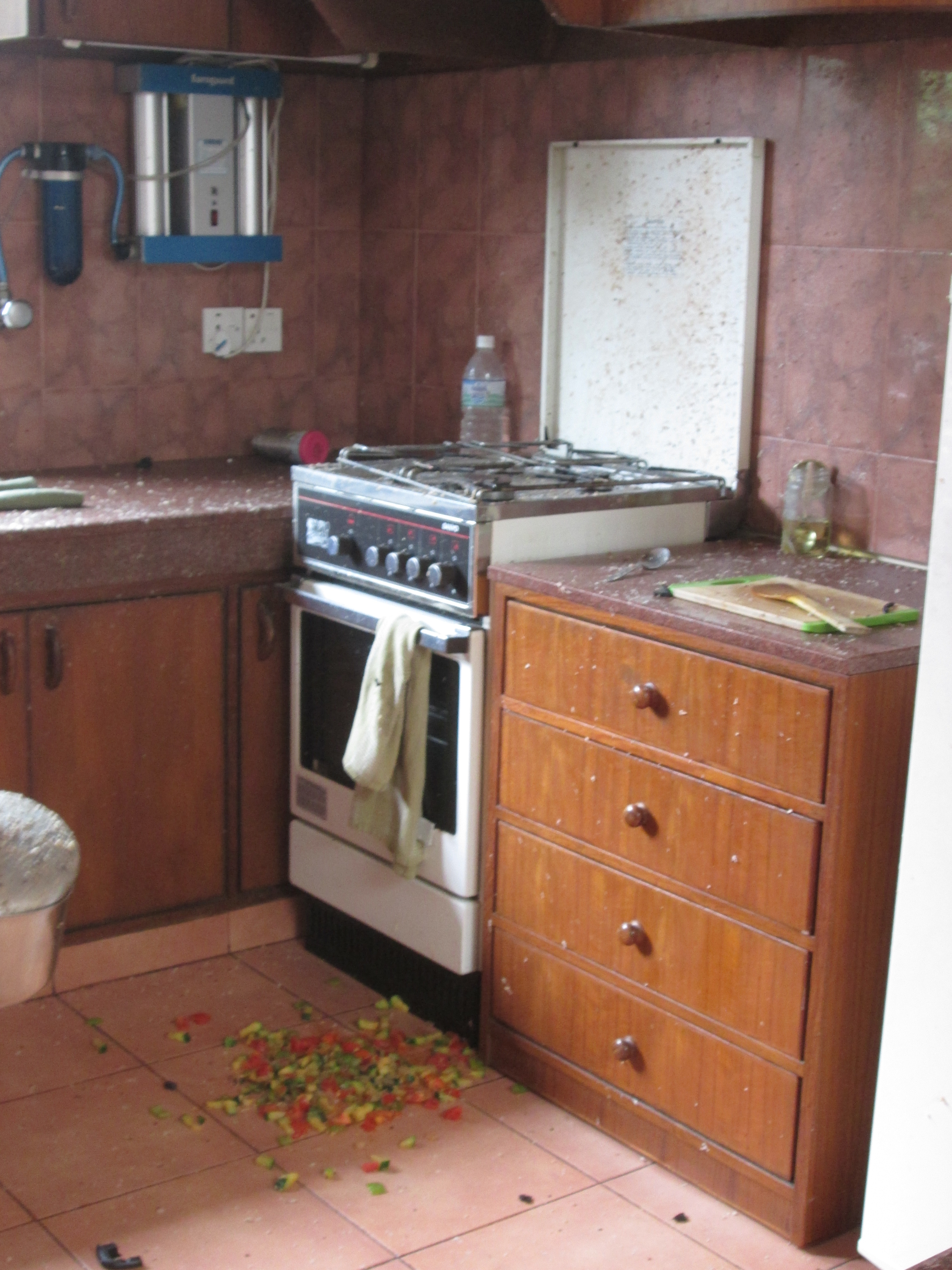
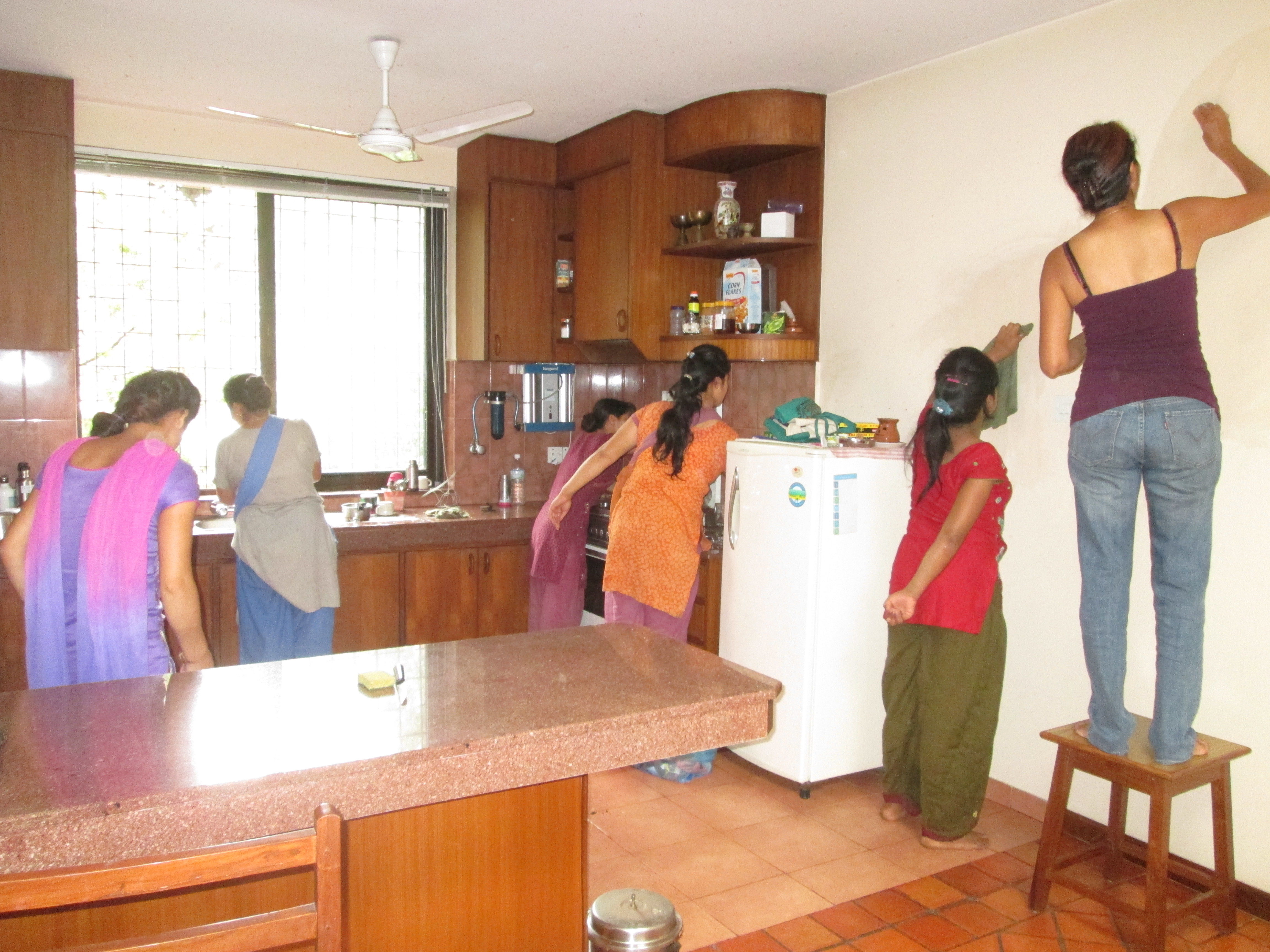
BOOM!!! The largest, loudest, most dangerous explosion erupted in our kitchen — the pressure cooker on the stove. I was standing nearby and darted away screaming. The kids and Prakash sat nearby in the living room, getting a board game ready to play – they sat shocked in silence. Within a few seconds the deafening noises and cloud of steam subsided and Sumanth’s loud, scared cry broke out. A thin layer of black-eyed-bean mush covered every visible surface in the entire kitchen — counters, floors, backsplash, stove, window, ceiling, cabinets, walls — EVERYTHING! It took a few minutes to quiet Sumanth down and assure him that we are all safe and that the mess will (somehow) get cleaned up…

IMG_2598

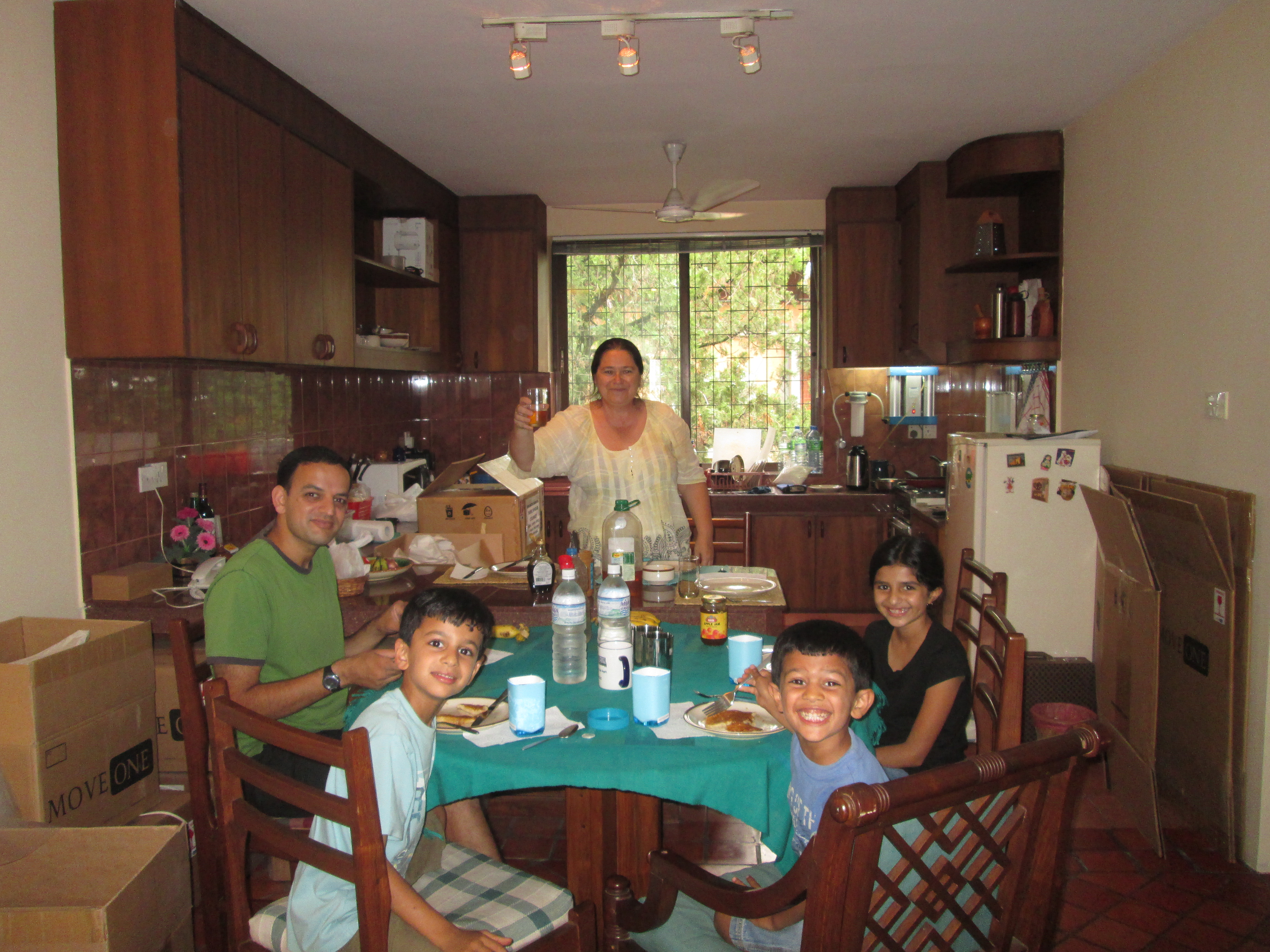
Minutes later, help arrived in droves! Gordon, our next door neighbor stopped by. Since our meal was splattered all over the kitchen, he graciously offered to make lunch for us! Within minutes, Gordon and Marilyn whipped up a yummy lunch of pancakes and fruit — hadn’t eaten pancakes that delicious in months…

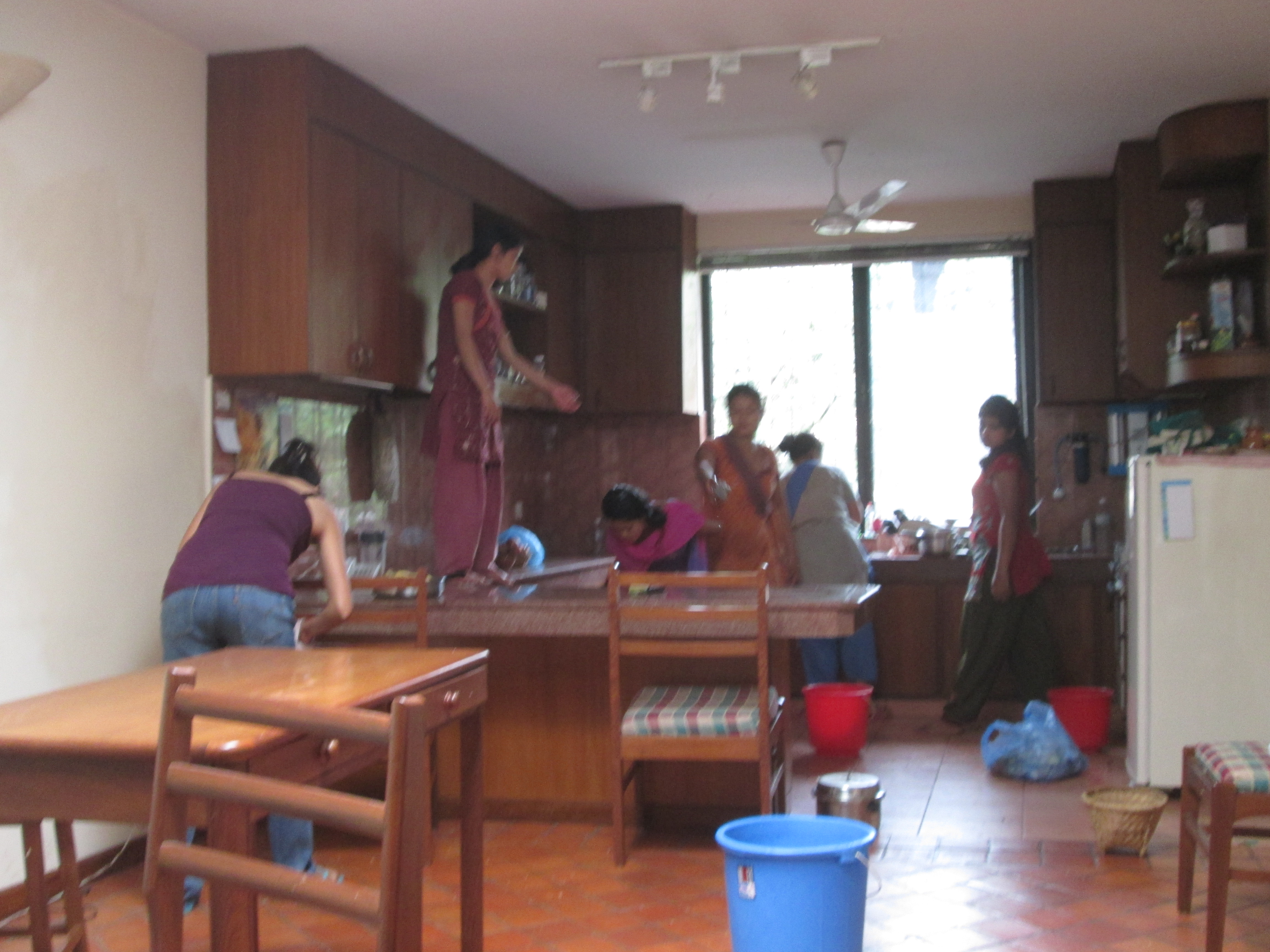
The nephew of our landlord along with their maid also arrived moments after the explosion — I think the whole block heard!! He inquired about our well being and ensured us that their staff will help with the mess. Within 10 minutes, six – yes 6!! – of their maids were over scrubbing, wiping and sweeping the food waste. It took this army of helpers about an hour to get the kitchen back in order…

IMG_2601

Needless to say, we felt SO blessed that we escaped this horrible accident, relatively unscathed… I FORTUNATELY was far enough from the stove to only have a few small, minor burns ; the troop of maids completed our insurmountable, but unavoidable job ; even though our lunch was spoiled, a yummier one was kindly offered to us. Angels in disguise came to rescue us in our time of need… Sincere appreciation to the Rana family and staff, and Gordon and Marilyn…

IMG_2610

Behind our dark cloud this Saturday afternoon was a bright, shining silver lining…

Had this incident happened in North Carolina, would our neighbors have heard the explosion? Likely not, as the distances between homes is much greater and windows are generally closed. Even if they had, would they know the boom came from our house? Would they have come to inquire? I’m not so sure… We likely would have grabbed take-out for lunch and started cleaning up the mess ourselves. Several hours later, perhaps, the kitchen might look somewhat like normal, our arms would be really sore and we’d be ready for a LONG nap. A testament to “village-style” life as opposed to the “nuclear-style” life we are used to in the USA. There are pluses and minuses to both. A lot depends on one’s perspective or preference — lack of privacy OR someone’s always there to help ; everyone knows my business OR there is always someone to keep an eye on the kids ; anonymity OR life as an open book…

This minor disaster left me grateful to live in Nepal :-). What would you prefer and why?

IMG_2612

Daily Routines…

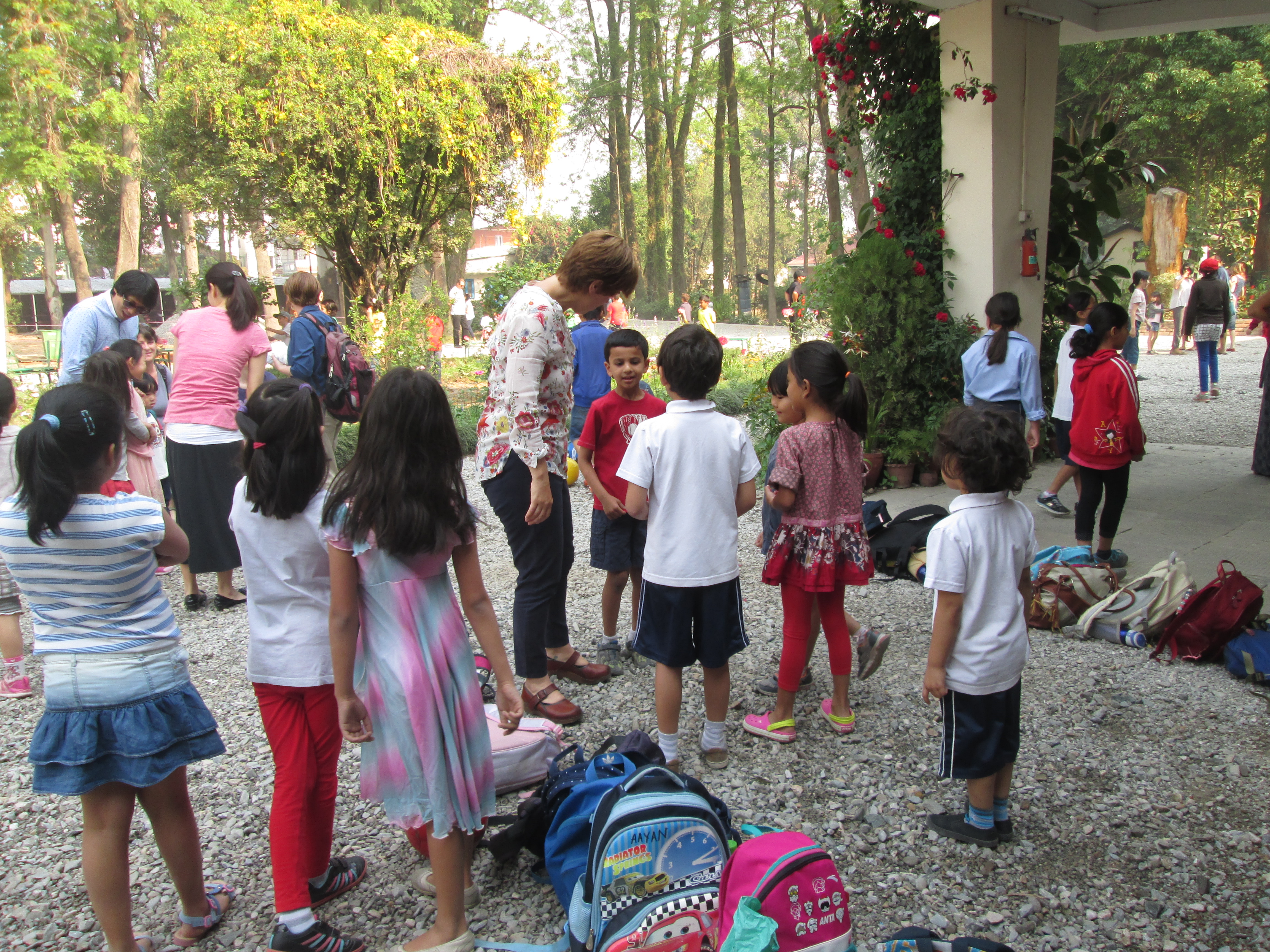
I wake up around 5:45 as the sun rises exceptionally early here in the summer – it is difficult to sleep much longer!  My morning routine consists of making breakfast (for all of us) and lunch (for the kids) and herding the children through their morning routines! We have a TV but don’t use it, so light classical music courtesy of Pandora is switched on after waking up. Pandora has become a dear and treasured friend… It is always on (when the internet connection is working, which is about 90% of the day). Soothing classical music in the am transitions to upbeat tunes later in the day. Prakash bathes, chants morning prayers then cycles out to a bakery to pick up a fresh loaf of warm bread and a 1/2 liter packet of milk. He’ll have a quick breakfast, chat with the kids and then ride to work around 7:30. The kids wake up between 6 to 6:30 but drag their feet to complete their few morning tasks (change clothes, brush teeth, make bed, get backpack ready and eat breakfast). We walk to school at 7:55am and the school gates open at 8am; at this time the kids can play and run around with their friends until the bell rings at 8:15. This is an enjoyable 15 minutes :-). Kids are fresh and enjoy greeting their friends; many parents are mingling around; a few teachers are available to chat with and generally the morning weather is very pleasant. Drop-off at The British School is so different than any of the half-dozen other schools we’ve been to – the strong community and family feel is very prominent and sets a good tone to start the day.  When the selected student of the day happily rings the giant cowbell,  parents then distribute goodbye hugs and kisses and the kids are off for the day!

Greeting the teacher before running off to the football / soccer field.

Greeting the teacher before running off to the football / soccer field.

I have 6 hours until picking the kids up in the afternoon and it is amazing how those precious kid-free hours fly by so quickly! I spend much of this time running errands and maintaining the household:

* Laundry — After sorting, counting and tabulating quantities and prices, I drop off dirty laundry at a small business which is a 2 minute cycle ride away (yes, riding with bags of clothes can be tricky and wobbly!). It is a family-business with the son and father manning the shop and ironing all items. I don’t have the courage to ask where they hand wash the clothes (likely a not-hygienic-per-Western-standards water source) and just pick up the (relatively) clean clothes 2-3 days later. Another wobbly bicycle ride home!

* Groceries — Purchasing groceries is tedious for two main reasons – there is no minivan trunk to fill a week’s worth of food in and the refrigerator doesn’t operate 24-hours-a-day, so food doesn’t keep. I end up going to a grocery store, fruit seller or vegetable seller about once every two days, filling up my backpack and carrying 1-2 additional bags. We borrowed Caleb’s “minivan bike” for a few weeks and this eased the load on my back and almost tripled my carrying capacity. I’m looking forward to having our own within a month or so! Also, since we don’t have Sams Club and Costco down the road, toilet paper is purchased in packs of 6 rolls, not 56; lentils and grains are sold in bags of 1 kg, not 10; and dish soap comes in a 6 oz bottle, not 1 gallon. You get the drift – we buy things in MUCH smaller quantities thus needing to replenish more often. Also, food doesn’t stay fresh as long as in the USA. Milk will keep for 1-2 days; bread, fruits and vegetables for 2-3 days. Frequent grocery store visits just can’t be avoided.

The panniers can hold an amazing amount!  Toss the groceries inside and the kids on top and you are off!

The panniers can hold an amazing amount! Toss the groceries inside and the kids on top and you are off!

* Cleaning — Nepal, and most other countries in Asia, have extremely low labor costs ($1 to $5 USD per day for low-skilled, working-with-your-hands jobs). Whether this is a blessing or curse, we are living in this society and are somewhat accepting the ways… Our apartment is serviced 6 days per week. The maid cleans the bathrooms, floors and kitchen, dusts everything, and changes the sheets and towels. Dust and pollution levels are high and windows are always open to allow indoor circulation (no air conditioner), so frequent cleaning is required. She doesn’t do dishes, so that, along with tidying up and cooking are my responsibilities. Needless to say, I’m enjoying the reduced burden of home-maintenance!

Laundry, groceries, cleaning and other home tasks (maintaining water levels in storage tanks, gardening, exterior home care) will look very different after we move to the house in July. After settling into a new routine, I’ll write about the daily practices of living in house and how that compares to apartment-living…

I spend the remaining, kid-free time on a variety of enrichment activities:

* Classes – attending Nepali language classes has been really enjoyable and a highlight of my routine! I feel the language is easy to pick up because the origin is Sanskrit as is my mother-tongue, Marathi. Many words are identical or similar to Marathi and the grammar and sentence structure is logical. I have two teachers, Raju and Deepa. I go to Raju’s house twice a week and he uses the class with me as an opportunity to train his wife, Prabina, to become a Nepali language teacher. The three of us focus on conversation and ensuring I use correct grammar. Deepa comes to our apartment once a week and her focus is more on vocabulary. Both are great teachers and I’m enjoying learning not only Nepali from them, but tidbits about Nepal’s culture too…

* CSGN – The Cultural Studies Group Nepal is an amazing group of motivated, curious expats who want to get to know the culture they live in. I attended the Thanka Art Studio visit and the day-hike from Dhulikhel to Panauti with this group. Most members are a bit older (my guess is an average age of 50). They meet 3 times per month (one hike, studio visit and lecture or presentation each per month).  After a short break for the summer months, they’ll resume educational activities in September.

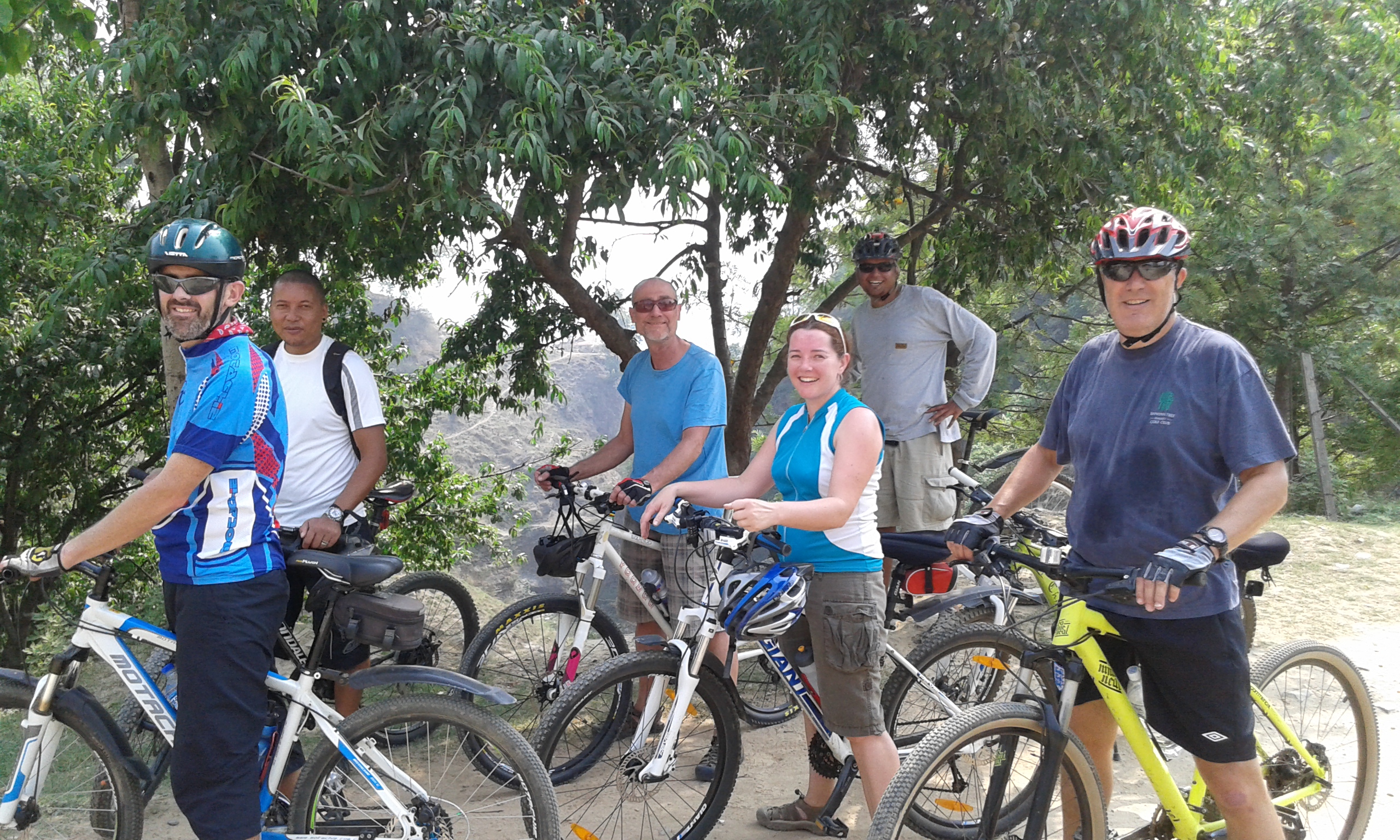
* Exercise – Tuesdays are biking days! I bring my bike with me to school and a group of 6-8 parents leave shortly after drop-off. We ride for 3-4 hours, stopping at the tops of steep hills and at some scenic viewpoints; after a few hours we break for Cokes and snacks then finish up the ride back to home. For me, the ride is an enjoyable but very grueling challenge…  I come home, scour off the layers of sweat, dust and mud and then collapse for the bit of time before picking up the kids. I really look forward to Tuesdays :-). I’ve also attended a few yoga classes (NOT on Tuesday, no more time or energy left!). There is a lovely studio within a 5 minute cycle ride from our apartment. Only expats attend as the price is prohibitive for locals ($6 USD per class). Rotating expats teach the classes and the broad variety of styles is wonderful.

* Blog – Writing blog posts has also been really enjoyable… It forces me to reflect which generally leads to an optimistic perspective on this amazing family adventure. I have stockpiled several topics to blog about – my aim is still to post once a week…

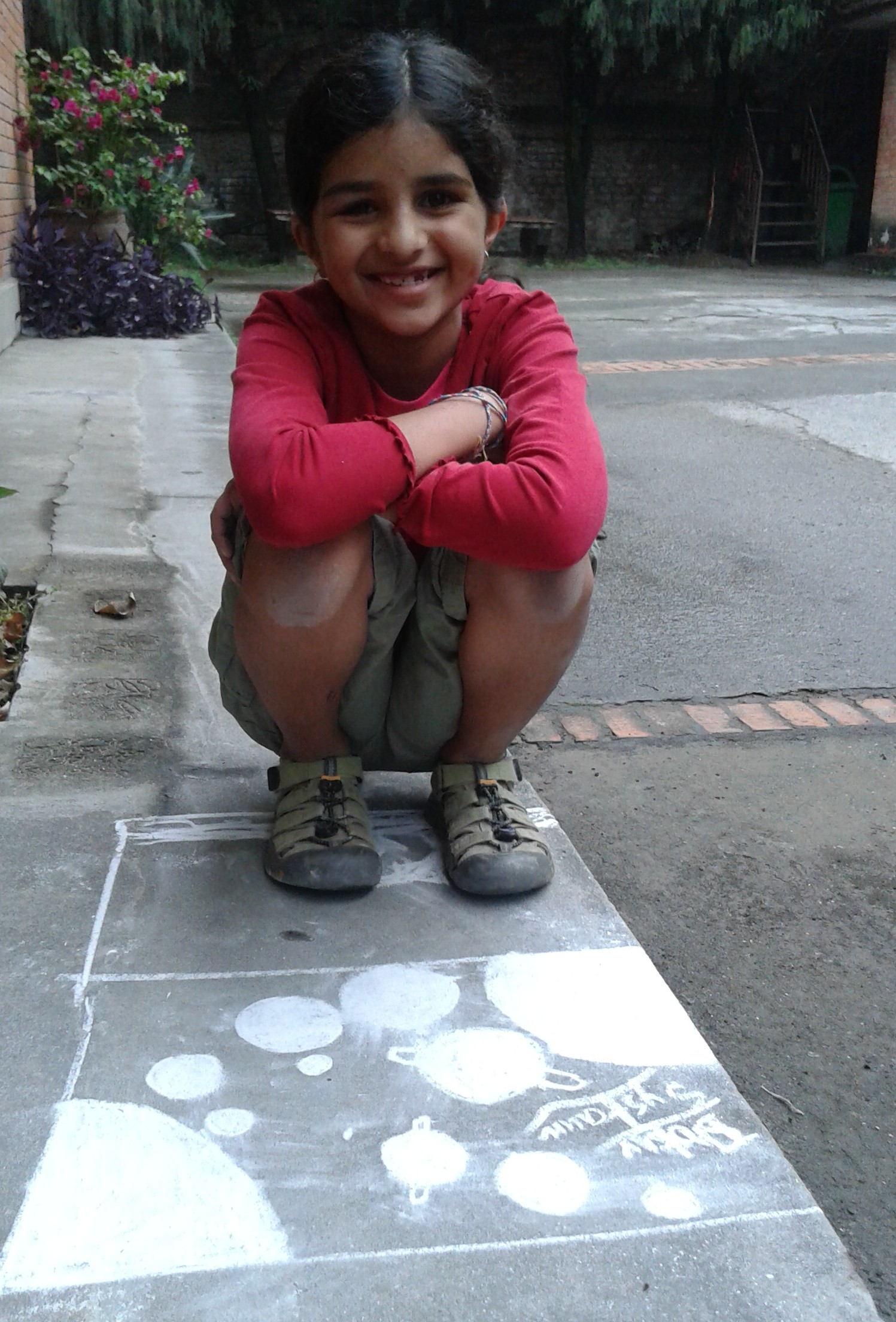
On most days, I pick up the kids at 3:30pm. School ends at 2:30 and 4 of the 5 days of the week, the kids have extracurricular clubs (athletics and arts focused) for one hour. After a full day of learning, playing and enjoying, they are wiped out! We walk home, freshen up (in Nepal, as in India, it is customary to wash not only your hands and face after coming home, but your feet too! it is so dusty here, that washing your feet after coming home is a must), have a snack and relax a bit. Thankfully the kids have VERY LITTLE homework, so we usually head downstairs and play in the courtyard of our apartment – the 3 favorite activities include basketball, soccer and chalk drawings! We head back up around 5:30 for baths.

Janani's chalk solar system!

Janani’s chalk drawing of the solar system!

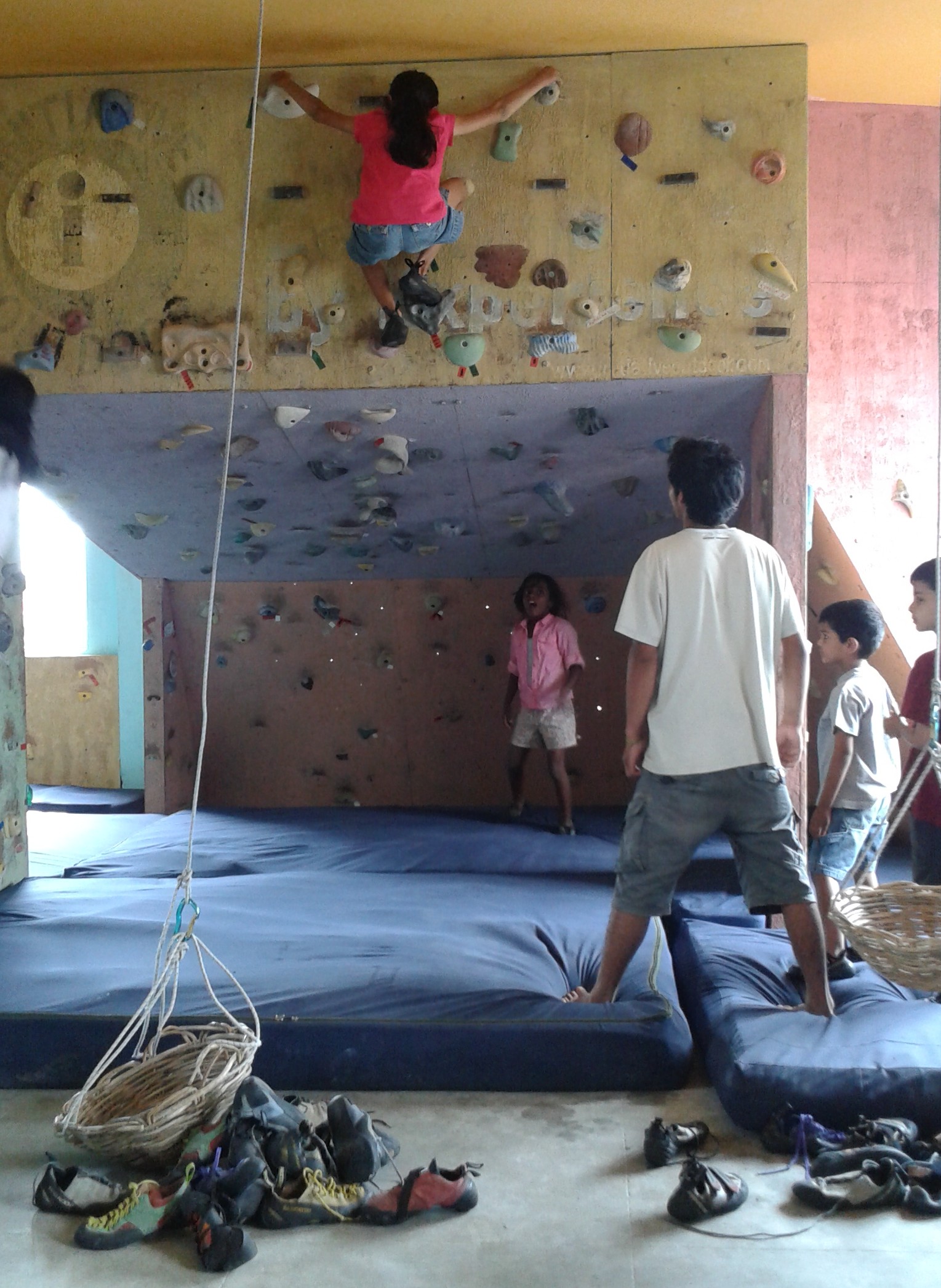
One or two afternoons per week, I caravan the kids on bicycle to classes and activities.  Janani is continuing vocal lessons, Sajjan is learning tabla (Indian drums) and Sumanth has just started vocal lessons. Also, on Thursday afternoons, an adventure company opens their mini-rock-climbing gym to kids. We’ve only been once, but had a blast and hope to attend weekly.

Janani climbing at the mini-gym.

Janani climbing at the mini-gym.

Prakash rides home by 6:30 and we’ll have dinner together. The kids have SO much excitement to share about their day with Baba! Constant chitter-chatter and buzzing children entertain us while we eat. The kids head to their room around 7:30 to 8 and read for a bit before sleeping. Prakash often falls asleep quite early too; biking an hour and working for 10 is exhausting! I enjoy a bit more quiet time at the computer, on the phone and with a good book and call it a night…

All in all, my days are quite different here than in North Carolina! The main differences include:

* time – no job and no preschoolers home with me part-time, so overall more free time
* vehicle – no minivan, traveling only on bicycle, foot and taxis once in a while
* radius of activity – significantly smaller travel distances between home, school, shops and activities
* meals – rarely eat leftovers, cook often and in smaller quantities

What would you prefer — life in USA or life in Nepal?!?  Please answer in the comment section!!

USA:

* guaranteed basics (electricity, water — overall supply, drinking water and hot water)
* amazing infrastructure and services (roads, internet, libraries, parks)
* conveniences (dishwasher, clothes washing machine and dryer, vacuums)

Nepal:

* access to low-cost labor (maid, gardener, babysitter, driver)
* convenient distances (work, school, shops, ALL activities within a 1 mile radius)

Initial Impressions of the Workplace – Himalaya’s EPA

How time flies!  May has come and gone, which means I’ve been at ICIMOD for a full month already.  Many friends have asked me about the work environment and culture.  Although it’s still early to make many conclusions, I can offer some first impressions.

The ICIMOD building and campus are beautiful.  I knew this when I came out for the interview.  Attractive flower beds decorate the front garden and there’s a prominent cycle stand (i.e., bike rack) beside the main building.  Upon entering, the majestic wall hangings that decorate the main corridors and stairwells are breathtaking – panoramic photographs of beautiful Himalayan mountainscapes with native residents in the foreground engaged in their daily activities.  Even after working at ICIMOD for a month, I can’t help stopping and staring in awe at these photos.

Himalaya

My first day at the office had a couple surprises.  I arrived on bicycle and was directed to a handicap-accessible restroom where I could change into office clothes – no locker room with warm showers like we had at the EPA!  I went upstairs to check in with my department secretary and was greeted warmly by a number of familiar faces whom I remembered meeting during my interview a few months before.  My group leader, Arnico Panday, showed me to my office which is in a new wing on the ground floor that was still partly under construction.  The office had two bare exterior windows and a dilapidated desk.  That afternoon, a carpenter came in to take measurements of the office and we sketched out several pieces of furniture together!  After a few days, my custom-built desk was delivered and the shelving and file cabinets arrived a couple weeks later.  I used a loaner laptop for a couple days, but a brand new Dell laptop with docking station arrived the following week.  The office gradually took shape throughout the month of May.  Blinds were put on the windows, office supplies were delivered, and I even got a pedestal fan that helps me cool off after my morning commutes.

One highlight of my first month at work was the bike commute.  My 6 km ride from Heritage Apartments to ICIMOD takes between 20 and 25 minutes.  The morning ride has some gentle downhills and very little traffic, providing a lovely start to each work day.  The evening ride home takes a bit longer, due to the uphill grade and heavier traffic volume.  The busiest intersection that I pass through is Satdobato, which literally means 7 roads!  There’s no traffic light there (or anywhere in Kathmandu, as far as I”ve seen), but the intersection is usually manned with a police officer who tries his best to direct the unruly traffic while inhaling an lethal dose of air pollution.  Keeping in mind that May is National Bike-to-Work month in the U.S., I commuted by bicycle 24 times.  Last week was the first time in my life that I managed to bike commute for 5 days in a single work week, and it felt great.  Cycling the streets in Kathmandu is a lot like playing a video game.  There are numerous obstacles:  most of them are moving, some that yield, others that intimidate, but one quickly learns to predict their patterns of motion.  I’m happy to report that I’ve had no accidents and only one close call in my 288 km of commuting thus far.

A highlight at ICIMOD been the genuine optimism exhibited by our Director General, David Molden, and reinforced by the near absence of cynicism among the staff.  We’ve had one all-hands meeting and a full-day retreat for all staff at an off-site resort.  At each of these events, I have to pinch myself to believe that the research budget here is actually on the rise and that ICIMOD is hiring aggressively – a stark contrast to EPA where the budget was cut year after year and morale was plummeting.  Whereas most Americans seem to have grown complacent about environmental protection, taking their clean air and water for granted, Nepalis are acutely aware of the importance of addressing their environmental hazards.  The daily imperatives to filter tap water before drinking and to wear masks while traveling the roads are the most blatant reminders.

ICIMOD colleagues descending on the refreshments at an all-hands meeting.

ICIMOD colleagues descending on the refreshments at an all-hands meeting.

My closest colleagues at ICIMOD are Bhupesh Adhikary and Praveen Puppala.   They also work in the Atmosphere Initiative and sit in offices adjacent to mine.  Bhupesh joined ICIMOD in March.  He’s a native of Kathmandu, but did his undergraduate studies and PhD in Iowa (Greg Carmichael’s group).  He’s a whiz at running meteorology and air quality models.  He even runs daily numerical weather forecasts for Nepal (reminds me of Rob Gilliam predicting wave heights and hurricane paths).  Bhupesh is extremely talkative and very friendly.  Praveen started the same day as me, after moving from IASS in Potsdam, Germany.  Prior to that, he worked at Scripps (San Diego) and at some top-notch research institutes in India.  Praveen is our measurement expert, and has been tasked with establishing a handful of mountaintop and urban observatories for monitoring air quality in the region.  He is lanky (looks like a giant next to Bhupesh), not quite as talkative, but very amicable.  The three of us often eat lunch together and have openly expressed to each other our environmental aspirations, which are quite alike.

Colleagues enthusiastically working on a team-building activity at our retreat

Colleagues enthusiastically working on a team-building activity at our retreat

Last week on a phone call to NC, Jay Helms (a close friend from Breckenridge) asked me whether the work I’m doing at ICIMOD is similar to what I had envisioned before joining.  My split-second response came as a surprise, even to me – a decisive “No.”  Whereas I came with the intent of doing research that would help reduce air pollution in Kathmandu and the Himalayas, my work during the first month can be best characterized as “capacity building.”  Our research group spent most of May gearing up to host a 5-day training class on a cutting-edge air quality model (WRF-Chem) that will be taught to young scientists and government staff from 6 of ICIMOD’s member countries, then host a regional atmospheric sciences conference with 80 participants from across the region, and then convene the first meeting of an international advisory panel for a proposed new graduate degree program on atmospheric sciences in the Himalayas.  While pitching in wherever needed, my main task has been to organize the advisory panel meeting: inviting panelists, setting the agenda, and trying to build consensus within our team about our motives for starting a degree program.  I’m hopeful to return to modeling research and data analyses soon after these meetings are over so, in hindsight, perhaps the more accurate answer to Jay should have been “Not yet.”  More on that in my next blog post…

— Prakash

House Hunters International – Bhaves in KTM

Inquiring minds want to know – what is it like to rent a house in Kathmandu, Nepal?!? The privilege of home ownership is granted solely to Nepali citizens so renting is really the only choice for expat residents. There are basically three main methods to finding a home for rent: a rental agent, the KTM expat Google group, and word of mouth:

* There are several agents in KTM who help transient families find housing. They know dozens of landlords and also know the “story” of almost each and every rental house (who lives there, which country they are from, who is their employer, how long they’ve lived there). After telling the agent our basic requirements (like which part of town we’d like to live in, number of bedrooms and budget), they accordingly show us available homes. There is (usually) no website with consolidated information about the house size, photos, prices – it’s a black box! So many unknowns, fairly illogical and the pricing is anything but straightforward! Their commission comes solely from the landlord. Throughout our search, we worked with three agents: Sangeeta, Arun and Pratap.

* The Kathmandu Expat Google Groups is the closest thing we have to Craigs List – an amazing local resource. In terms of housing, dozens of emails are posted each day with folks listing and folks looking for available apartments, rooms, houses, sublets, and guest houses. We responded to one posting from this resource.

* Given the nature of expats’ job assignments, turnover is very high and folks are always coming and going. Some really good houses often are transferred without any advertising. We saw two houses from referrals.

These two lists summarize our primary and secondary priorities in a home:

* Proximity to The British School (TBS) – We may or may not get a car, but our aim is to live car-free on weekdays. Walking distance to the school is a must.

* Well-lit with large southern exposure – As Kathmandu has a mountainous climate over 4300 feet above sea level, it gets quite cold in winter time. Sunlight pouring into the house is critical as it is the main source of warmth. Central-indoor heating is practically unheard of throughout Nepal.

* Well maintained – Standards in developing countries are far different than what we are used to in the States. We’re not seeking a U.S. standard of living while here, but a well-maintained home would be nice.

* Home size (1500 – 2500 sf) – We’d like to be able to live comfortably and also host guests

* Cost (600 – 1200 usd) – Prakash’s housing stipend from ICIMOD is quite generous, covering the lesser of $600 USD per month or 75% of the cost of our home . We’d like to minimize cost on our home so we can maximize our travel budget!

—————

* Furnished – In terms of furniture, we sold most all that we owned in NC and have come to Nepal with one bed and one beloved rocking chair (due to exorbitant cost of shipping to this land-locked nation). It would be great to not have to purchase so much at the beginning.

* Low-traffic street – This is obvious… For peace and quiet and for the safety of the kids.

* Nice garden – Organic, veggie patches are very common and sought after here. It would be a great addition to the house, enjoyable to care for with the kids and more enjoyable to eat!

* Nice outdoor space – Folks in KTM basically live on their terraces in winter time, as we’ve been told. Once the sun rises, people head out and soak in the warmth. At dusk, all hustle inside and pile on layers of coats, scarves and shawls. So a nice terrace, or balcony would be great.

We saw SO many houses! Here is the house-by-house summary (for those short on time or interest, skip down to CONCLUSIONS):

Within the first week of arriving into Nepal, I saw an ad on KTM Google Groups for an available house in Sanepa, the neighborhood adjacent to TBS. The house was indeed VERY close to school. However, it was poorly maintained, and far from move-in ready. When we arrived, the neighbors were burning trash and plant debris in their yard – very unappealing. Several walls had original artwork from a previous child tenant… the whole house badly needed a coat of paint but the owner said he would only paint a few rooms. There were 3 bathrooms, but all were a bit small. A large washing machine occupied the entire upstairs bathroom! The kitchen was quite small, with only a 3-seater breakfast table. The house had few advantages – in addition to location, there was plenty of space for all of us plus a few guests, there were numerous balconies, a lovely terrace, and a small garden. With A LOT of labor, this house could work for us. But on week #1, we just couldn’t imagine putting in that much effort and / or hiring laborers. Another advantage: very cheap – only $600 USD!

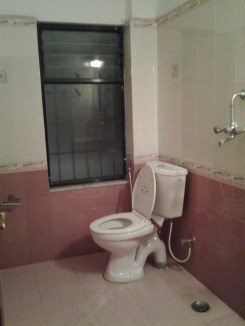
Sangeeta and Pratap are a team, and their efforts are the most straightforward in the business. They have a website (!) with a search engine. The website lists available properties, basic details, and tells the price for rent (!). The properties they showed us and those on the website didn’t match up 100%, but it is much more straightforward than the other agents. Also, just a week into our stay in Nepal, we met Sangeeta. She showed us four apartments; all were walking distance from TBS, had 3 bedrooms and were furnished. The first was SO close to the school, but not a good fit. It had a VERY small kitchen (think, NYC kitchen) and tiny bathrooms (i.e., you are showering right next to the toilet). It was on the ground floor, so probably wouldn’t get much direct sunlight. It had a nice garden and compound, but just wouldn’t work.

20140528_192406

The next apartment was at the end of a quiet side street called Shangrila Lane! It was on the 3rd floor of a small building. The apartment was very nice, clean and well maintained, but was quite small at 1180 sf. Other setbacks were the one shared washing machine for all tenants plus the landlord (5-6 families ; doesn’t seem like a huge deal, but if you take into account that electricity is only available about 12 hours per day, sharing one machine could get tricky!), and yet another very small kitchen. Nice, but would be tight for all 5 of us, let alone with overnight guests.
20140528_192926

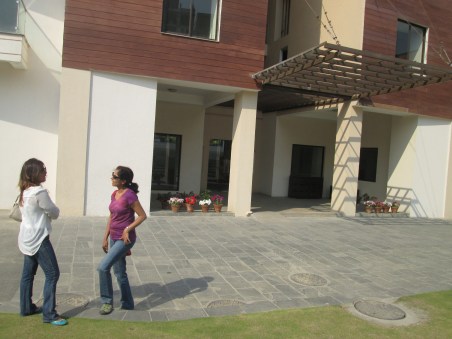
The last 2 were in a “high-rise” building (approximately 12 floors). They were both brand new, never lived in (rare find here) and were located on the 5th and 8th floor. Both were identical in layout and direction. The 5th floor had a peculiar “contemporary” style to its furnishings, not very tasteful in my opinion, but could work. A bit pricy at $1000. The 8th floor had a much nicer style (similar to Pottery Barn), and had a SOUPED-UP invertor system! He had eight invertors (having one is more typical for an apartment) which powered the entire apartment (refrigerator included!!) 24-hours a day. He also had an AC unit that could provide central heat – RARE find! This was really appealing – I am a desert creature – raised in San Diego and used to “sunny and 70 all year around”! In addition to being very pricy, $1500 per month, it went against our overall goal of living happily with less… One huge disadvantage was that the building was mostly vacant – there were probably 80 apartments in the building and only 7 families lived there so far! Many units were purchased by investors not planning on occupying their units just yet; others were still available for sale. Another huge drawback was the elevator system. Because the building is so vacant, they couldn’t justify running the generator whenever the power is out. Thus, when you are ready to come down, you would phone the watchman downstairs, he would switch the generator on and you’d be elevated down – seems a bit dicey…
IMG_2119

We concluded that we should start looking at bungalows – congruent with the advice received from Prakash’s colleagues and most other expats we’ve met… So, here goes!

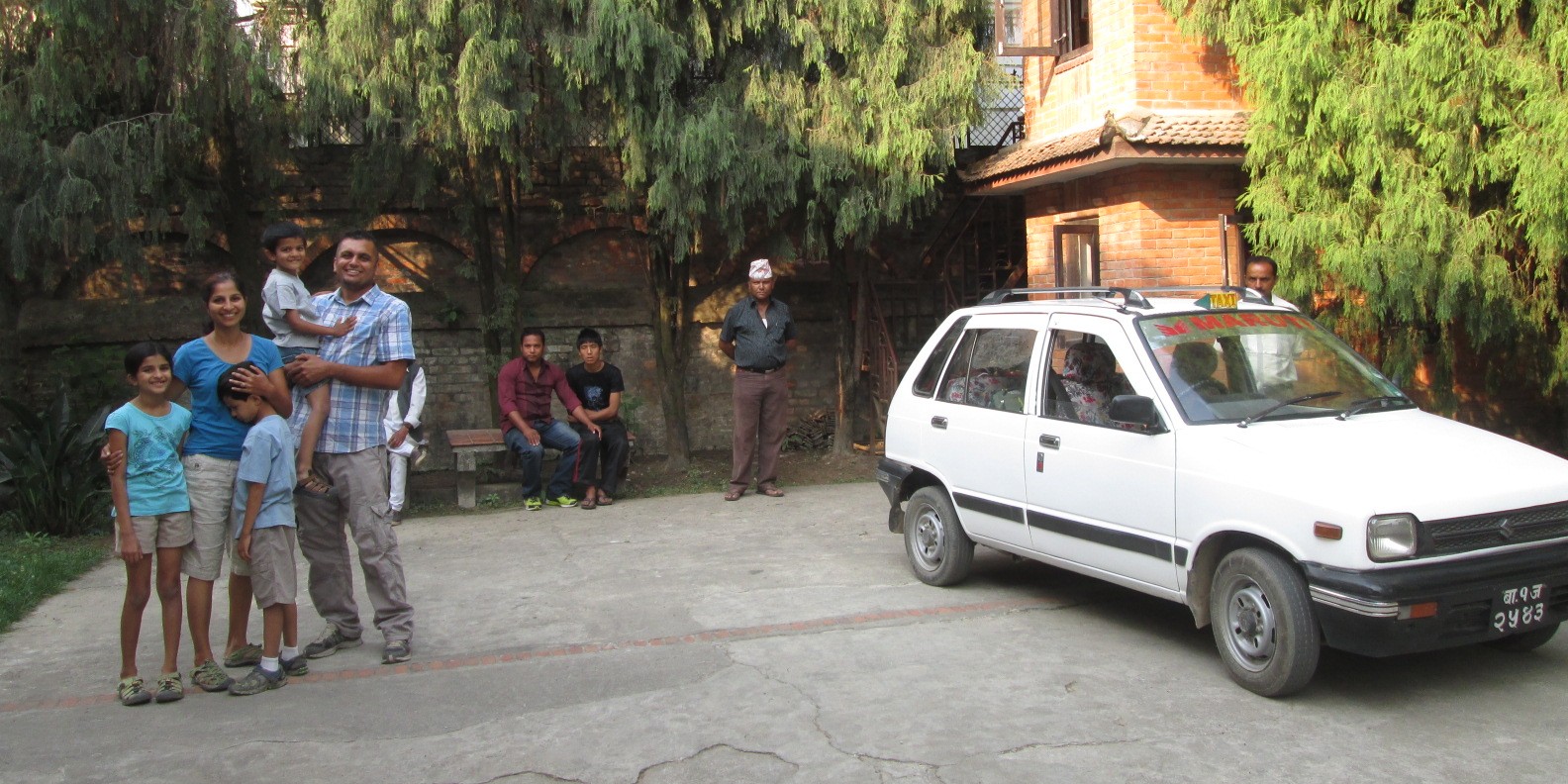
After seeing the apartments with the 3 kiddies in tow, it was a treat to go house-hunting while they were in school and before Prakash started work! Arun met us at our apartment and suggested we hire a taxi to get around efficiently. Our outing lasted 2.5 hours and covered over half a dozen homes. First we saw a house with a nice garden, good overall size and reasonable kitchen. But it was very old, poorly maintained, had horrible furniture, had signs of a leak in the bathroom, and the biggest issue – it was located ON the edge of the Ring Road (i.e. lots of traffic, noise and air pollution).

Next we saw a house that even up until now, has been my favorite :-). It is a bit far from TBS (would be a 10-15 minute pleasant bike ride, but really isn’t walkable). It is a beautiful house, well maintained, nice landlord, several blooming fruit trees (peach and apple), well maintained, spacious enough for our family plus the ability to host guests, quiet paved road leading to house, move-in ready, nice furnishings, and well maintained (did I mention that it was well maintained?!? this is huge for me!! so many houses are so run down and I am utterly spoiled after living in brand new / next to brand new houses in North Carolina for the past 10 years.). Downside was the location. A 10-15 minute bike ride seems okay, but I’m a bit concerned about the ride during the rainy season. We can get a car and drive to school, but I’d rather avoid this… Other downsides were a not-so-attractive kitchen, but tolerable; and no space to have a vegetable garden. House was probably $1500 USD (Arun rarely told us the prices of houses he showed us. After questioning him for the monthly rate, he would usually respond with an approximation).

We saw several more that were all generally undesirable. Mostly because they were old, not well maintained or not well lit.

Towards the end of our outing, we saw another potential option. It is brand new and still under construction, will likely be done within a month or so. It was BIG! It had a weird basement kitchen and large basement multi-purpose room. The ground level had 2 rooms and an open area that could be a combined foyer, living and dining. Given that the house was still under construction, we concluded that the kitchen could be relocated to one of the rooms on the ground level. The next level up had 3 nice bedrooms and very nice bathrooms. It had very fancy fixtures (bathroom and lighting). At the very top level, there was a nice terrace and a partially enclosed area to keep a washing machine. Another neat element was the size of the compound – it was HUGE! It was in bad shape though because of the construction but had significant potential to create a beautiful garden with several separate outdoor spaces. The basement level also had numerous rooms, each of which were accessible only from the exterior of the house. These rooms could be used as servant quarters or extra storage; there were just SO many of them, 5-7 separate rooms! Another less than desirable aspect to the house was that the house was far from the main entry gate having a very long driveway or entry into the compound. This just seemed unappealing to me, mostly from a safety perspective. Although this house is HUGE, it felt like it could work for our family – almost recreating our last home in Morrisville, NC, where we hosted a kid’s chess club, bhajan sessions, band practices, and numerous guests! But not only would the house be very expensive (probably $2200 per month), we weren’t sure we wanted to recreate the life we had just lived…

End of a long morning out… treated ourselves to a peaceful lunch out 🙂

Arun was determined to find something for us and two days later, showed us a few more houses (I wondered why he didn’t show us these on Monday, but decided not to ask :-)). This time the three of us walked from house to house, so they were definitely close enough to TBS. Unfortunately, most did not make the short list. Two were really old and not well maintained. Another was old yet getting renovated, but looked like months would pass before the work finished. One house did make the short list – it was also under construction with an estimated completion date of June 1 (fyi, the house is still not ready). The most appealing aspect of this house (besides being brand new) was that it is SO close to TBS. From the terrace, you can see the school’s football field. The kids could walk to school, door-to-door, in 2 minutes – literally! Other nice aspects of the house include: perfect size, nice layout and a lovely terrace. Downsides to this house include: high-rise apartment building in the adjacent plot (aesthetically unappealing, but we can deal with this), adjacent to the main road so very visible (passersby would notice when we are / are not home so big safety concern), very limited space for a garden, small compound so not too much outdoor play space, and completely unfurnished so significant upfront costs to outfit the home (appliances too). House will likely be $1500 per month.

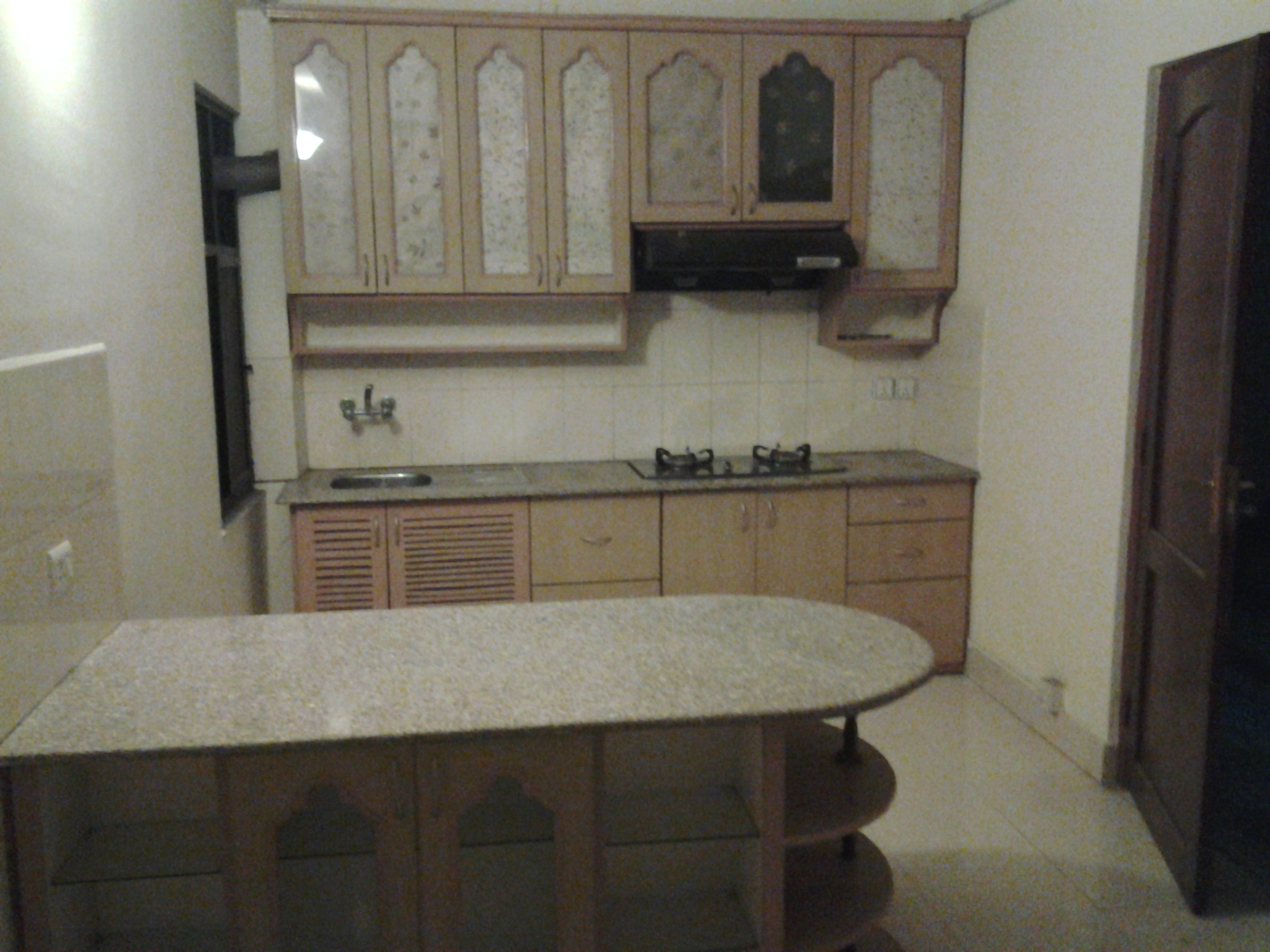
Have to write about this next very unique house… It was MEGA-HUGE!!! It is also still under construction and has 7 spacious bedrooms! In addition, there is a huge multi-purpose space on the top level. This house had the biggest kitchen we’ve seen in Nepal (very cool kitchen!) complete with 6 burner-stove and an island. It was on a nice plot of land and close to the school, but will be expensive, likely $2200 USD per month. Another neat aspect to this house was a HUGE skylight from the foyer to the top which made the house exceptionally well-lit. It was definitely not a possibility, but entertaining to visit.

This was yet another large, expensive house that Arun showed us.  A few nagging questions were running 20140430_093524through our minds at this point: why is Arun showing us homes well outside our stated budget ($1000) and why are Nepali landowners building such enormous houses? We spoke with Arun about the range of homes he showed us, but decided to leave the other inquiry alone at the time. In hind-sight, our guess is that land owners are trying to tap into the highest echelon of expat (top UN and Embassy officials) families. Their housing allowances are generous and could be lucrative for landlords…
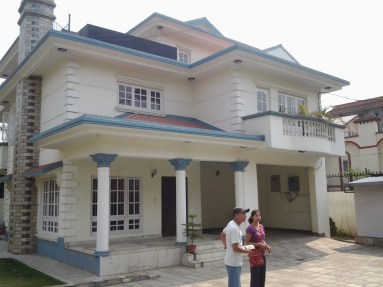
Sangeeta’s colleague, Prataap, showed us a few places that afternoon before we picked the kids up from school. Boy were we zonked by the end of this appointment – walking around KTM in the hot sun can get draining… We saw a nice and very affordable ($600 USD) apartment that was a 1 km walk from school. It was on the 3rd floor of a small building and occupied two levels. It was old yet reasonably maintained. Small rooms and kitchen, but a very nice bedroom and terrace. For the price, it was a good option. However, only older couples live in the compound of about 5-7 families. Maybe our kids would make too much noise, in their opinions?!? Also the size of the toilets reminded me of those you see in the pediatrician’s office! Kind of entertaining 🙂

Next, we saw a very big house on a VERY big plot of land. It is reasonably close to school (about 1.5 km away). The plot of land had a large grassy area, giant veggie patch, car park area, swing set and servant quarter area – it was HUGE. Inside, however, the house was just not well maintained. Prataap said the rent would be $1300 USD, which seemed like a great deal for the amount of house and land.

Saw another house, TOO dark, but spacious. Also a bit farther, so not a good option. I think I am very very picky!!! But, we will live in this house for 3 years, so we should like it, A LOT, right?!?

On Thursday morning, Prataap showed me (today was Prakash’s first day at the office) an apartment on the 6th floor of a different high-rise building. It had 3 bedrooms, a living room, kitchen, dining area, 3 bathrooms and a small study. It was definitely enough for the 5 of us, but again, would be hard to host guests. It is VERY affordable at $700 USD per month and also brand new. This building is similar to the other high-rise as it is not fully occupied, but not nearly as vacant. A total of 18 families are living there right now and 5 of them have children. There is 24-hour security and also a gym and community room with a ping pong table! The apartment has very small balconies, so very little connection with the outdoor – this is by far, the biggest disadvantage with life in a high-rise building.

The following Monday, I got a tour of Alem’s house by referral from Vijaya, another mom at TBS. It is a very lovely house with so many positives: very affordable at $660 per month; great outdoor space (nice vegetable garden, tree house, yes, a tree house!!, swing set, grassy area and flower beds) ; quiet road leading to the house ; double gate to the house, the first of which has a watchman ; close to school (12 min walk or 3-4 min bike ride) ; big wood stove in the dining area, appealing during the cold winters ; old house but well maintained, recently painted, and very clean. Some of the neutral or unknown points about the house include: the garden is very mature with several towering trees on the perimeter so limited sunlight comes in the house (on the other hand, the garden is simply lovely with sunny spots where we could spend winter afternoons) ; the house is fairly petite and would be perfect for the 5 of us plus a few flexible guests (4 small bedrooms). The negatives of the house include the bathrooms, disconnected hot water and the lack of furniture. There are only 2 bathrooms – both are old and small but very clean. There are solar panels on the terrace to heat water, but there is a problem with the connection into the bathrooms. Alem’s family either asks the helper to fetch a bucket of hot water from the terrace or uses an immersion electric heating rod to heat a bucket of water. This is likely a problem that could be fixed. Although the house comes unfurnished, Alem will be selling several things (oven, refrigerator, washing machine, sofa, small bed, and other small pieces) so we can purchase those from her seamlessly.

On Tuesday afternoon, Arun spontaneously called me to see a very affordable house in Sanepa.  It will be ready in two weeks and is currently occupied by a Scottish couple. For a rent of $750 per month, it is a steal! It is in a great location on a quiet street; has a beautifully maintained garden (flowers, veggie patch and grassy area) ; is reasonably spacious inside with a living room, dining room, small kitchen, 4 bedrooms and 3 full bathrooms; and has two lovely terraces at the top. Best feature is the sunlight that pours into the house. A few issues include horrible blue carpet in 3 of the 4 bedrooms, a very small kitchen (only a small 2 burner stove with no oven, inadequate space for a refrigerator, and very limited counter and cabinet space), and the entire inside needs a fresh coat of paint.20140506_172619

CONCLUSIONS:

* as in all cities, the range of available options is tremendous

* several atypical criteria (for the USA) are extremely important here:
— water availability (well on site, volume of water tanks at the house)
— south-facing exposure (maximize direct sunlight during chilly winters)
— terrace (nice outdoor space to soak in winter sun and enjoy mountain views)

* negotiate well – the price is rarely fixed

* hired help is very affordable (about $100 – $200 per month for a full-time staff), so employing a maid, cook, gardener, watchman, babysitter, etc is all possible and often encouraged by the agents

* in the end, however, so many more elements are involved to make a house into a home… love, a positive outlook, an open door welcoming guests, and of course good food!

In the end, we chose Alem’s house :-). Affordable, simple, manageable size, lovely garden, and just felt like home. Our meeting with the landlord gave us a very warm feeling also. We move in about 1 month… Our door is always open – hope you visit soon!

On a separate note, many of you know that we considered operating a Bed & Breakfast while in Nepal. This seemed like a great way to meet people, encourage our family and friends to visit, and provide a unique service to the myriad of tourists. Upon our arrival, however, we quickly realized that this sort of service is already plentiful. The internet search for “Bed & Breakfast” that I did while still in NC resulted in few hits, and later I realized terminology is just a bit different here. Similar services offering rooms for rent and basic meals are often referred to as Guest Houses and over a dozen are available within 1 kilometer of our apartment! Also, my concern or desire for meeting people was quickly satiated upon arrival – people in Nepal are exceptionally friendly and activities abound for ways to meet new folks. Needless to say, we still encourage ya’ll to come and visit us!!

ps – sorry we don’t have photos yet of our house!  will write a blog post of our moving experience and post photos then 🙂

First visitor! An old buddy from UCSD…

What an awesome week – a visit from our first out-of-town guest, Krishneil Maharaj.  We studied together at UCSD over 15 years ago, had the same group of friends, participated in the same campus activities (Hindu Students Council) and had long philosophical chats on library walk enjoying the sunny So Cal weather.  We kept in touch here and there, but hadn’t met in over a decade.  As we all know how the saying goes — ” Make new friends, but keep the old. One is silver, the other is gold…”

Krishneil arrived early enough on Monday to join me for my Nepali language classes!  He was a great sport and joined in when the teacher prompted him – so grateful that Nepali is similar to Hindi / Marathi…  The kids were SO excited to have a guest at home.  After picking them up from school, they felt at ease with him right away.  Sumi read his daily book to Krishneil, then we all went down for basketball practice /drills from Coach K – the kids had a ball!

20140519_172147

We joined the Tuesday British School riding group for a grueling but very enjoyable 12 mile mountain bike ride!  Any walking, hiking or biking in the valley (or in most of Nepal) involves LOTS of hills.  We climbed a total of 1425 feet, and clocked the highest speed at 30 mph.  Advantage of climbing up the hills is the enjoyable (and fast!) coast coming back down!  We both wished we had taken the GoPro camera and connected it to our helmet.  Maybe on the next ride, I’ll set it up (Jay, SO sorry for the long delay in this)…

20140520_091729

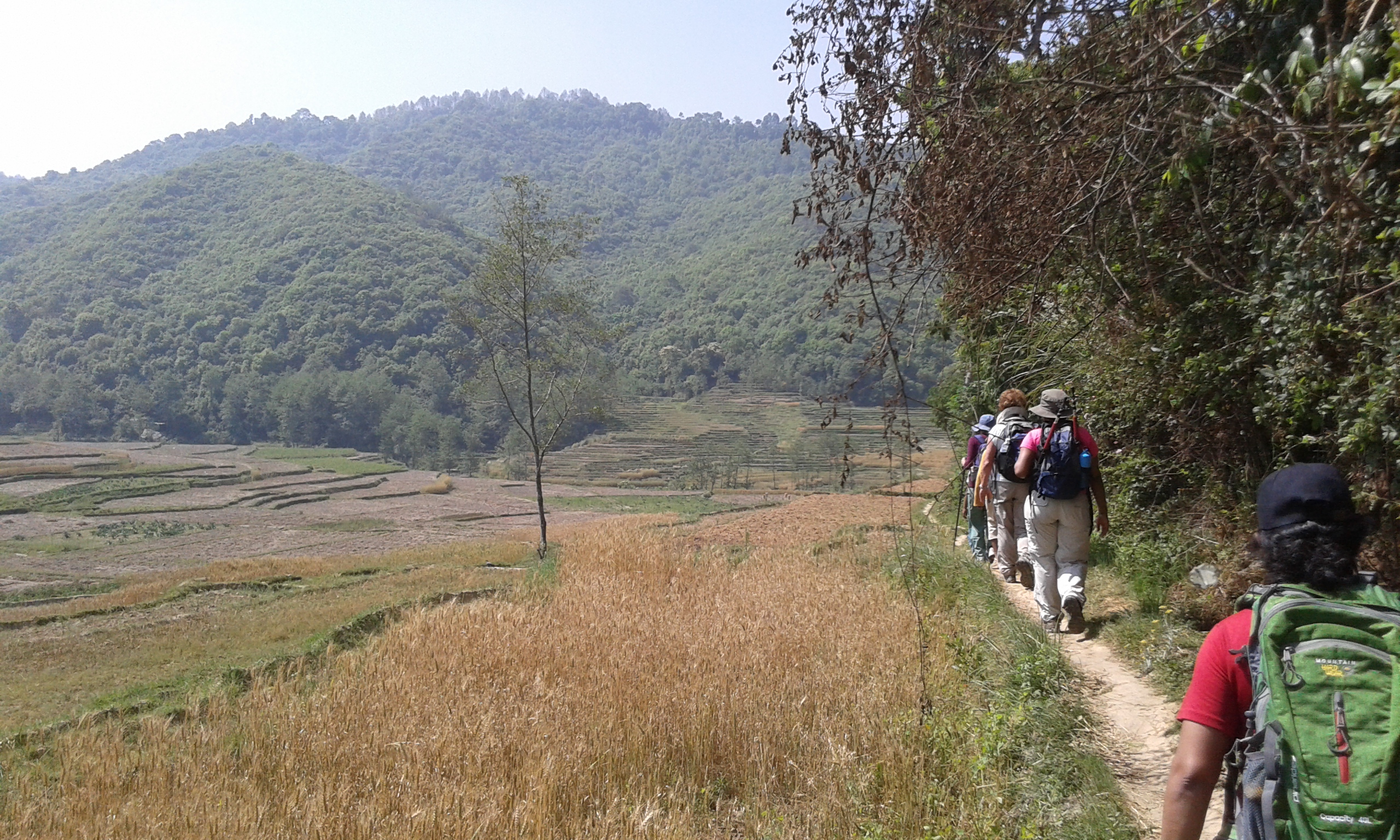
On Wednesday, we joined the Cultural Studies Group Nepal (the same group who hosted the Thanka Art Studio Visit that I wrote about last week), for a hike from Dulikhel to Panauti.  We left KTM early to avoid being in the midday sun (it was still SO hot!) and took a 1-hour bus ride to Dulikhel.  A guide met our group at the bus stand and we started walking – what an interesting variety of paths!  We went through town roads, village alley ways, dirt trails and across several agricultural fields (I’d never seen that many potatoes!).  Even though Krishneil and I were huffing and puffing to get up the hillside trails, being in the company of folks well over twice our age was inspirational…  Betty, the oldest one on our group hike, is 83 years old and was often at the head of the pack.  When someone commented, “we all hope to be like Betty when we are 83.” Krishneil followed up with, “I hope I can be like that at 43!”  A picnic lunch on a shady hillside, temple visit at Panauti, and refreshing cokes at the end of the hike rounded out the afternoon.

20140521_093512

At this point, we debated going for a swim to make it a complete week-long triathlon (swim, bike, hike / run).  But decided against 😉

After dropping the kids to school on Thursday, we went for a yoga class here in Patan.  Great to see the same faces –  Roger from the Tuesday bike ride and Eliane from the Wednesday hike were also there!  KTM is relatively small – very easy to bump into folks you know – I love that about this town…  The yoga teacher gave detailed, precise instructions, but class was tough!  Pigeon, warrior 2, cow face, high lunge, low lunge, and several more.  When she said, “now you can rest in downward dog pose for 5 breaths” I knew I was totally out of my league!  I much prefer RESTING in childs pose…

We then hopped on the bikes and cycled over to ICIMOD (Krishneil had a go on the “minivan” of bikes — Caleb Spear’s creation!).  Prakash, his colleague – Bhupesh, Krishneil and I all had lunch at the ICIMOD cafeteria.  Prakash gave us a quick tour of the office – for a developing country, the office is very impressive.  Nothing too fancy, but amazing life-size photographs displaying their vision “men, women, and children of the Hindu Kush Himalayas enjoy improved well-being in a healthy mountain environment” and mission “to enable sustainable and resilient mountain development for improved and equitable livelihoods through knowledge and regional cooperation” cover the walls and corridors of the building.

We got some groceries on the way home then started preparing for our evening!  What a coincidence – our brand new neighbors spent several years in Fiji, the same country where Krishneil was born and raised until age 9.  Marilyn and Gordon joined us for dinner and they exchanged several island stories.  We got to see some beautiful images of the remote island where Marilyn did her PhD research in education, the same island that Krishneil recently visited.

A big cockroach, friendly spider and empty water tanks (ie, bathe with whatever is remaining in the bucket ; can’t wash the dirty dishes ; how many bottles of drinking water are left in the fridge?!?) rounded out the week of adventures!  A few of the numerous workers where we stay befriended Krishneil during our afternoon basketball sessions.  The sendoff this morning was just like those in India – everyone gathers to say good-bye 🙂

IMG_2307

Thanka Painting — How Fascinating!

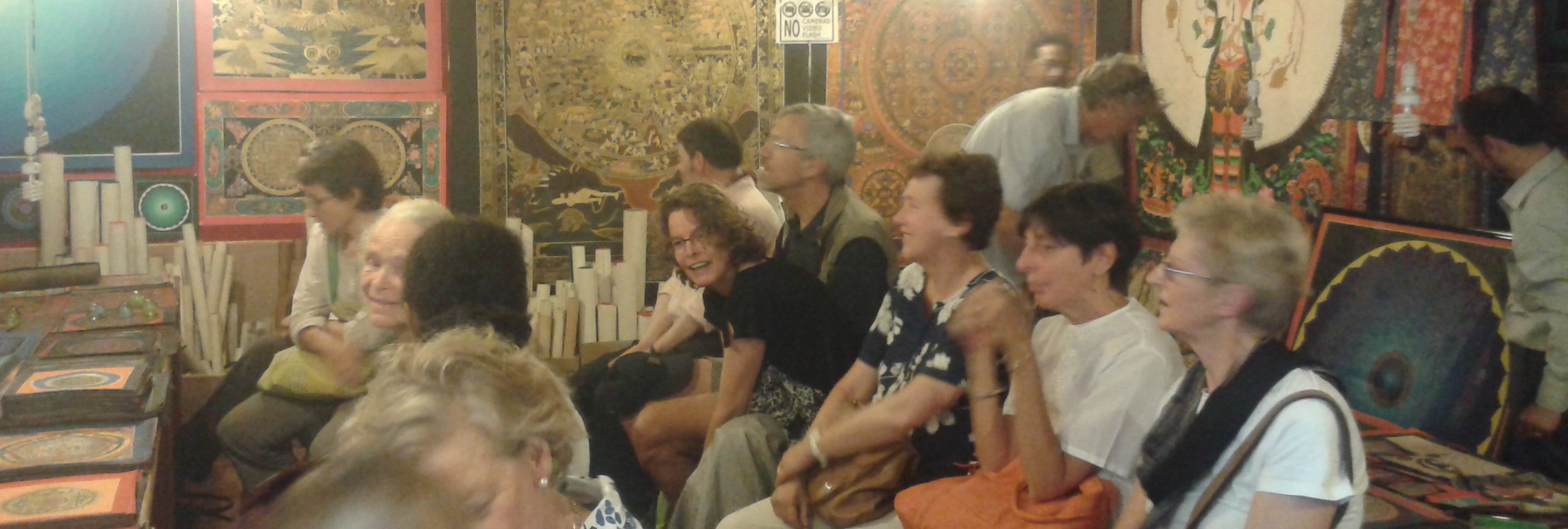
Today morning, I joined a new friend, Houk from the Netherlands, on a visit to a Thanka Painting Showroom.  What a neat experience!

Houk is a member of an expat group that together visits various art studios, invites interesting speakers for lectures and ventures out on small walks around the town.  I joined the group for today’s studio visit.

20140516_095736

The Thanka Painting Showroom is located within Swayambhu – a very famous KTM site, often referred to as “the monkey temple”.  Dozens of monkeys entertain and annoy visitors as they enjoy their life on the Swayambhu mountain top.  We were greeted with warm “Namastes” from Rajesh (dad) and Surya (son) along with several staff members.  Surya gave a 1 hour presentation to us and covered the history, significance, basic techniques and modern day adaptation of Thanka Painting:

* often the paintings are depictions of some aspect of the Buddhist religion20140516_103917

* the word “Thanka” is derived from than (cotton) and ka (art), so it is art done on a piece of cotton

* traditionally, the artist while painting will live like a monk ; he will not smoke, drink alcohol and will be celibate ; he will sit facing east

* all the painting is done while sitting on the floor, crossed-legged

* this art form requires utmost patience and almost a meditative state of mind

* one piece can take 2 weeks to 7 years to complete

* the painter attaches a thin sheet of cotton to a bamboo frame, then applies several coats of “glue” (made from yak skin and water) and powder to make the surface smooth to apply the paint

* traditionally rock colors were used, however nowadays, vegetable and acrylic colors are used

* extremely fine brushes are used where one brush has 1-5 hairs (from a cat)

* as the paintings are usually of a spiritual nature, reminding us to be detached and eliminate ego, the painter usually maintains a certain level of anonymity (signatures are often not present, or signed very generally, ie Arun Shrestha which in Nepal is as common as Joe Smith in the USA)

* a painter is considered a “student” for at least the first 9 years of training and slowly achieves titles such as master and grand master (reminded me of chess!)

* traditionally, paintings were done only by men, but in the past few decades, Rajesh has fought to introduce women into the trade

After the presentation, I approached Surya and complimented him on his English-speaking ability.  The vast majority of Nepalis, young and old, do not speak English at all, let alone have the ability to carry a 1-hour long presentation with Q/As.  Surya is rare, a product of government school and government college (Nepali-medium) but able to communicate brilliantly about his culture and family traditions in English.  He told me that his father would tell him as a child, “Never be shy about 2 things in life – talking and eating!”  Wise words here in Nepal 🙂

It was a lovely morning!  Learning about ancient Nepalese art and visiting a famous KTM landmark…

Recent Highlights – Concerts and Biking!

Summer is here in full blast! It has been dry and hot the last week, but we really have nothing to complain about… It is much worse at lower altitudes and closer to the equator. In KTM, hot, but bearable… Some of the recent highlights include (1) a French Family Band concert, (2) a Choir concert, and (3) an adventurous mountain biking ride!

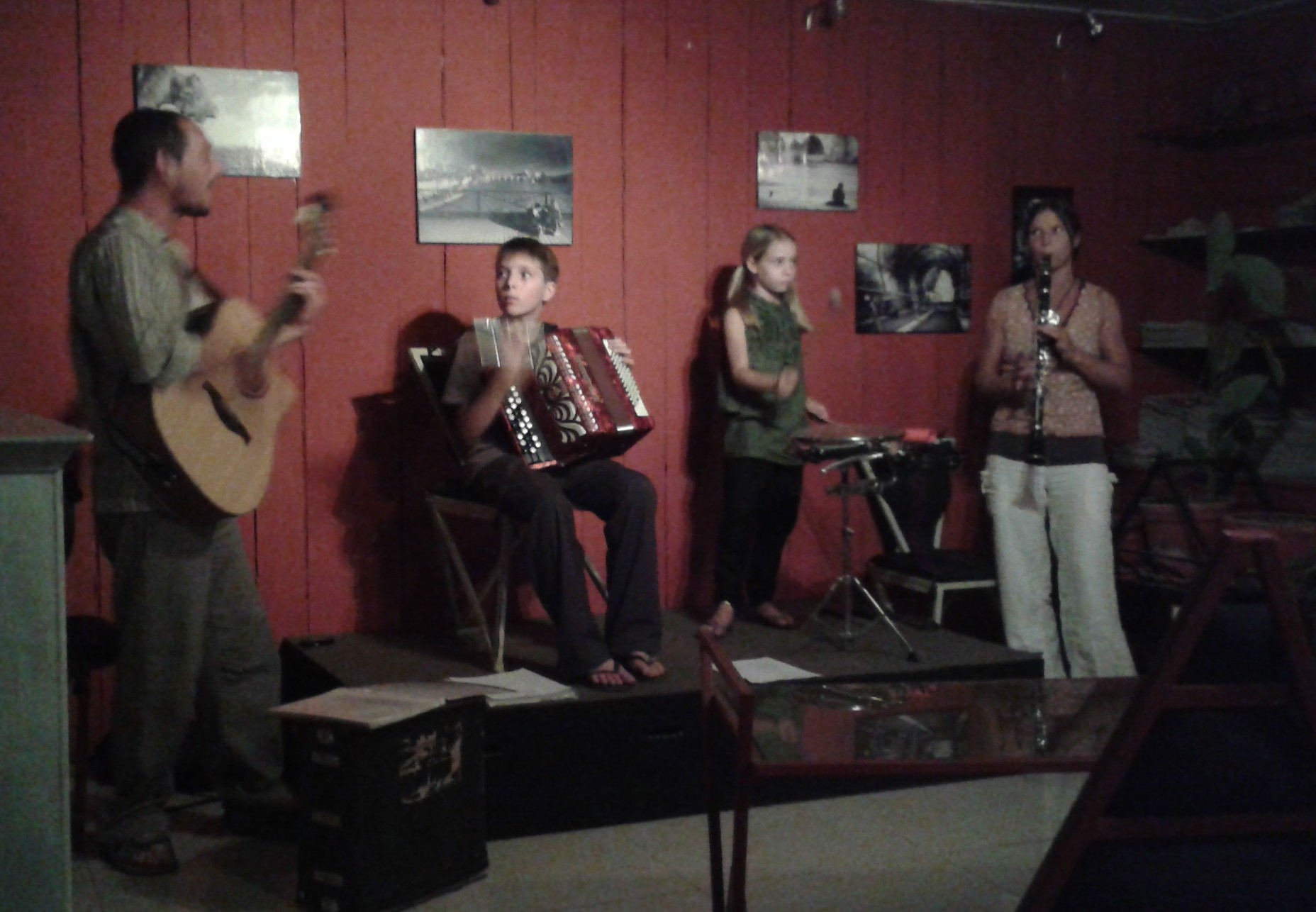
We are fortunate to have an expat google groups where folks post about houses for rent, items for sale and cultural happenings all around town. There was an advertisement about a French Family Band who would be performing in a French Restaurant in Thamel (the most touristy part of KTM). We decided to check it out along with our friends, the Spear’s (the family who builds the cool bikes!). What a special treat!! Their band consists of the Dad (guitar and vocals), Mom (clarinet), 13 year old boy (accordion) and a 9 year old girl (numerous percussion instruments and a bit of vocals too!). They are from France and have taken a year off of their ordinary life to travel the world in their family-van and sing for people, specifically for schools. They spent 3 months in India, 3 months in Nepal and are soon heading back to France. Their songs were mostly in French, but also in German and English. What a fascinating family! Their simple style, sweet smiles, and joyful enthusiasm were very inspirational 🙂 Checking out the french restaurant was cool too (fresh french bread, apple momos, chocolate cake – yum!)

20140508_194819

The Kathmandu Chorale performed last Saturday night at The British School auditorium. WOW – what a talented bunch! There was 1 director, 1 pianist and 40 singers – all (approximately) aged between 18-65. Per the demographics of the group, I felt like we were back in North Carolina!! However, the (approximately) 80 degree auditorium temperature quickly reminded us that we were in Nepal :-). They sang Latin, French and English songs – impeccably high quality production. An instrumental portion was also included in the concert! There was a quartet of flute, oboe, piano and bassoon – 4 super talented individuals synergizing into melodious tones… The most memorable song of the choir was “Gloria” by Antonio Vivaldi.

New Picture

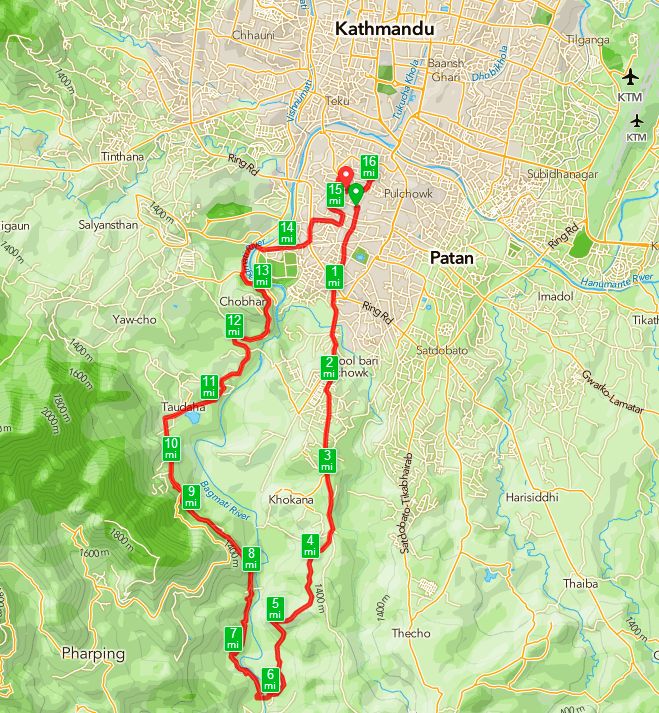
On Tuesday mornings, several British School parents set out for the surrounding hills of the Kathmandu Valley on their mountain bikes! This week, I joined Adrian, Andy, Roger, Clare and Katheryn and together we cycled for 27 kilometers (~16 miles) in about 3 hours. What an adventure… Much of the way was paved, but a fair bit was gravel, dirt or  small rocks. We crossed over the Bagmati River twice on 2 metal, pedestrian, suspension bridges. Oh and there were hills – numerous ups and downs! Once or twice I had to walk the bike up the steep hills, but mostly I managed to ride. Basic stats: total elevation climb = 1925 feet ; highest elevation reached = 4500 feet above sea level ; peak speed = 32 miles per hour. This was an awesome introduction to mountain biking and hopefully I’ll make it out on more rides through the hills of the valley…  Here is an image of our route – go to Google Maps to see a more detailed image of the roadways and dirt paths.

New Picture (1)

Electricity in Kathmandu (and other utilities)

Today (April 21), we learned the weekly schedule for power outages in our neighborhood.  This gave us a feeling of “enlightenment” because, until now, the times when our refrigerator would switch on or off seemed quite sporadic.   As advertised, the outages last 12 hours per day. Ironically, almost all twelve are waking hours.

Sun 5-noon & 4-9pm (i.e., no power during the most useful hours)

Mon 4-10am & 2-8pm (almost as bad as Sunday)

Tue 3-9am & noon-6pm (best day of the week; we get power right after sunset)

Wed 10am-5pm & 8pm-1am (not a good day to work from home!)

Thu 9am-4pm & 7pm-mid (another killer day)

Fri 7am-2pm & 6-11pm (perfect excuse to go out for dinner)

Sat 6am-1pm & 5-10pm (much like Sunday)

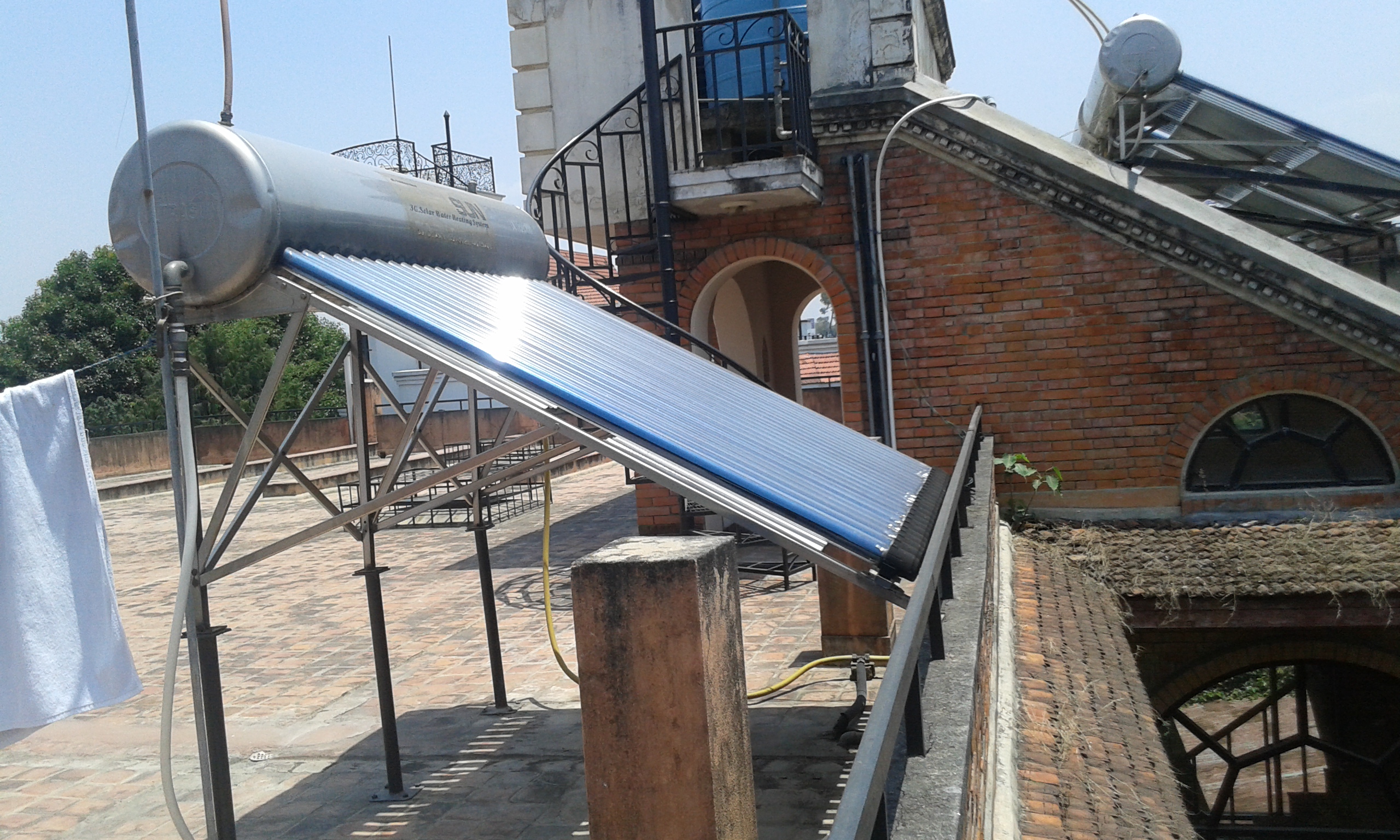
During the power outages, we can operate a few lights in each room, 1 socket in the living room, and all ceiling fans using our inverter/battery system.  But the refrigerator is off, as is the water purifier, and all kitchen lights (the tube lights are supposed to work on the invertor, but don’t). We get hot water around the clock because it’s heated by solar power. This may not work as well during the monsoon season due to cloudiness.

Solar panels and tank on the terrace of our apartment building

Solar panels and tank on the terrace of our apartment building

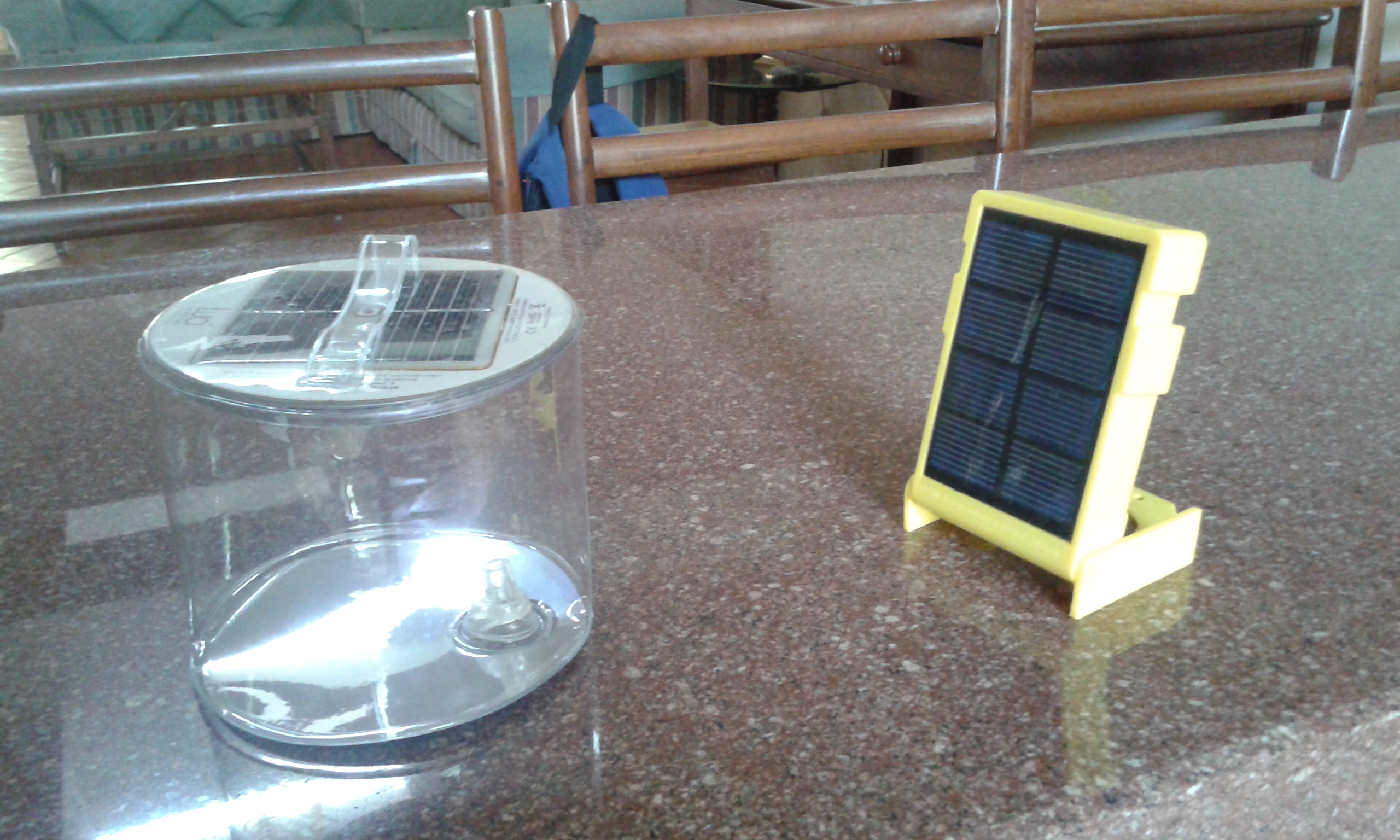
Nita had received some good advice to purchase solar-powered lanterns before coming here, so we’ve begun using those during the power outages and on evening walks.

Waka Waka and Luci

Waka Waka and Luci

— Prakash

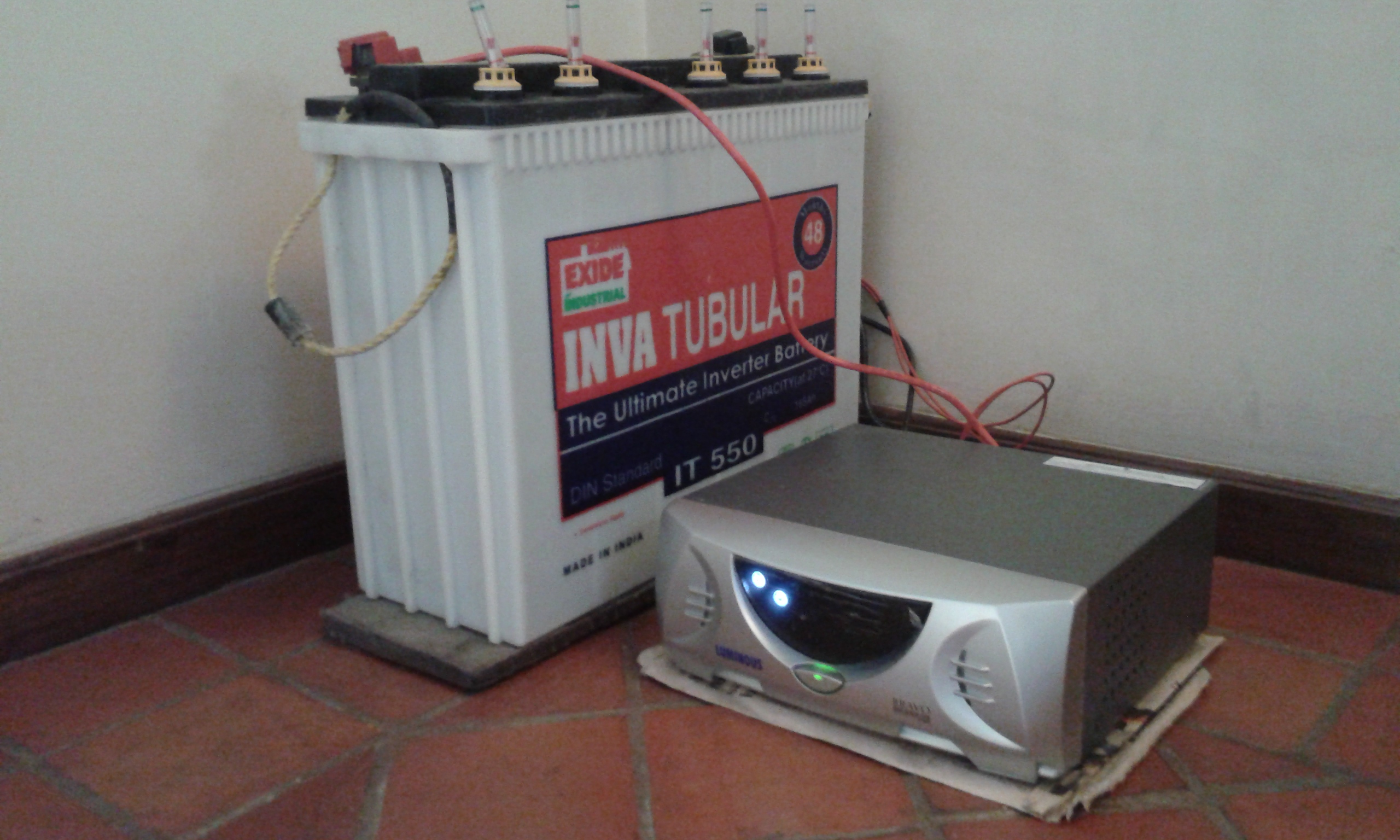
It has been almost a month since we’ve arrived in Kathmandu!  Getting used to the electricity outages has been easier than I anticipated.  Largely due to our new best friend – our invertor!

The invertor in our apartment.

The invertor in our apartment.

When the electricity is on, the invertor gets charged up ; when the electricity goes out, whatever is connected to the invertor can still be operated.  There have been only 3 incidents where the power was out and the invertor ran out of supply.  Having only candlelight, solar lanterns and NO ceiling fans was a bit tough.  However, we are the lucky ones who have an invertor (along with the vast majority of other expats and most middle class and above Nepalis).  This past Saturday, after returning home around 8pm from a concert (will post about that soon!), I noticed how dark it was while walking down our street…  Many families do not have invertors and rely solely on candlelight during blackouts.

We have seen numerous houses while searching for one to rent and there is a broad range of the number of invertors some families have!  We have seen 0 – 8!  Some are fine managing without electricity when the rest of KTM doesn’t have power.  And another wanted to have their refrigerator and AC / heating system and all other lights and sockets working 24 hours a day!  Our apt has 1 invertor and so far, we are managing okay.  The house that we will rent (will also post soon about our exciting home search!) will have 4 invertors (and is about double of this apt), so will feel quite luxurious compared to just 1 over here!

Much of the electricity in KTM is provided by hydro-power.  Thus, in the rainy season, the outages are shorter (I believe around 8 hours per day).  And in winter, the outages are at their peak with up to 16 hours of outage!  We’ll have to precisely time when we charge up our lifelines (ie cell phone, laptop, tablet)!

Internet – THANKFULLY we have internet connection around the clock!  Our connection is provided by the landlord who has the modem connected to his invertor.  Speed is moderate.  Totally adequate for emailing and blogging, but a bit slow for watching videos.  Intolerable compared to USA standards, but A-OK in a developing country.

Let me briefly talk about the other utilities – gas and water.  Direct gas lines are non-existent in Nepal (just like India).  So there are large red cylinders (about 2 feet tall and 1 feet diameter) that each house has to operate any gas appliances (stove and space heaters).  When the tank depletes, you take it to a filling station.  I’ve heard an estimate of filling the tank for the stove about 3 times per year.  Water is in short supply here in Nepal (ironic because there is plentiful snow melt so nearby…).  Water comes from wells (some houses have small wells on their property), the government (pumped into a tank that is kept in or around your house approximately weekly), or by private tankers (large tanker trucks pump water from the truck into a tank at your house – this can be costly).

Our neighbors solar panels and 2 water tanks of an apartment building in the next lane.

Our neighbors solar panels and 2 water tanks of an apartment building in the next lane.

Once we move to our own house, we’ll have the pleasure of experiencing all of this — filling up gas cylinders, filling up water tanks, making sure the electricity is on before trying to pump the water!!  Now, in this furnished, serviced apartment, all of this is taken care of for us (this is as close as it gets to Marriott Residence Inn in Nepal!!)

Looking forward to reading your comments and questions 🙂

Nita

Great Biking Weekend!

Biking is the thing to do in Kathmandu!  Many tourists mountain bike, but more importantly, many locals, tourists and expats get around town on bicycle.  The city is relatively small, so bike is a great means of transportation.

On Saturday, after a long outing of errands and a nice lunch, we stumbled upon THE COOLEST NEW ADDITION to the Bhave Family!  A tag-a-long bike for Sumanth to ride!  He is a great biker and has been riding without training wheels all around NC for almost 2 years, however, in Kathmandu, bike rides are SO different, that we feel more comfortable only having to “look after” Janani and Sajjan on their bikes and know that Sumanth is taken care of.  A tag-a-long bike is half of a kid’s bike (handle bar, seat, peddles, and back wheel) attached to the back of an adult’s bike (connected to the seat post).  It allows the child to pedal and contribute to the movement of the bike, but gives full control of navigation to the adult.  We stumbled upon this second-hand piece, originally from Australia, at the 5th bike store we visited – felt so lucky!

We have had the great pleasure of meeting Caleb & Emily Spear – another young expat family, originally fromIMG_2208 Colorado, USA, living in Kathmandu.  Yesterday, they took us on our first family bike ride here in Patan.  First, I’ll introduce you to the Spear family, then tell you about our AMAZING outing!
Caleb and Emily started a non-profit organization called Portal Bikes – they build bikes to help people “create pathways out of poverty.”  Their bikes are elongated with a chain almost double that of a standard bike.  A small apparatus (water pump, corn kernel remover, basic washing machine)can be attached to the bike and powered with the energy derived from pedaling.  Or up to 3 small children can ride on the back, or significant amount of cargo can be carried along the back sides.  They have 2 boys, Zion age 8 and Anatolli age 6.  Extremely neat family, bikes and non-profit organization!!

We met up at Caleb & Emily’s house (5 min walk from our house) on Sunday morning.  Using our adult bike and tag-a-long, and 2 of their portal bikes, 1 of their adult mountain bikes, and 2 of their kid’s 20 inch bikes, the nine of us were off!  We zigzagged in and out of the alley ways of Patan, stopping every once in a while to check the map, regroup, or switch who was riding on which bike!  Riding in the streets of Kathmandu – how do I begin to describe it!?!  SO much visual stimulation, taking in so much information and making numerous split-second decisions.  We are constantly dodging cars, motorcycles, other cyclists, pedestrians, dogs, and pot holes!  But it is SO much fun…  Our speed is relatively slow, so it didn’t feel dangerous – just VERY challenging.

20140504_093911 (1)

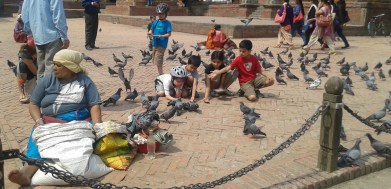
After riding  2-3 miles, we ended up at Patan Darbar Square.  The parents took turns watching the bikes and meandering around with the kids.  They fed the birds, climbed the elephant statues, ate some mint leaves in the medicinal garden and scurried around the numerous ladders and pathways in the museum!  Our collection of bikes was a sight to see…

20140504_094420

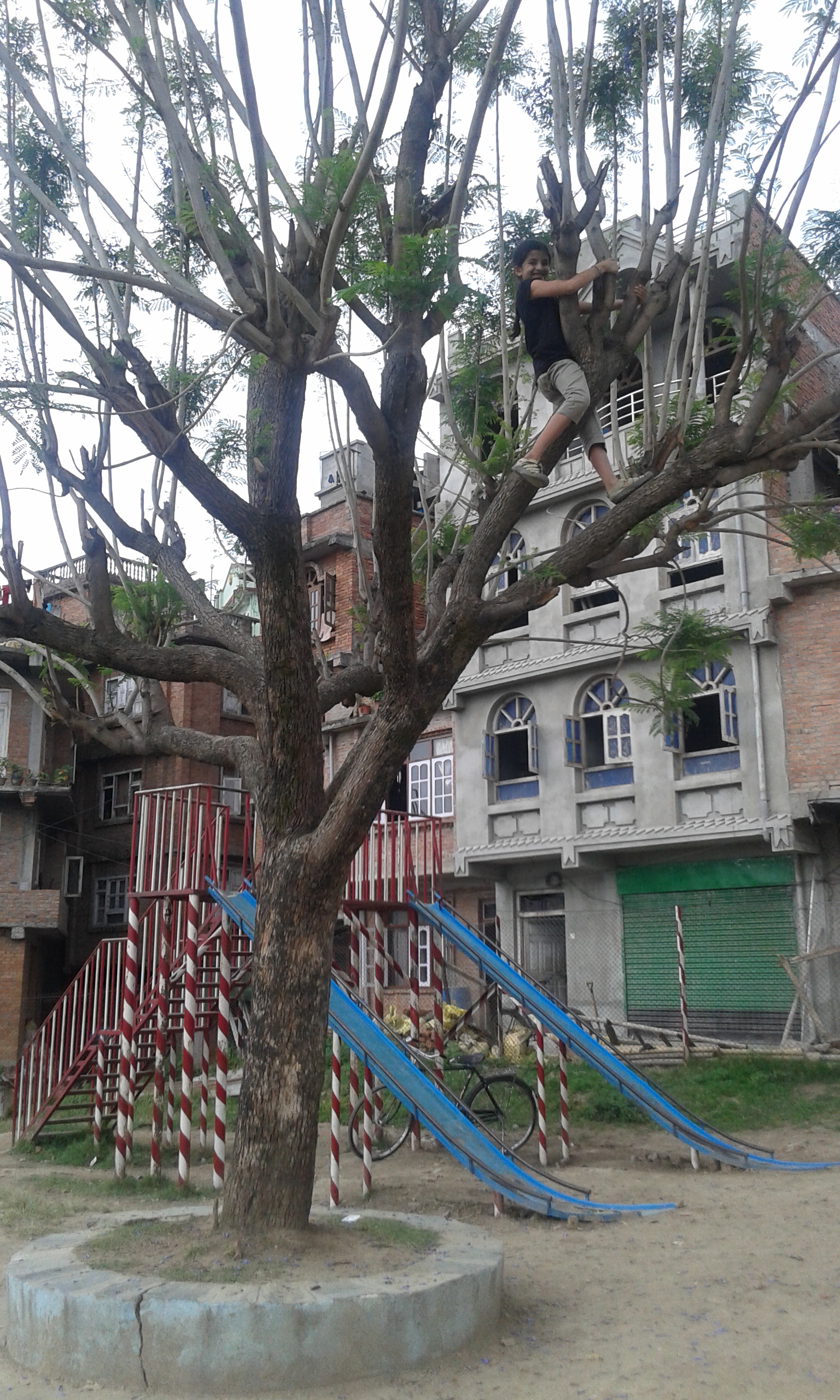
We rode for another bit and then out of nowhere, discovered a Children’s Playground!  The Spear family, who has been in Nepal for almost a year, and us were shocked to find it.  It was fully equipped with 2 slides, 4 swings, 3 seesaws, monkey bars and 2 trees great for climbing.  Unfortunately, even though there are 3 million of people in Kathmandu, public and green spaces are very limited.  Even though this playground was old, dingy and not well maintained, it was a pleasant surprise and we will definitely revisit it soon…

20140504_105302

We ended up at Yellow House Bed & Breakfast and had a yummy brunch and enjoyed a bit of shopping at the farmers market!  I got fresh ghee (clarified butter) and flax seeds.  We are looking forward to equipping the rest of our family with bikes in the next week or so!  A 24 inch bike for Janani, a 20 inch bike for Sajjan and a mountain bike for me.  We’ll be biking all around town in no time!  Can’t wait to see how the rides in the monsoon rains will pan out – I’m sure the kids will have a blast riding through all the puddles :-).